Delhi-NCR tightens pollution curbs: Work-from-home, costly parking and restrictions on buses
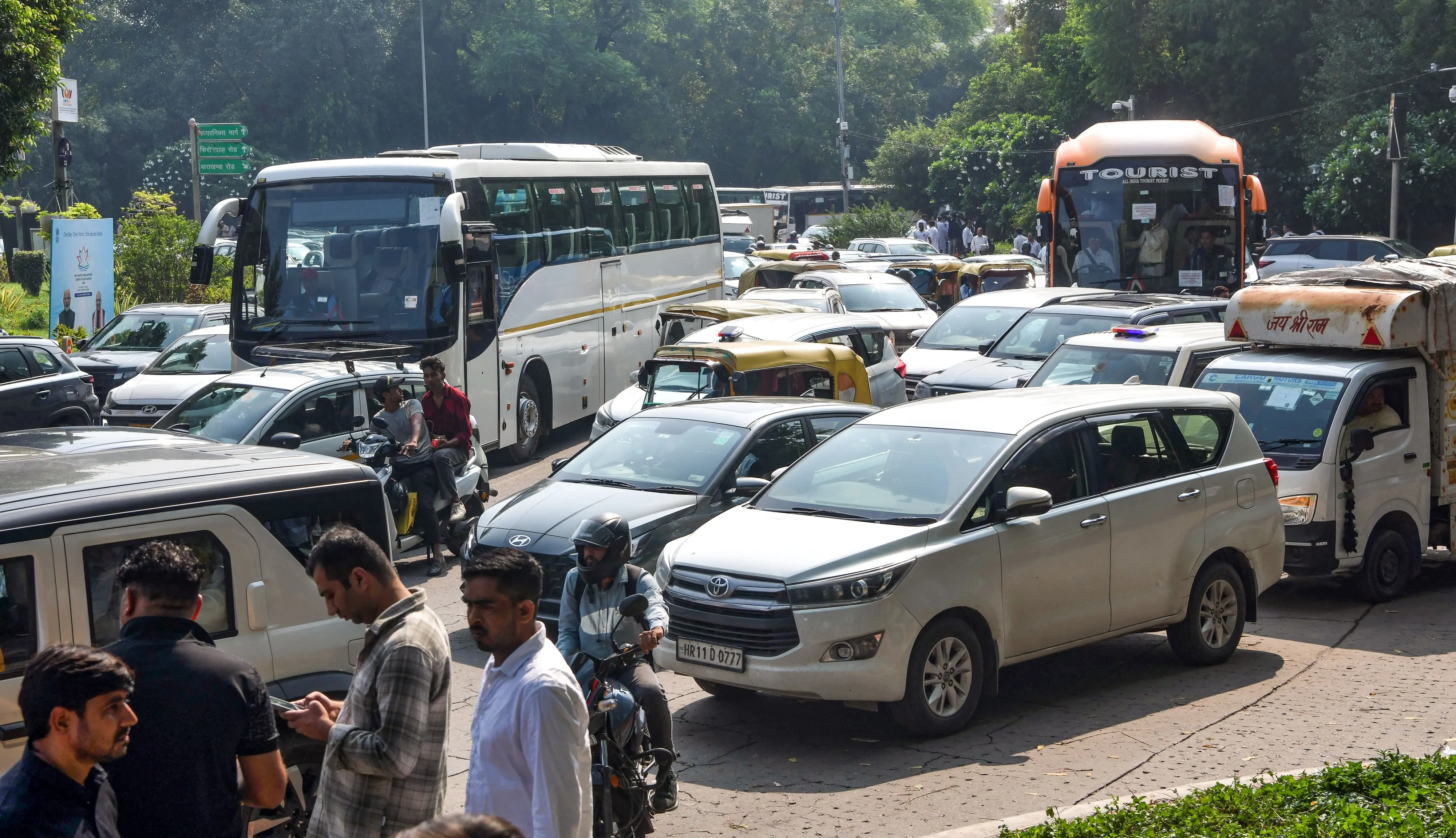
Delhi: Delhi Metro will operate 20 additional train trips on weekdays from Tuesday as authorities step up efforts to tackle rising air pollution across the National Capital Region (NCR). The additional services will take the total number of extra trips on the Metro network to 40.
The Delhi Metro Rail Corporation (DMRC) said the move is intended to encourage commuters to use public transport instead of private vehicles and help reduce pollution.
The decision comes after Delhi’s Air Quality Index (AQI) climbed to 324 on November 2, placing it in the ‘Very Poor’ category. The Commission for Air Quality Management (CAQM) subsequently invoked Stage II of the Graded Response Action Plan (GRAP) across Delhi-NCR.
Gurugram introduces 50% work-from-home arrangement
Neighbouring Gurugram has also introduced a 50% work-from-home arrangement as part of efforts to reduce daily travel and traffic congestion.
The measure is aimed at limiting the number of employees commuting to offices amid the worsening pollution situation.
Under the GRAP measures, public offices and municipal bodies in Delhi, Gurugram, Faridabad, Ghaziabad and Gautam Buddha Nagar are also required to adopt staggered office timings to reduce peak-hour traffic.
Central government offices may also consider staggered working hours.
Higher parking charges, more public transport
The GRAP Stage II action plan includes measures to discourage the use of private vehicles and improve public transport availability. Parking fees are being increased, while Metro, Regional Rapid Transit System (RRTS) and CNG and electric bus services are to be strengthened through additional trips and fleet deployment.
Authorities may also introduce differential fares to encourage commuters to travel during off-peak hours.
Restrictions have also been placed on inter-city and inter-state buses entering Delhi-NCR. Buses from Haryana, Uttar Pradesh, Rajasthan, Punjab, Himachal Pradesh, Madhya Pradesh, Uttarakhand and Jammu and Kashmir will be allowed to enter only if they run on electricity, CNG or BS-VI diesel.
Restrictions on construction, generators and eateries
The pollution-control measures also target dust and emissions from other sources. Dust-generating construction activities are to be restricted, while the use of coal and firewood in tandoors at hotels, restaurants and open eateries is prohibited. Such establishments are required to use cleaner fuels, including electricity or gas.
The use of diesel generator sets is also restricted, with portable sets below 19 kW barred except for essential services such as hospitals, Metro and railway operations, airports, water supply and telecommunications.
Resident Welfare Associations have been asked to provide electric heaters and power connections for security guards and other outdoor workers to prevent the burning of wood, biomass or waste for warmth.
What residents are advised to do
People have been urged to use public transport, carpool and avoid unnecessary trips in private vehicles. Those who can work from home have also been encouraged to do so.
Vehicle owners should keep their pollution certificates valid, maintain their vehicles and switch off engines at traffic signals. Residents have also been advised against open burning and to avoid activities that generate dust.
Pollution-related violations can be reported through the SAMEER and Green Delhi apps, as well as the 311 app.