Why did CJP leaders approach Delhi HC under Article 226? Court questions choice of remedy
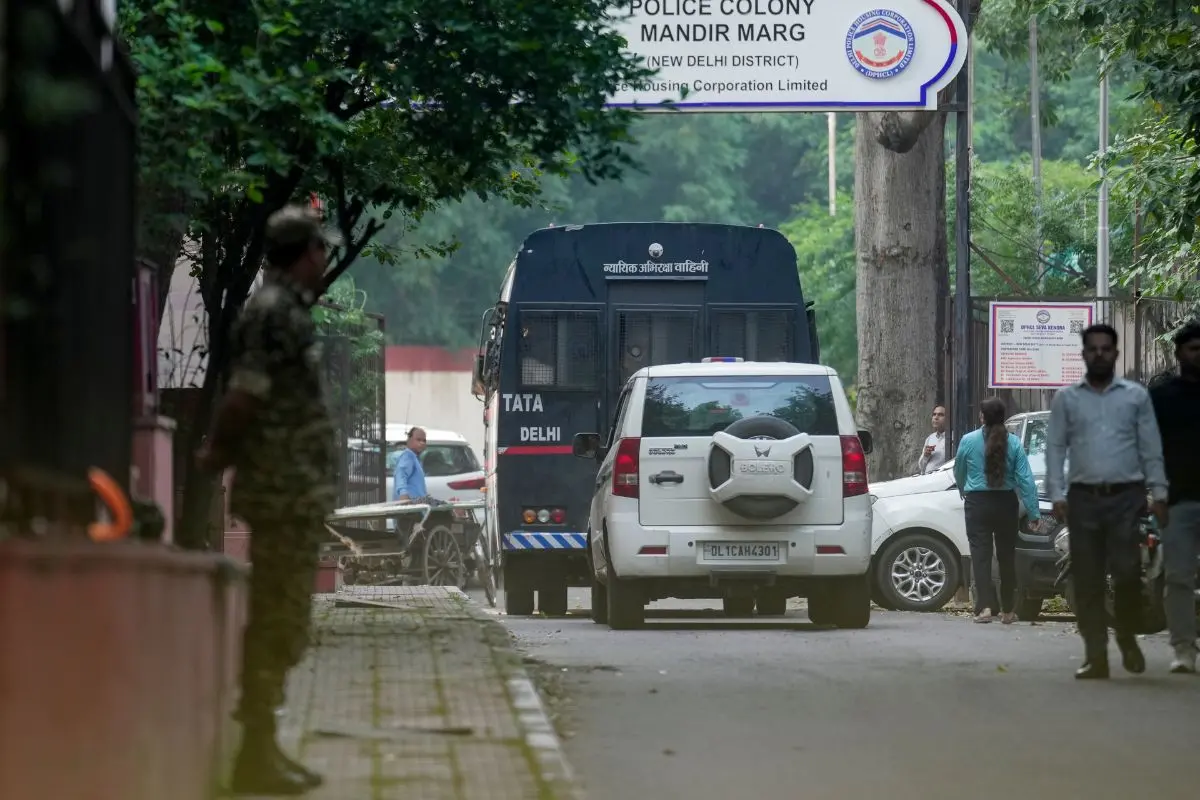
New Delhi: The Delhi High Court on Wednesday questioned why Cockroach Janta Party (CJP) leaders Saurav Das and Ashutosh Ranka had approached it under Article 226 of the Constitution to challenge the extension of their judicial custody, observing that they should have pursued a revision petition instead.
The petitioners had challenged an October 19 order of the Special Executive Magistrate (SEM) extending their custody until October 21. They sought the quashing of the order and their release but later withdrew the plea.
“Your second incident. You are a person who has actually broken a bond. Your remedy actually lies in revision,” the court observed while hearing the matter.
The bench asked advocate Abhik Chimni, appearing for the petitioners, why they had approached the High Court when the order could be challenged before the appropriate revisional forum. It noted that a revisional court could examine the facts of the case, while writ proceedings primarily concerned the decision-making process.
The court also questioned whether authorities were entitled to impose stricter surety conditions following an alleged second breach of a peace bond.
“Once you have broken peace for the second time, are the authorities not entitled to insist upon everything?” it asked.
The bench referred to the pending proceedings before the Supreme Court challenging the denotification of Jantar Mantar as a designated protest site. It noted that the notification had not been stayed and questioned the petitioners’ decision to return to the site.
Expressing concern over the breach of barricades, the court observed that such actions could encourage others to violate prohibitory orders under Section 163 of the Bharatiya Nagarik Suraksha Sanhita (BNSS).
“The two petitioners here are at the forefront. When you go and break a barricade, the chances of 10 or 20 more people in violation of 163 are very high,” the bench said.
It also observed that requiring police permission for protests helps prevent unwanted elements from joining demonstrations and causing disruption.
Petitioners question SEM’s authority
During the hearing, Chimni argued that the October 19 order was legally unsustainable, contending that the SEM lacked the jurisdiction to extend the petitioners’ custody and that preventive proceedings were being used arbitrarily.
He also challenged the rejection of the sureties, submitting that two additional sureties were available but had not been called for consideration. The SEM’s order referred to discrepancies in photographs and difficulties in verifying details relating to one of the petitioners, he said.
The court examined the circumstances surrounding the petitioners’ earlier peace bond and asked about the procedure prescribed under the BNSS in cases of a bond breach.
Chimni argued that the order did not specify material establishing an imminent threat to peace and tranquillity.
The bench suggested that the petitioners await the outcome of proceedings before the SEM, which was scheduled to reconsider their sureties at 2 pm on Wednesday.
The petitioners subsequently withdrew their plea. The High Court clarified that it had not expressed any opinion on the merits of the case.
PTI