Can artificial rain clear Delhi’s everlasting pollution pain? Expert explains limits and hope
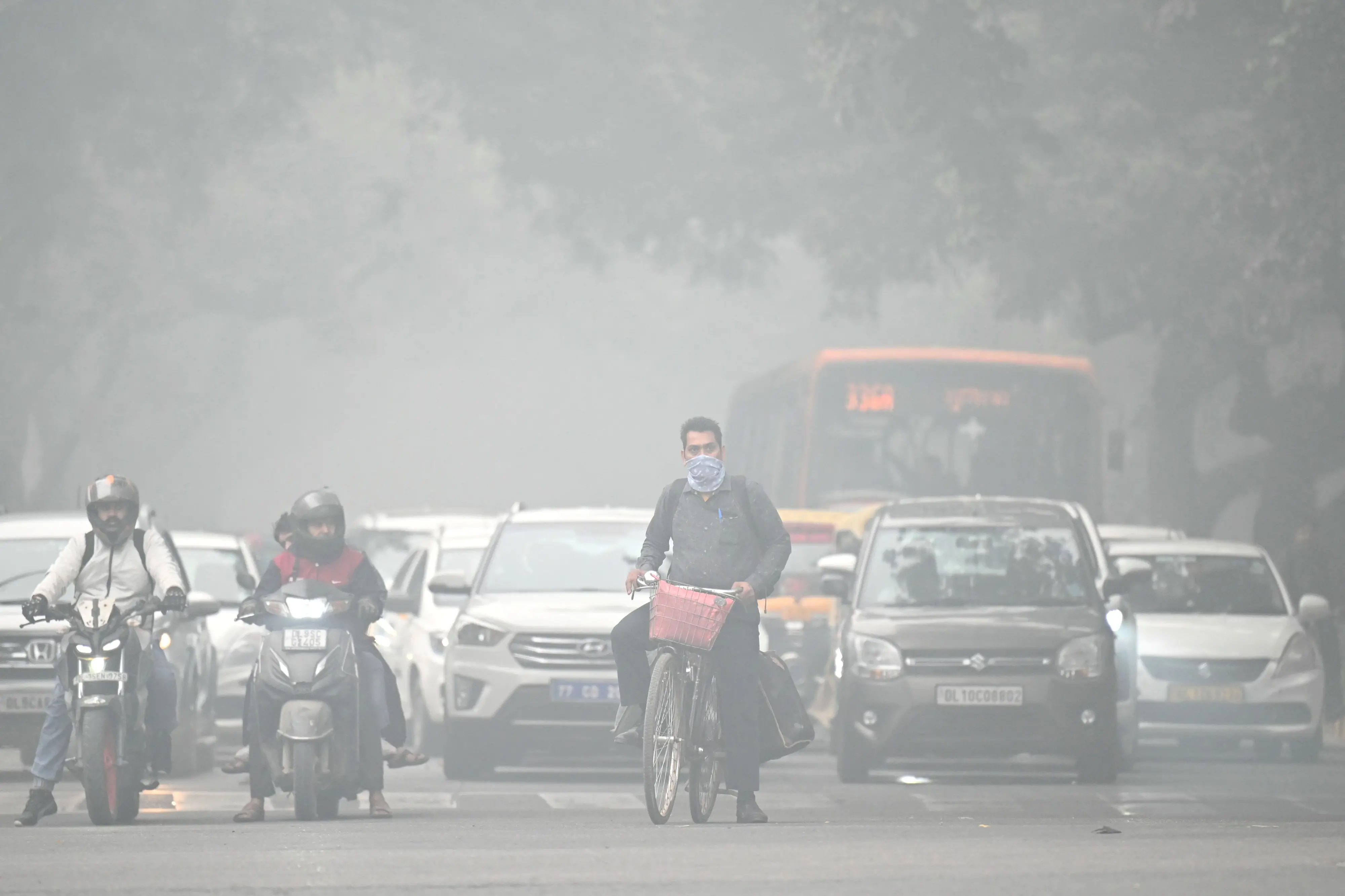
New Delhi: Delhi, one of the world’s most polluted capitals, is preparing to take an unprecedented scientific step in its war on air pollution. A project to induce artificial rainfall through cloud seeding—the first such experiment focused purely on air purification—is set to begin once weather conditions become favourable.
The man behind the project, Prof Manindra Agrawal, Dean at IIT Kanpur and a recipient of the Shanti Swarup Bhatnagar Prize, shared insights into the vision and mechanics of this bold initiative.
“This is not a magic fix,” says Prof Agrawal to News18. “But even a single successful round could bring AQI down from hazardous to breathable levels, offering a temporary but meaningful reprieve.”
What is cloud seeding and how it works
Cloud seeding is a weather modification technique involving the dispersion of fine particles—typically silver iodide, potassium iodide, or dry ice—into clouds to stimulate rainfall. These particles act as condensation nuclei, accelerating the formation of raindrops. When the seeded clouds release rain, it helps wash away airborne pollutants like PM2.5 and PM10 particles.
The process is not new: China famously used cloud seeding to clear smog before the 2008 Olympics. The UAE continues to invest in it for water security. India has tried it before in Maharashtra and Karnataka, but mainly for agriculture during drought years.
Delhi’s plan is the first in India to use the method specifically for air purification in an urban setting.
Why now—and why Delhi?
Delhi’s air quality consistently plunges into hazardous levels between October and January, due to a combination of:
Stubble burning in neighbouring states, Vehicular and industrial emissions, Dust from construction, and low wind speeds that trap pollutants close to the ground.
At times, the Air Quality Index (AQI) has shot up to 1,500, while anything above 100 is considered unhealthy. The World Health Organization (WHO) recommends an AQI below 50.
"Rainfall has consistently brought down AQI in the past. What we are trying to do is simulate that through science," says Agrawal.
Where things stand now
The trial was initially slated for November 2023, but delays in DGCA flight clearances stalled operations. Ironically, the arrival of the monsoon in July has now put the project on hold again—this time because the weather is too unstable.
“We need gentle, moisture-laden clouds, not thunderclouds or fast-moving systems,” says Agrawal.
“The right atmospheric stability is essential for cloud seeding to succeed.”
Aircraft are ready, chemicals have been procured, and the scientific teams from IIT Kanpur, the India Meteorological Department (IMD), and Indian Institute of Science (IISc) are on standby.
The window for the first trial is expected to open in late July or early August, depending on cloud behaviour and wind conditions, with daily weather monitoring underway.
What’s the goal?
The target is to bring Delhi’s AQI below 100, ideally into the “moderate” or even “good” category. Even one successful round of induced rainfall could:
Temporarily reduce PM2.5 and PM10 levels, Provide relief to residents, especially children and the elderly, and act as an emergency pollution response tool.
Agrawal emphasises the short-term nature of the benefit: “It won’t solve the problem permanently, but it can give people a clean-air window—possibly for a few days or even a week.”
Scalability and future use
If the Delhi trial succeeds, the cloud seeding model could be scaled to other highly polluted cities such as Kanpur, Patna, Lucknow, Ghaziabad, and Mumbai. However, implementation depends on:
State government interest, Local meteorological conditions, and logistical feasibility, such as access to aircraft and trained personnel.
Agrawal says the IIT Kanpur team is ready to support similar interventions wherever conditions permit.
Limitations: A tool, not a cure
Despite public excitement, experts caution against treating cloud seeding as a replacement for long-term environmental policy.
“It’s not a substitute for clean energy, crop stubble management, or better urban planning,” Agrawal warns.
“Think of it as firefighting—useful when the house is burning, but not a permanent solution.”
While the Delhi experiment is a scientific milestone, policymakers must still focus on sustainable solutions to tackle root causes of pollution, such as:
- Urban transportation overhaul
- Renewable energy adoption
- Enforcement of emission regulations
- Agricultural residue management
What’s next? waiting on the weather
With preparations complete, all eyes are now on Delhi’s skies. The IIT Kanpur-led team is scanning satellite and IMD data daily, hoping for a break in monsoon turbulence. Once a favourable weather window appears, the team will launch the flight from a designated airbase, targeting cloud systems over high-pollution hotspots in Delhi-NCR.
“We are prepared—logistically, scientifically, and technically. All we need now is a favourable sky,” says Agrawal.
If the plan works, it may signal a new chapter in India’s climate resilience strategy—a bold fusion of science, governance, and urgency.
For now, Delhi waits—not just for rain, but for a chance to breathe.