Delhi witnesses second cleanest post-Diwali day since 2015, but fire accidents hit 13-year high
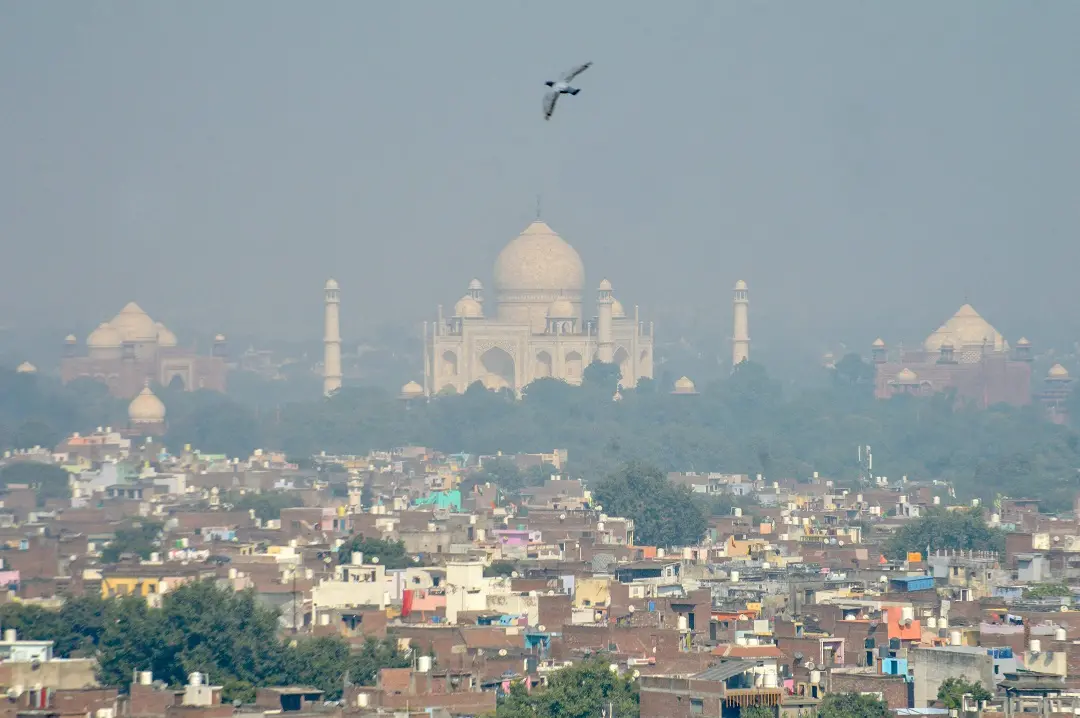
New Delhi: The air quality in Delhi continued to be categorised as "very poor" on Friday, despite the rampant use of firecrackers during Diwali celebrations the previous day. Above-normal temperatures and favourable winds played a role in dispersing pollutants.
A thick haze enveloped the national capital, with the Air Quality Index (AQI) recorded at 362 at 9 am, as many residents disregarded a citywide ban on firecrackers. However, conditions improved by 4 pm, with the 24-hour average AQI dropping to 339, according to data from the Central Pollution Control Board (CPCB).
Noise Pollution Spike
Data from the Delhi Pollution Control Committee (DPCC) indicated a rise in noise pollution levels from 6 pm to midnight on Diwali. Although a spike in pollution levels was anticipated due to firecracker use, the AQI did not reach the "severe" category.
"Despite the ban, firecrackers were burst in Delhi-NCR. However, the air quality did not reach the severe category as the winds helped improve the situation," said environmentalist Vimalendu Jha.
Potential for Increased Pollution
Looking ahead, Jha warned that pollution levels might spike in the coming days due to unfavourable weather conditions. On Friday, temperatures reached a maximum of 33.6 degrees Celsius, three degrees above normal, while the minimum temperature was 18.4 degrees Celsius, 2.3 degrees above normal.
Of the 40 weather-monitoring stations in the city, 32 recorded "very poor" air quality.
Areas with Very Poor Air Quality
The Sameer app, which provides hourly updates of the National AQI published by the CPCB, reported several areas in "very poor" condition, including:
- Anand Vihar: 385
- Ashok Vihar: 365
- Wazirpur: 366
- Mundka: 340
- Jahangirpuri: 361
An AQI reading between zero and 50 is considered "good," while readings above 400 are categorised as "severe."
Diwali Report Findings
The DPCC's report on Diwali highlighted that the AQI did not show significant improvement despite many residents flouting anti-pollution norms. The 24-hour average AQI rose from 328 on Thursday to 360 on Friday morning.
While PM2.5 levels decreased by 4% compared to last year’s Diwali, PM10 levels increased by 11%. PM2.5 refers to fine inhalable particles with diameters of 2.5 micrometres or smaller, while PM10 refers to particulate matter 10 micrometres or less in diameter.
Strong winds, reaching speeds of 16 km/h, and above-normal temperatures contributed to keeping the AQI in the "very poor" category, marking it as the second-cleanest day after Diwali since 2015. This year's clear skies stood in stark contrast to previous years, such as 2020 and 2021, when air quality severely deteriorated.
Surge in Fire-Related Incidents
The Delhi Fire Services (DFS) reported over 300 fire-related incidents on Diwali, the highest in 13 years. This increase was attributed to the extensive use of firecrackers. Hospitals in Delhi recorded more than 280 burn injury cases linked to firecrackers, with Safdarjung Hospital reporting the highest number at 117 cases.
Experts attributed the widespread flouting of the firecracker ban to gaps in enforcement, limited monitoring, and easy access to firecrackers in the National Capital Region (NCR).
Challenges in Enforcement
Despite the Delhi government's establishment of 377 enforcement teams and awareness campaigns, large-scale violations were reported across various neighbourhoods. Rajiv Kakria, convenor of Save Our City (SOC), stated that "the porous Delhi-NCR borders make it easy for people to buy firecrackers without any difficulty."
However, Environment Minister Gopal Rai acknowledged the efforts of many residents who refrained from using firecrackers, stating, "Thanks to the responsible actions of many residents who avoided using firecrackers, we managed to avoid a severe AQI reading."
Mahesh Palawat, vice president of meteorology and climate change at Skymet, remarked, "This year, pollution levels were not as high as anticipated. We expected the air quality to fall into the severe category, but winds started blowing from the northwest at a good speed, which dispersed pollutants."
With PTI inputs