Indian Navy neutralises unexploded missile warhead on Kochi-bound ship after mid-ocean blast
Kochi: The Indian Navy has successfully retrieved and neutralised a live missile warhead from a crude oil commercial ship bound for Kochi, following a mid-ocean hull blast near Oman late last month, an official announced Thursday.
The MT Olympic Life, a crude carrier sailing under the Marshall Islands registry with no Indian crew members onboard, was travelling from Fujairah in the United Arab Emirates to Kochi when an explosion tore through its hull on May 26 off the Omani coastline, according to the defence spokesperson.
The merchant ship subsequently alerted maritime authorities that unexploded military ammunition remained on board as it kept its course toward the southwest Indian coast.
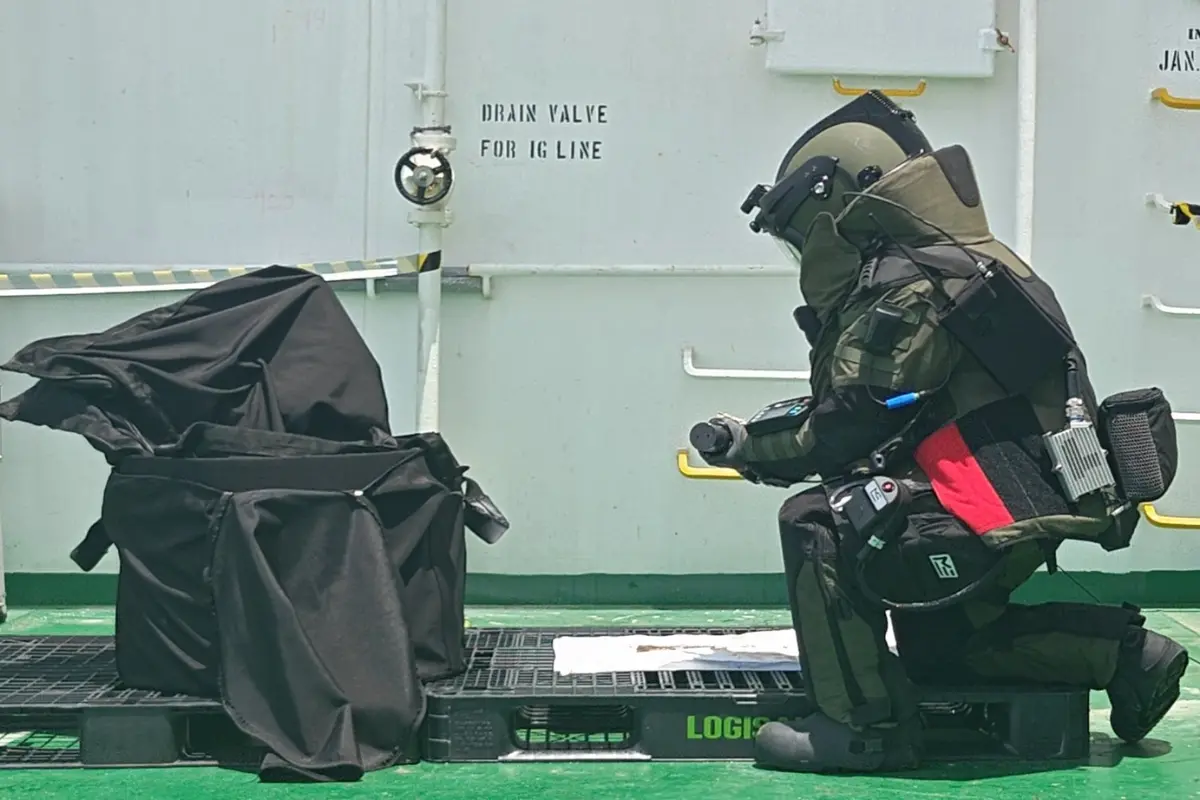
Upon receiving the distress notification via the Information Fusion Centre–Indian Ocean Region, the Indian Navy organised a rapid intervention response. The Kochi-based Southern Naval Command dispatched a specialised Explosive Ordnance Disposal (EOD) unit to board the vessel and gauge the security threat.
The naval team determined that a weapon projectile had breached the exterior hull of the ship, sliced through multiple internal structural walls, and come to rest inside a fuel storage compartment, according to an official press release.
Given the extreme volatility of having an unexploded warhead resting inside a fuel-laden area, the technical unit implemented a structured, multi-phase plan to guarantee the protection of the vessel, its maritime crew, and neighbouring harbour facilities, the spokesperson said.
Following rigorous safety checks, the bomb disposal team utilised advanced scanning and analysis tools to track down and isolate the weapon's firing mechanism. They then extracted the live warhead alongside related structural wreckage without further incident.
The recovered explosive material has since been shifted to a highly secure military site for guarded storage and comprehensive forensic analysis, the official statement noted.
Naval officials emphasised that the high-risk intervention highlighted the military branch's deep capabilities in handling live ordnance, its technical engineering strengths, and its seamless multi-agency integration during intricate high-seas crises.
With inputs from PTI