Darjeeling on the edge: 23 dead; roads cut off as landslides tear through hills
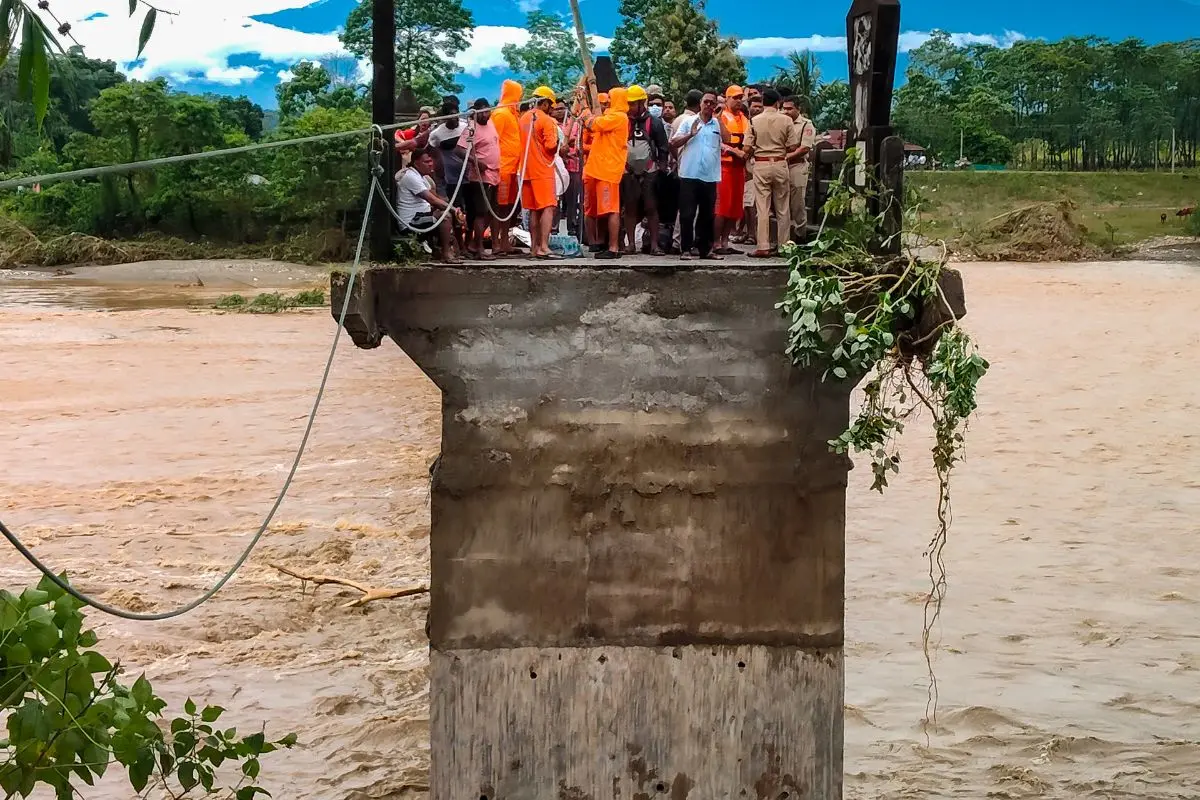
Darjeeling: The death toll from the devastating landslides that struck Darjeeling and neighbouring districts on Sunday has risen to 23, with officials warning that the number could climb further as rescue operations continue across the rain-battered region.
Triggered by relentless rainfall, the landslides have swept through several villages and tourist areas, isolating communities, destroying homes, and leaving roads impassable. What began as a grim toll of 18 on Sunday evening has now grown to include fatalities from additional sites across Darjeeling and Jalpaiguri districts, officials confirmed on Monday.
“Total number of deaths reported so far is 23, spanning across Mirik, Darjeeling and Jalpaiguri,” a National Disaster Response Force (NDRF) official said. The worst-hit area remains Mirik, where 11 people have been confirmed dead, followed by seven fatalities in other parts of Darjeeling district. Five more bodies were recovered from the Nagrakata area in Jalpaiguri.
The situation remains tense and fluid, with over 35 landslide points reported across the Darjeeling hills, according to Anit Thapa, Chief Executive of the Gorkhaland Territorial Administration (GTA). Entire slopes have collapsed, highways are buried in mud, and hundreds of tourists remain stranded after the holiday rush for Durga Puja turned into a nightmare.
Worst event since 2015
State officials described the crisis as the worst landslide event since 2015, which claimed nearly 40 lives.
North Bengal Development Minister Udayan Guha called the situation “alarming” and warned that the number of casualties “is likely to go up.” Many rescue efforts remain ongoing in inaccessible areas, including Dhar Gaon, Mirik Basti, and Jasbirgaon, where homes have been flattened by heavy mudslides.
Amid the chaos, the Mirik–Sukhiapokhri road, a key route for several hill settlements, remains blocked, and an iron bridge connecting Siliguri to the Darjeeling region has been severely damaged, severing access to vital areas.
West Bengal Chief Minister Mamata Banerjee, who held an emergency meeting in Kolkata on Sunday evening, described the calamity as “grave”, citing unusually heavy rain from upstream Bhutan.
“This disaster is unfortunate – natural calamities are beyond our control,” she told a news channel, adding that over 300 mm of rainfall was recorded in just 12 hours.
The Chief Minister is scheduled to visit North Bengal on Monday (6 October) and announced compensation for victims' families, as well as support for those injured and displaced. Relief camps have been set up, and stranded tourists have been promised safe passage out of the region.
Prime Minister Narendra Modi also expressed his condolences and said the situation was being “closely monitored.”
“Deeply pained by the loss of lives due to a bridge mishap in Darjeeling. Condolences to those who have lost their loved ones. May the injured recover soon,” he posted on X.
IMD issues further alerts
Meanwhile, the India Meteorological Department (IMD) has issued a red alert for parts of North Bengal, warning of more landslides and flash floods as rain continues to batter the saturated hills. The alert covers Darjeeling, Kalimpong, Jalpaiguri, and Cooch Behar, with warnings that conditions remain hazardous.
While the rescue effort intensifies, the disaster has once again thrown a harsh spotlight on the fragile terrain of the Darjeeling hills, frequently at the mercy of extreme weather. Comparisons have already been drawn to the catastrophic 1968 deluge, which claimed nearly 1,000 lives — the region’s deadliest in living memory.
Darjeeling MP Raju Bista has urged the Chief Minister to declare the landslides a “state-level disaster.” Meanwhile, opposition leaders including Mallikarjun Kharge and Rahul Gandhi have called on the Centre to extend immediate assistance.