Congress turns up heat on EC: PM, CEC resignations among CWC demands
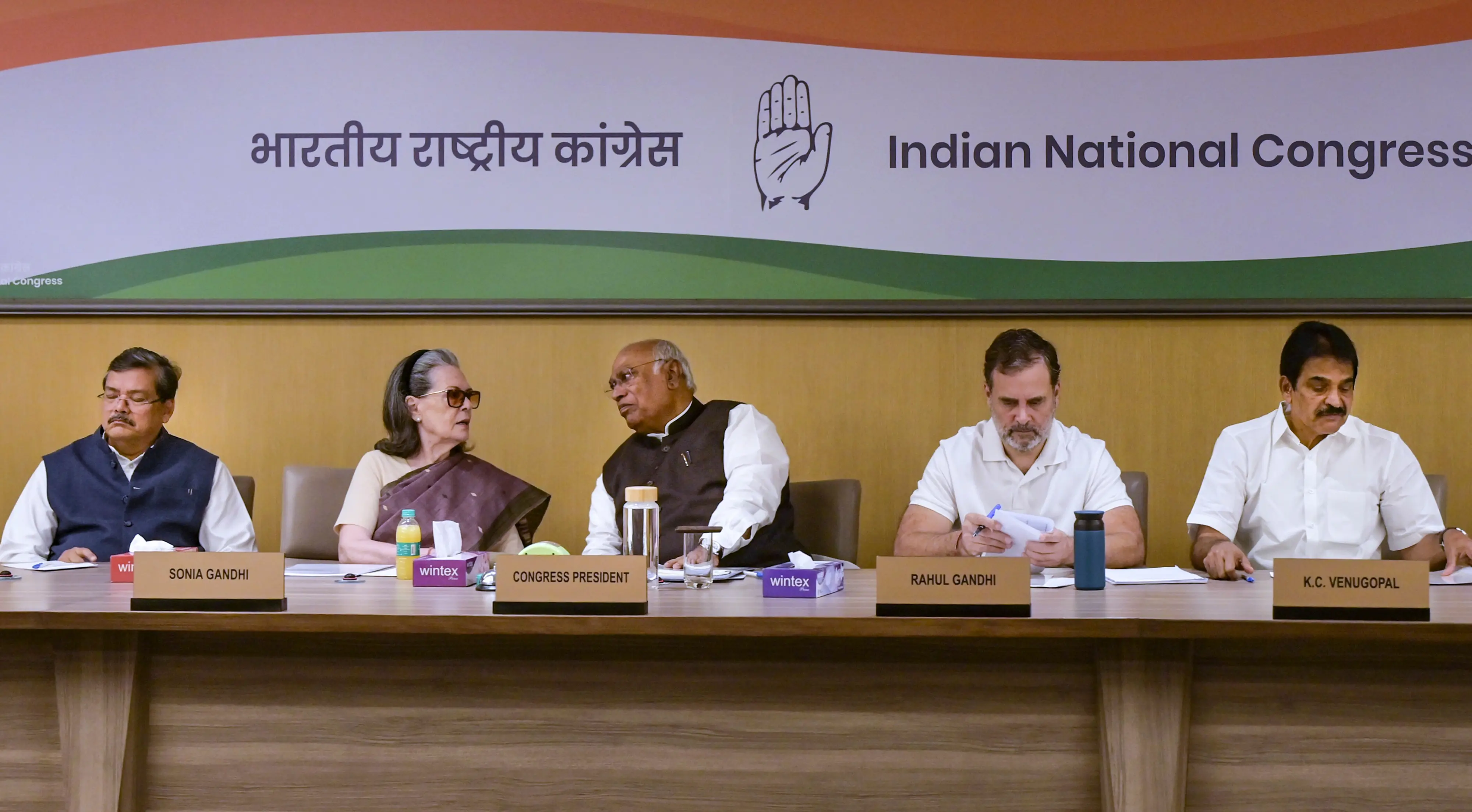
New Delhi: The Congress Working Committee (CWC) on Tuesday intensified its opposition to the Election Commission’s Special Intensive Revision (SIR) of electoral rolls, adopting a set of demands that include the resignation of Chief Election Commissioner Gyanesh Kumar, suspension of the SIR exercise and restoration of 13.3 crore names that the party says were removed from voter lists.
The CWC meeting in New Delhi, chaired by Congress president Mallikarjun Kharge, lasted around two and a half hours and was attended by senior leaders including Sonia Gandhi, Rahul Gandhi, Priyanka Gandhi Vadra, KC Venugopal and Jairam Ramesh. The meeting came amid a growing political dispute over the electoral-roll revision process and reports of differences within the Election Commission.
What are Congress's main demands?
The CWC resolution centred on several demands related to the electoral rolls and the functioning of the Election Commission:
- CEC's resignation: Congress demanded the immediate resignation of Chief Election Commissioner Gyanesh Kumar.
- SIR suspension: The party called for the immediate suspension of the Special Intensive Revision, citing concerns over the integrity and transparency of the process.
- Restoration of voter names: Congress demanded restoration of the 13 crore 30 lakh names it says were removed from electoral rolls.
- PM's resignation: The party also demanded Prime Minister Narendra Modi’s resignation over its allegations concerning the electoral process.
- Disclosure of electoral-roll data: Congress wants complete information on major changes made to electoral rolls to be made public.
- Right to appeal: It has demanded that voters whose names are removed should be informed and given an opportunity to challenge the deletion.
- Independent inquiries: The party wants independent, time-bound inquiries wherever evidence of serious discrepancies emerges.
Kharge seeks greater transparency
Addressing the CWC, Mallikarjun Kharge called for greater transparency in the electoral process and access to information concerning changes to voter lists.
He demanded that political parties be provided electoral rolls and relevant data in a simple format and within a reasonable timeframe. He also said voters affected by deletions should receive information about the decision and have an opportunity to appeal.
The demands come as the Election Commission's voter-verification exercise has become a major political issue, particularly because of the large number of names removed from draft electoral rolls.
Why has the SIR exercise become controversial?
The SIR is intended to verify electoral rolls and identify entries that may no longer be eligible. However, the current exercise has faced political opposition because of the scale of deletions and questions over the process used to verify voters.
Reports have also highlighted objections raised by Election Commissioners Sukhbir Singh Sandhu and Vivek Joshi concerning aspects of the SIR exercise, voter registration procedures and electoral-roll data systems.
The Election Commission has rejected the suggestion that these differences amounted to institutional dissent affecting final decisions. It has said that individual views and observations are part of internal deliberations and that decisions of the Commission, including those relating to SIR, were taken unanimously.
13.3 crore names at the centre of the row
One of the most significant demands from Congress concerns the restoration of 13.3 crore names that the party says were removed from electoral rolls during the revision process.
The figure has become a central point in the political debate. The Election Commission's position is that electoral-roll revision can involve legitimate deletions, including cases involving death, migration and duplicate entries. The dispute therefore also concerns how individual deletions are identified and whether eligible voters have sufficient opportunities to establish their eligibility and seek restoration.
Congress, meanwhile, has argued that the scale of the deletions requires greater disclosure and scrutiny before the exercise proceeds.
Form 6 and first-time voters
Another issue in the dispute concerns changes connected with Form 6, which is used for applications for inclusion in the electoral roll.
Congress has raised concerns about additional information sought from applicants and its potential implications for first-time voters. The Election Commission has defended the changes and said the procedures have legal backing.
The issue is particularly relevant to young voters who are applying to be added to electoral rolls for the first time.
Congress announces nationwide protests
Following the CWC meeting, Congress general secretary KC Venugopal said the party would intensify peaceful demonstrations at the state and district levels.
The party also plans to coordinate with other opposition parties. An INDIA bloc meeting scheduled for Wednesday is expected to discuss the wider electoral-roll controversy and a possible joint strategy.
Opposition parties have already organised protests in several cities over the SIR process and the demand for Kumar's resignation.
Election Commission's position
The Election Commission has maintained that the SIR process follows established legal and administrative procedures. It has also rejected claims that reported differences among Election Commissioners demonstrate a breakdown in the functioning of the institution.
The poll panel has said that differing views during internal deliberations do not necessarily represent dissent over final decisions and has maintained that its SIR decisions were approved unanimously.
The Commission has also introduced measures intended to assist voters during the revision process, including additional time for claims and objections, verification measures and help desks.
What happens next?
The dispute is now moving beyond the CWC meeting towards a wider opposition campaign. Congress has said it will continue protests and seek coordination with INDIA bloc parties.
At the same time, opposition parties are considering further parliamentary action concerning the Chief Election Commissioner, while legal challenges relating to the SIR process and electoral-roll deletions are also pending before courts.
The key issues in the coming weeks are likely to include the basis for large-scale voter deletions, the safeguards available to affected voters, access to electoral data, the functioning of the Election Commission and the legal questions surrounding the SIR exercise.