CM Vijay, Udhayanidhi Stalin engage in heated exchange inside TN Assembly over Mekedatu dam
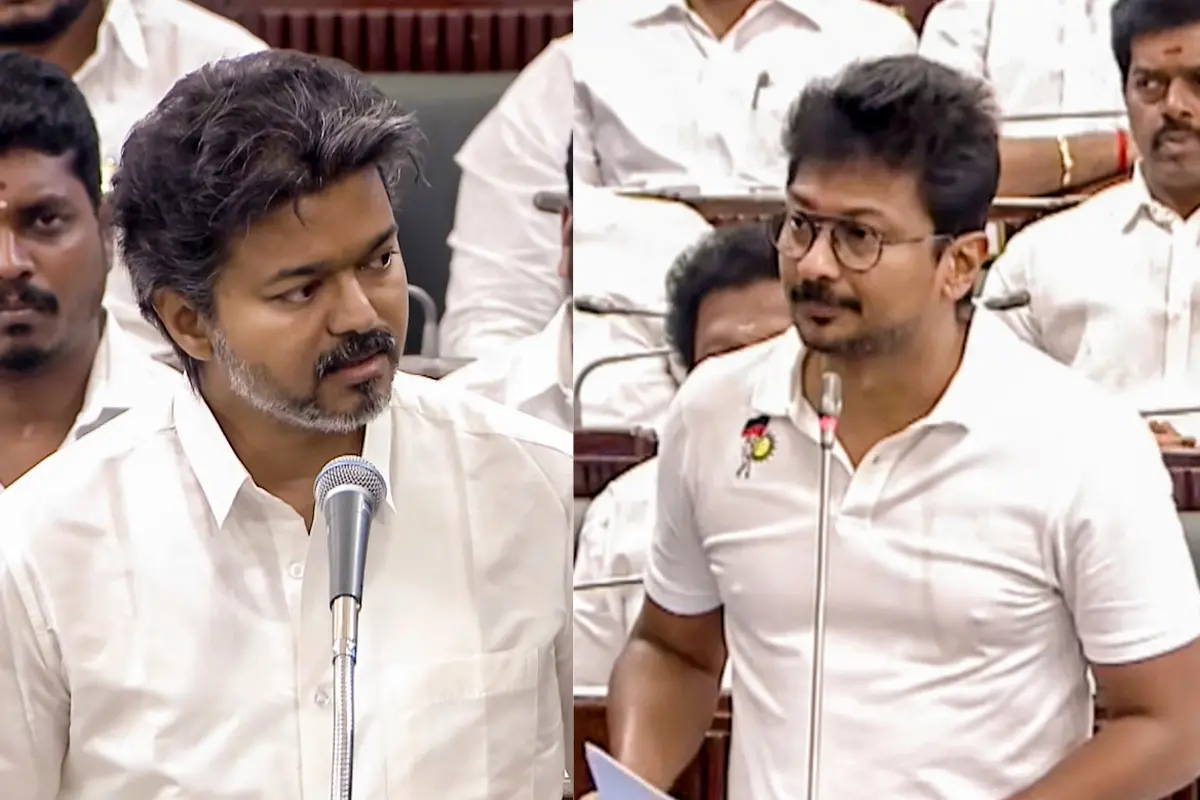
Chennai: Tamil Nadu Chief Minister C. Joseph Vijay has ruled out convening an all-party meeting on the contentious Mekedatu dam project, asserting that his government will address the Cauvery dispute through legal and constitutional channels while refusing to "indulge in cheap politics."
Responding to the Opposition's demand for a united political meeting on Karnataka's proposed Mekedatu balancing reservoir across the Cauvery river, Vijay said the state had already conveyed its stand to Prime Minister Narendra Modi and would not compromise on Tamil Nadu's water rights.
"There is no need to convene an all-party meeting. Please do not play politics on the Mekedatu dam issue. Our government has already communicated its position to the Prime Minister. We will not compromise on our rights regarding the Cauvery water issue or the Mekedatu project," the Chief Minister said while addressing the Tamil Nadu Assembly on Friday.
He added that the government was committed to pursuing the matter through legal means and urged political parties not to view the issue through the prism of electoral gains.
The remarks come amid a heated political exchange in the state after Leader of Opposition Udhayanidhi Stalin questioned the government's handling of the Mekedatu issue and demanded an all-party meeting. Vijay's comments also follow recent controversy surrounding Udhayanidhi's arrest over remarks made during the ongoing Cauvery dispute.
Why the Mekedatu project remains contentious
The Mekedatu Balancing Reservoir-cum-Drinking Water Project has been proposed by Karnataka across the Cauvery river, around 110 km from Bengaluru.
Karnataka maintains that the reservoir is intended primarily to supply drinking water to the Bengaluru metropolitan region, store surplus monsoon flows and generate about 400 MW of hydroelectric power. The project currently envisages a live storage capacity of 59.46 TMC (Thousand Million Cubic feet).
However, the proposal has undergone significant changes since the Detailed Project Report (DPR) was first submitted. Karnataka recently revised the DPR, increasing the proposed consumptive use of Cauvery water from 4.75 TMC to 6.95 TMC, citing Bengaluru's growing population and rising water demand. The revised project cost has also increased from around ₹9,000 crore to nearly ₹16,000 crore.
CWC asks Karnataka to prepare fresh DPR
The revised proposal has prompted the Central Water Commission (CWC) to ask Karnataka to prepare an entirely fresh DPR instead of processing the earlier one.
The Commission observed that the project now includes substantial changes, including revised water requirements, additional infrastructure and updated technical parameters. It also questioned Karnataka's calculations for reservoir storage, noting that some estimates were based on outdated assumptions and that the proposed consumptive use appeared higher than what was permitted under the Supreme Court's Cauvery water allocation.
Until a revised DPR is submitted and approved, the project cannot move forward. It also requires wildlife, forest and environmental clearances before construction can begin.
Tamil Nadu's objections
Tamil Nadu has consistently opposed the project, arguing that a large upstream reservoir near the inter-state border could affect downstream river flows and undermine the Cauvery water-sharing arrangement laid down by the Cauvery Water Disputes Tribunal and modified by the Supreme Court in 2018.
The state has urged the Central Water Commission not to clear the proposal, maintaining that Karnataka already possesses sufficient storage infrastructure to meet Bengaluru's drinking water needs.
Environmental groups have also raised concerns because the proposed reservoir falls within the ecologically sensitive Cauvery Wildlife Sanctuary, where thousands of hectares of forest and critical wildlife habitat could be affected if the project is implemented.
With the political debate intensifying in Tamil Nadu and the technical approval process still incomplete, the Mekedatu project remains one of the most closely watched inter-state river disputes in the country.
Tamil Nadu seeks long-term water solution
Even as it continues to oppose Karnataka's Mekedatu project, the Tamil Nadu government has simultaneously urged the Centre to fast-track another major water initiative.
In a letter to Prime Minister Narendra Modi on Wednesday, Vijay requested the Union government to expedite the Godavari-Cauvery-Gundar river linking project and declare it a project of national importance.
The Chief Minister said Tamil Nadu faces a structural shortage of surface water and depends on neighbouring states for more than 30 per cent of its water requirements. He warned that groundwater resources in many parts of the state had already been overexploited despite conservation measures.
Describing the river-linking project as the state's most significant long-term water security initiative, Vijay said it would help transfer surplus floodwaters from water-rich basins to drought-prone regions of southern Tamil Nadu while benefiting Telangana, Andhra Pradesh, Karnataka and Tamil Nadu.
He also proposed creating a dedicated special purpose vehicle involving the Centre and beneficiary states to ensure coordinated implementation and timely completion of the project.