Canada alleges Home Minister Amit Shah ordered campaign against Sikh separatists
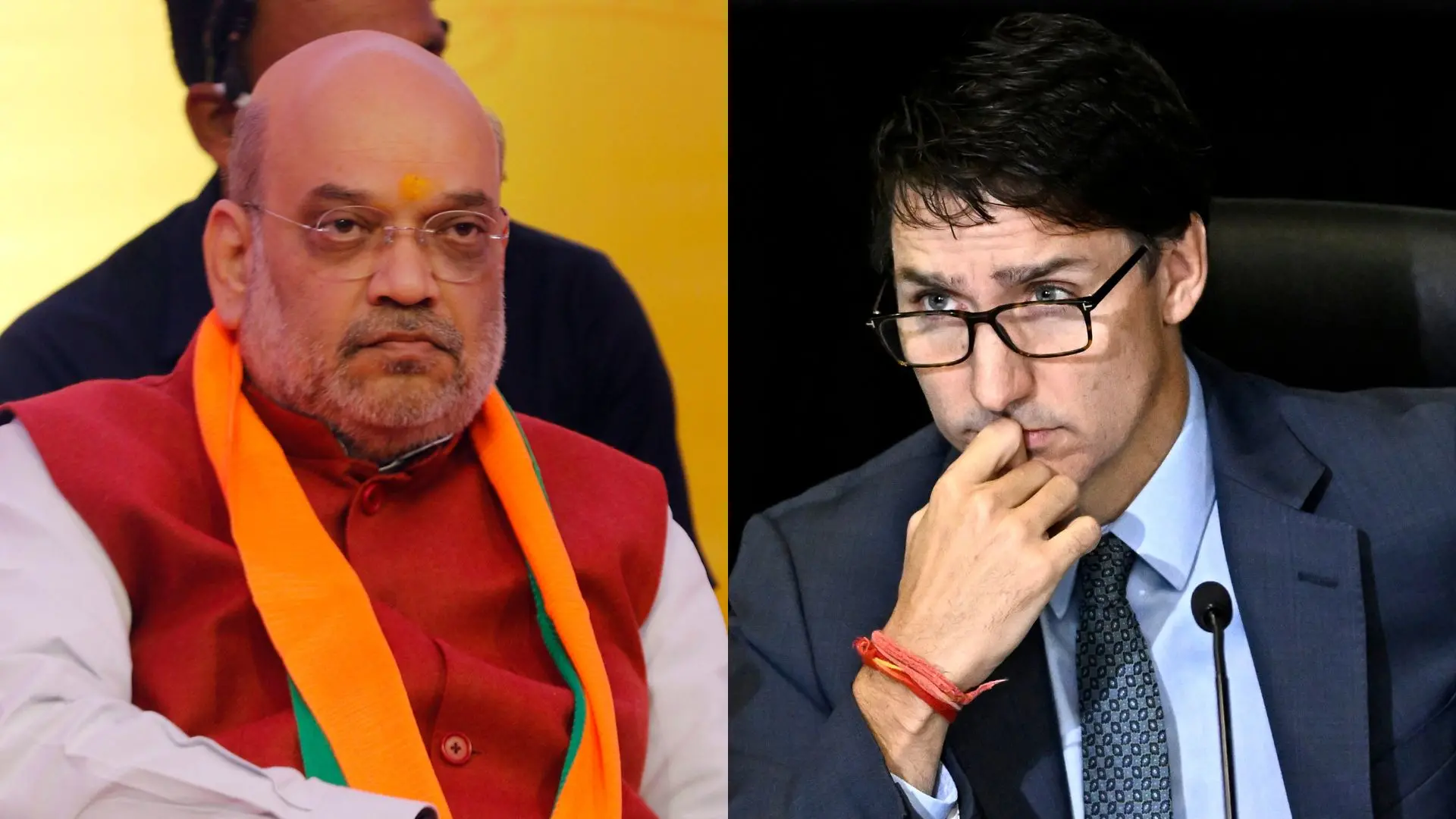
Ottawa, Ontario: A Canadian official claimed on Tuesday that Indian Home Minister Amit Shah directed a campaign of violence and intimidation against Sikh separatists in Canada. Deputy Foreign Affairs Minister David Morrison informed members of Parliament's national security committee that he confirmed Shah’s name to The Washington Post, which first reported these allegations.
“The journalist called me and asked if it was that person. I confirmed it was that person,” Morrison told the committee. However, Morrison did not disclose how Canada obtained this information about Shah's involvement.
Prime Minister Justin Trudeau previously stated that Canada had credible evidence linking agents of the Indian government to the murder of Canadian Sikh activist Hardeep Singh Nijjar in British Columbia in June 2023. Canadian authorities have said they shared this evidence with India, but Indian officials have repeatedly denied receiving any proof and have dismissed the claims as absurd. India's embassy in Ottawa did not respond immediately to requests for comment on the allegations against Shah.
On October 14, Canada expelled the Indian high commissioner and five other diplomats, alleging they were involved in multiple cases of intimidation and violence aimed at suppressing the movement for an independent Sikh state known as Khalistan.
Canada is not alone in its accusations. The U.S. Justice Department recently announced criminal charges against an Indian government employee related to a failed plot to kill a Sikh separatist leader living in New York City. Vikash Yadav, accused of orchestrating the New York plot from India, faces murder-for-hire charges connected to a series of politically motivated killings planned in both the U.S. and Canada.
Nathalie Drouin, Trudeau's national security adviser, testified that Canada has evidence showing the Indian government gathered information on Indian nationals and Canadian citizens through diplomatic channels and other means. This information was reportedly sent to New Delhi, where it was linked to a criminal network associated with Lawrence Bishnoi, currently imprisoned in India for various violent crimes.
Drouin explained that before the Royal Canadian Mounted Police (RCMP) publicly disclosed that Indian diplomats were under investigation, there was an effort to work with India to ensure accountability. A meeting took place with India’s national security adviser, Ajit Doval, in Singapore two days prior. Drouin noted that the decision to go public was made when it became clear that India would not cooperate on accountability measures, including waiving diplomatic immunity for the individuals of interest.
The RCMP stated that they felt compelled to make the allegations public due to threats to public safety. In response, the Indian government expelled six Canadian diplomats.
Hardeep Singh Nijjar, 45, was shot and killed in his pickup truck after leaving the Sikh temple he led in Surrey, British Columbia. Four Indian nationals living in Canada have been charged with his murder and are awaiting trial.
Drouin and Morrison appeared as witnesses alongside the Royal Canadian Mounted Police Commissioner Mike Duheme and the head of Canada’s spy service during the parliamentary
Agency