India’s fastest multirotor UAV? BITS startup drone hits 498 km/h
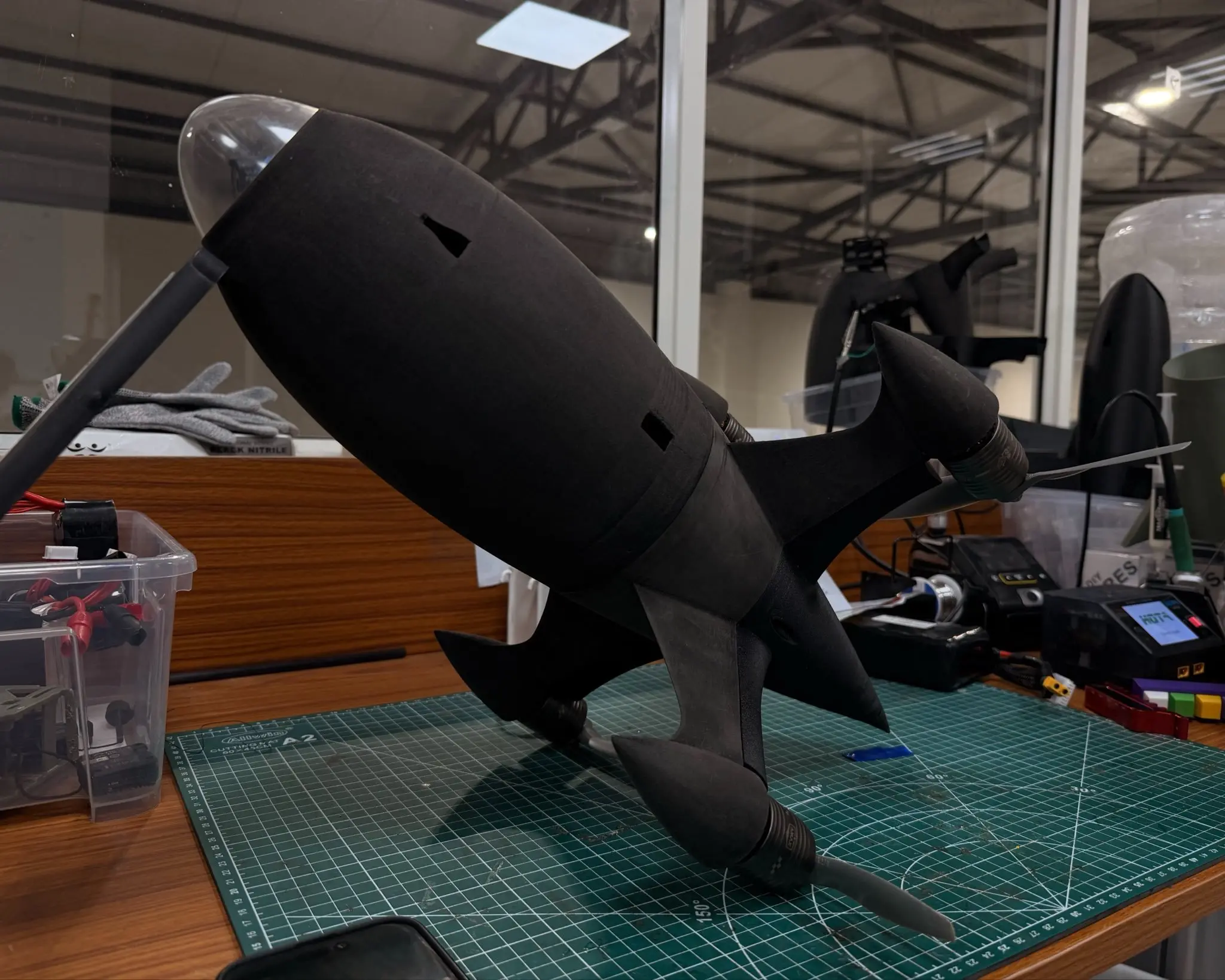
New Delhi: Defence technology startup Apollyon Dynamics, incubated at BITS Pilani's Hyderabad campus, has entered the India Book of Records after its electric interceptor, Ahuti Mk II, clocked a certified top speed of 498 km/h, officials said.
The achievement has been recognised as the maximum speed recorded by a multirotor unmanned aerial vehicle (UAV), according to the company.
Apollyon Dynamics claimed that based on currently available public data, no other multirotor aircraft in South Asia has recorded a speed matching or exceeding 498 km/h.
Founded by Jayant Khatri and Sourya Choudhary and incorporated in 2025, the startup develops autonomous aerial and unmanned systems for the Indian armed forces. It has also fielded its systems with the Indian Army.
The record-setting Ahuti Mk II was developed by Aman Virani (Shady), Manas Vichare and Ishaan Suri.
The aircraft is an upgraded version of the original Ahuti drone, which reached a speed of around 300 km/h in 2025. The team subsequently redesigned the platform for use as a high-speed interceptor intended to counter hostile drones and loitering munitions.
The development pushed its maximum speed to 498 km/h in less than a year, representing an increase of nearly 200 km/h, or about 66 per cent, over the original platform.
"Ahuti Mk II was developed with a specific focus on high-speed interception, which required us to rethink the aircraft's design and performance parameters. Reaching a certified top speed of 498 km/h is an important validation of the engineering approach and the work undertaken by the team," Khatri, one of the co-founders, said.
"The recognition by the India Book of Records marks a milestone in the development of Ahuti Mk II and reflects the engineering and testing undertaken by the team," he added.
Choudhary said the progression from approximately 300 km/h with the original Ahuti in 2025 to 498 km/h with the upgraded version involved extensive testing, repeated iterations and technical refinement.
"The development of Ahuti Mk II is an example of how an academic and entrepreneurial ecosystem can support the translation of engineering ideas into real-world applications. We are pleased to see the work emerging from the BITS Pilani Hyderabad Campus ecosystem progress from development and testing to a recognised achievement in unmanned systems," said V Ramgopal Rao, Group Vice Chancellor, BITS Pilani.
The India Book of Records, established in 2006, documents notable achievements by individuals and organisations across the country.