Army Hospital R&R performs AFMS's first robotic brainstem stereotactic biopsy
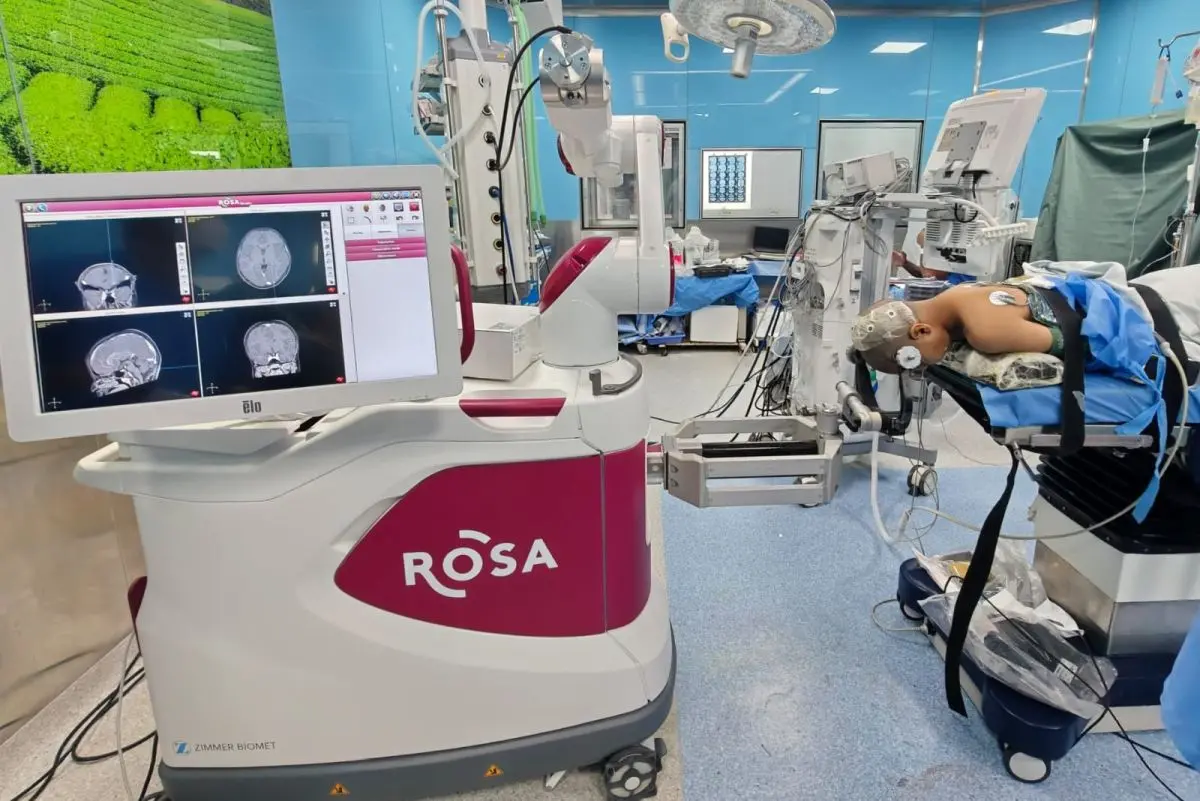
The Indian Army's flagship Army Hospital (Research & Referral) in New Delhi has notched up a major medical milestone, with its Neurosurgery Department successfully performing the Armed Forces Medical Services' first brainstem robotic stereotactic brain biopsy -- a highly delicate procedure that pushes the frontier of military neurosurgical care.
Army Hospital R&R, the apex tertiary-care facility of the Armed Forces based at Subroto Park, is widely regarded as the premier military hospital in the country, handling complex cases from across the armed forces. The successful completion of a brainstem robotic stereotactic brain biopsy there marks the introduction of state‑of‑the‑art robotic guidance into one of neurosurgery’s most challenging and high‑risk territories.
Stereotactic brain biopsy is a minimally invasive technique used to sample deep‑seated brain lesions through a precisely planned trajectory, and the brainstem -- which controls vital functions like breathing, heart rate and consciousness -- is considered one of the most sensitive and unforgiving regions to operate on.
International studies have shown that stereotactic biopsies of brainstem lesions, when done with modern techniques, can achieve diagnostic yields close to 97 per cent with very low rates of permanent neurological deficits, underscoring both the complexity and the value of such procedures.
Why robotic stereotaxy matters
Robotic stereotactic systems combine pre‑operative imaging, computer planning and robotic arm guidance to help neurosurgeons reach small, deep or otherwise inaccessible targets in the brain with sub‑millimetre accuracy.
Global reviews of robot‑assisted stereotactic brain biopsy have found diagnostic biopsy rates ranging from 75 to 100 per cent and average target accuracy on the order of 1–4.5 mm, with very low rates of procedure‑related complications when used in experienced centres.
For brainstem lesions, where even slight deviations can injure critical tracts and nuclei, robotic guidance adds an extra layer of precision and stability over traditional frame‑based or freehand approaches.
By bringing this technology into the AFMS ecosystem, Army Hospital R&R has effectively aligned its neurosurgical capabilities with best‑practice standards seen in leading civilian and military hospitals around the world.
Building on a record of complex brainstem work
This is not the first time Army Hospital R&R has broken new ground in brainstem‑related neurosurgery. In 2025, the hospital’s neurosurgery and ENT teams drew national attention after performing a rare auditory brainstem implant on a 1.8‑year‑old child of a serving soldier, a life‑changing procedure for a condition known as Michel aplasia, in which key structures of the inner ear are absent.
That surgery demonstrated the hospital’s ability to work safely in and around the brainstem in a tiny child, using advanced neuro‑otological techniques and implant technology.
Implications for soldiers and veterans
For serving personnel and veterans, the introduction of robotic stereotactic brainstem biopsy means better access to cutting‑edge diagnostics for deep‑seated brain and brainstem lesions that might otherwise require open surgery or be considered inoperable.
Stereotactic biopsy allows doctors to obtain tissue, confirm a diagnosis, and tailor treatment plans — whether radiotherapy, chemotherapy or targeted therapies — without the morbidity of major craniotomies.
In operational terms, this capability supports faster and more accurate management of neurological conditions that can affect combat readiness or long‑term health, including brainstem tumours, demyelinating lesions and certain infections. It also strengthens AFMS’s ability to retain complex cases within its own network, reducing dependence on external facilities.