‘Stop tarnishing my son’s name’: Father of Air India pilot killed in Ahmedabad crash seeks justice
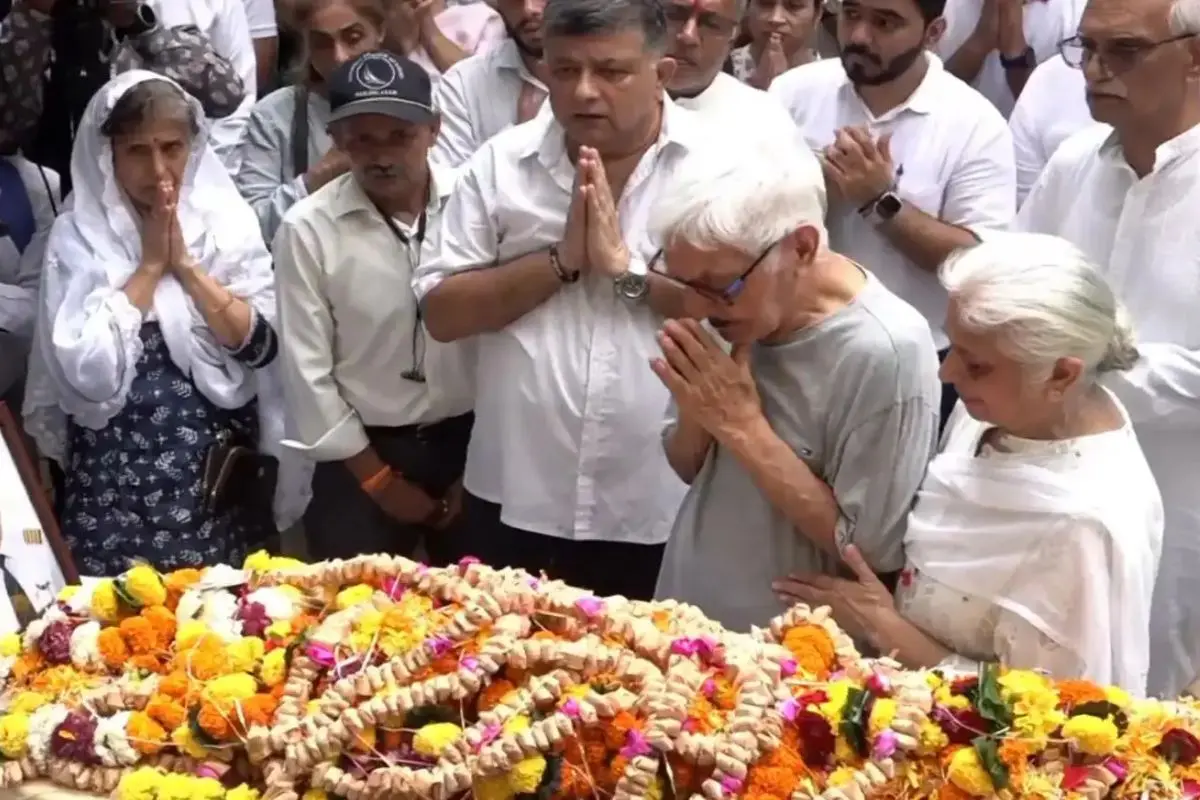
Perturbed by what he calls a “lack of credibility and transparency” in the ongoing investigation into the Air India flight AI171 crash, the father of the deceased pilot, Captain Sumeet Sabharwal, has approached the Supreme Court demanding a judicially monitored inquiry into the tragedy that claimed 260 lives, including 241 passengers.
The writ petition, jointly filed on October 10 by Pushkaraj Sabharwal (91) and the Federation of Indian Pilots (FIP), urges the top court to constitute a Court-Monitored Committee or a Court of Inquiry headed by a retired Supreme Court judge with independent aviation and technical experts.
It further demands that all prior investigations by the Aircraft Accident Investigation Bureau (AAIB) be declared closed and that all materials, data, and records be handed over to the proposed judicial committee.
The petition alleges that the AAIB’s investigation has been compromised by bias and a “pilot-blame narrative,” failing to thoroughly investigate possible design-level faults in the Boeing 787 Dreamliner.
It also claims that the investigation’s conduct violates India’s international obligations under ICAO Annex 13 on fair and independent accident inquiries.
Pushkaraj Sabharwal—father of Captain Sumeet Sabharwal, who was piloting the ill-fated Boeing 787-8 Dreamliner operating Air India flight AI171 from Ahmedabad to London Gatwick—had earlier written to the Civil Aviation Secretary and the AAIB Director General demanding a formal probe under Rule 12 of the Aircraft (Investigation of Accidents and Incidents) Rules, 2017. This rule empowers the Centre to order a formal investigation if deemed expedient.
In his earlier letter dated August 29, Sabharwal expressed anguish over “selective leaks” to the media, suggesting that his son was under psychological distress or contemplating suicide.
“These innuendos have deeply affected my health and have caused irreparable damage to my son’s reputation,” he wrote, adding that such claims were baseless and ignored his son’s spotless 25-year flying record, including over 15,000 flight hours and his role as a Line Training Captain on the Boeing 787.
Sabharwal also described the AAIB’s preliminary report dated July 12 as “deficient, diversionary, and discrepant,” alleging that it downplayed key evidence while offering “copious clean chits” to the aircraft manufacturer.
The preliminary AAIB findings revealed that fuel supply to both engines was cut off within a second of each other shortly after takeoff from Ahmedabad, leading to chaos in the cockpit.
The report quotes one pilot asking the other, “Why did you cut off?” to which the other replies, “I did not.”
Amid growing public speculation, the AAIB had clarified that it was too early to draw definitive conclusions and that the final report would identify the root causes, urging restraint in spreading unverified theories.