Ahmedabad Air India crash sparks Civil Aviation crackdown on high-rise hazards near airports
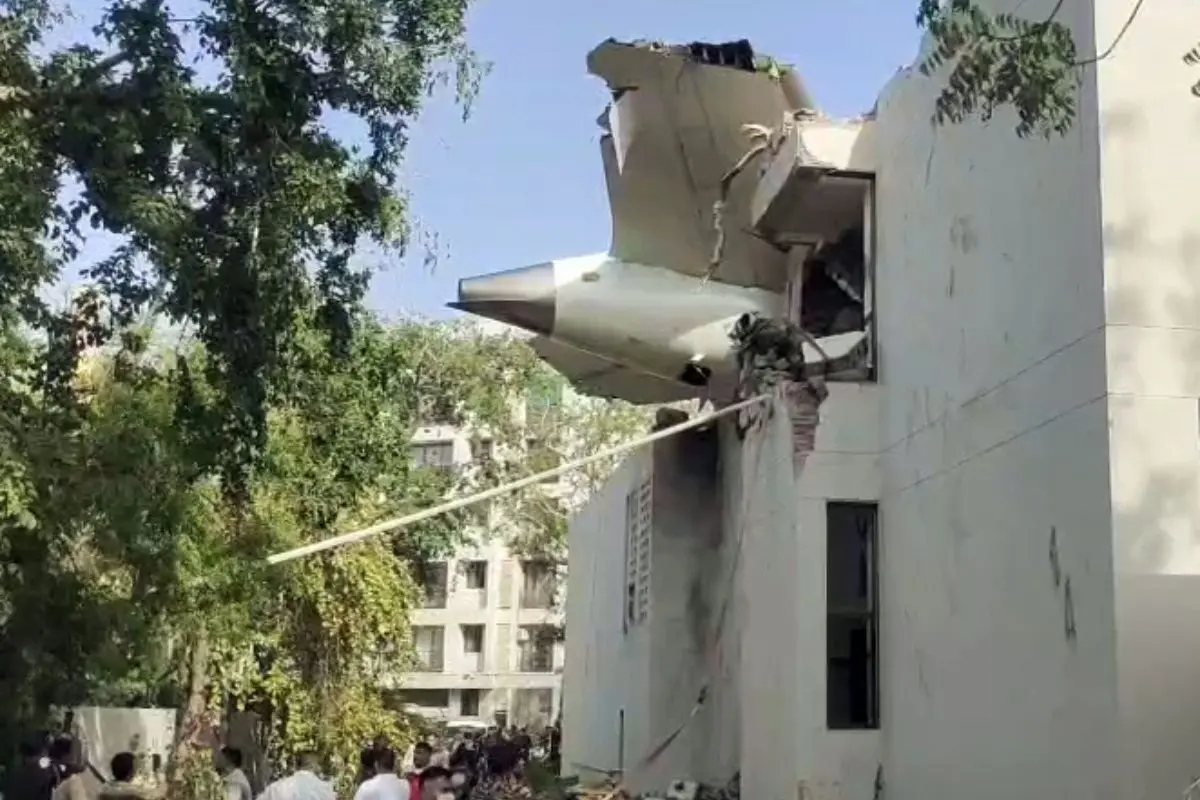
New Delhi: In the wake of the devastating Air India crash in Ahmedabad that killed 241 people, India’s Ministry of Civil Aviation has released a set of draft rules to swiftly identify and remove structures that pose risks to aircraft in flight paths.
Draft rules issued after Ahmedabad crash
The draft legislation, titled Aircraft (Demolition of Obstructions) Rules, 2025, was issued on 18 June and will take effect upon its publication in the Official Gazette. The move is seen as a direct response to the 12 June tragedy, where a London-bound Boeing 787-8 Dreamliner collided with a building shortly after takeoff from Sardar Vallabhbhai Patel International Airport.
The incident claimed the lives of 241 of the 242 people on board, including former Gujarat Chief Minister Vijay Rupani. The aircraft crashed into a hostel complex at BJ Medical College in the city’s Meghani Nagar area, raising urgent questions about obstacle clearance in aerodrome zones.
Focus on height violations near aerodromes
The proposed rules empower aerodrome authorities to act against buildings or trees that violate permissible height limits in notified zones.
The draft states, "Where any notification has been issued by the Central Government under sub-section (1) of section 18 of the Act and the officer-in-charge of the concerned aerodrome has reason to believe that any building or tree exists in violation of the provisions of the aforesaid notification, he shall serve a copy of the notification on the owner of the building or tree, as the case may be, in accordance with the procedure laid down in sub-section (3) of said section."
Owners given 60 days to respond to notices
Under the provisions, aerodrome officers will be authorised to issue formal notices to owners of violating structures. These owners will be required to submit relevant information — such as building dimensions and site plans — within 60 days. If no response is received, authorities may take corrective action, including partial or full demolition.
"The officer-in-charge of the concerned aerodrome shall forthwith send a report of such violation to the Director General, or any officer authorised by him in this behalf," the draft further states.
Officers empowered to inspect properties
To ensure accuracy before enforcement, aerodrome officers can conduct on-site inspections during daylight hours, provided reasonable prior notice is given. Property owners are required to assist during these inspections.
"Before forwarding the details to the Director General, the officer-in-charge of the aerodrome shall satisfy himself about the correctness of the details and for that purpose, he shall be empowered to enter the premises in question and carry out physical verification of the dimensions of the building or tree, as the case may be, during daylight hours and with reasonable prior notice to the owner, who shall be duty bound to extend full cooperation during such physical verification," it adds.
Appeal and compensation process outlined
In cases where violations are confirmed and no corrective action is taken, the matter will be escalated to the District Collector, who must ensure that demolition or trimming is carried out in line with official orders. The process will follow the existing framework for removing unauthorised constructions.
Those affected by enforcement actions will have the right to appeal through the First or Second Appellate Officer. Appeals must be submitted in the prescribed format, accompanied by supporting documents and a fee of ₹1,000. Compensation, as provided under section 22 of the Bharatiya Vayuyan Adhiniyam, 2024, will be granted only to owners who have complied with orders. Newly constructed non-compliant structures after the issuance of government notification will not qualify for compensation.
The Civil Aviation Ministry has invited the public to submit objections or suggestions within 20 days of the draft's publication. Feedback can be addressed to the Director-General of Civil Aviation.
(With inputs from ANI)