‘The Paradise’ movie review: Nani delivers a brutally heartwarming tale of survival
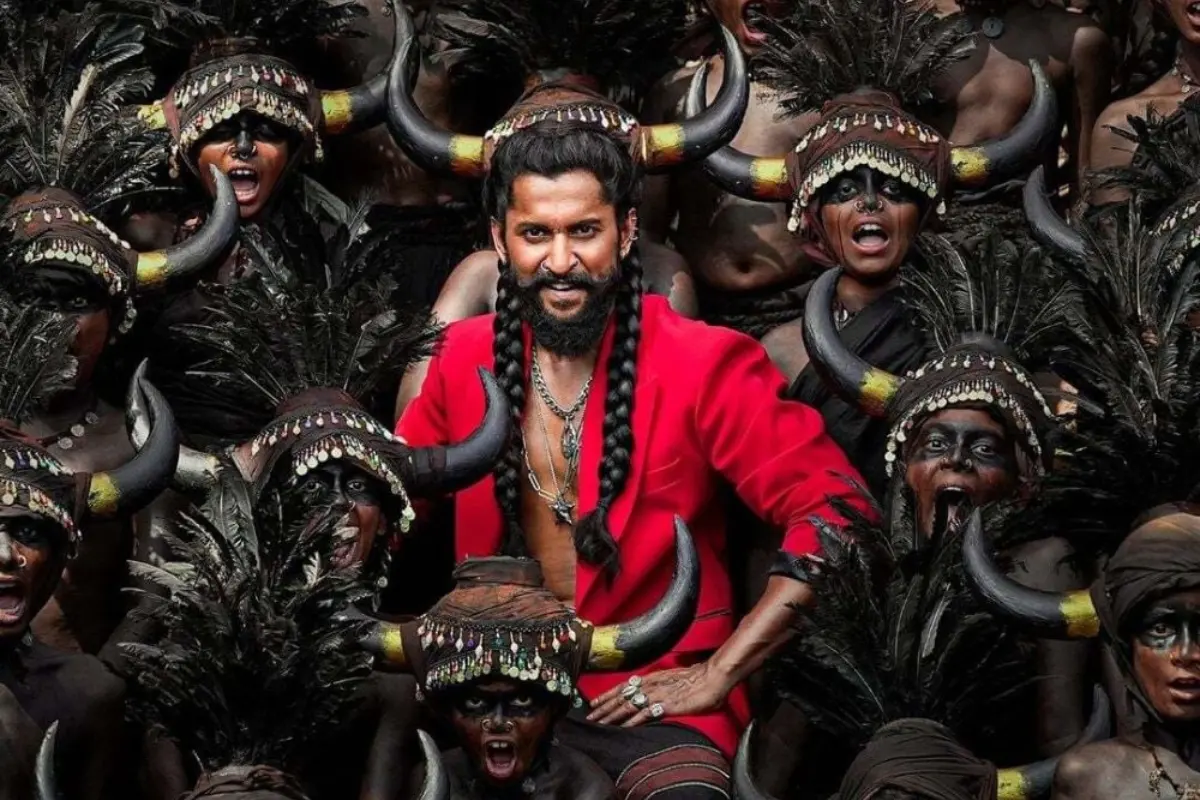
There is a distinct world waiting to be discovered in ‘The Paradise’. From its grim landscapes and striking production design to its bursts of violence and simmering emotional tension, Srikanth Odela’s film is more than a conventional action drama. The result is ambitious, visually arresting and occasionally uneven, but it remains a decent watch, particularly for its performances, atmosphere and big-screen moments.
Starring Nani as Jadal, ‘The Paradise’ is set in post-Independence Secunderabad and follows a marginalised community living under the control of Malik (Mohan Babu). The story revolves around oppression, survival and the desire to break free from a system that has kept an entire community powerless. At the centre of it is Jadal, whose relationship with his mother Samakka (Sonali Kulkarni) gives the otherwise brutal narrative an emotional anchor.
The film, released on September 24, is the second collaboration between Nani and Srikanth Odela after ‘Dasara’, and the director once again opts for a world that feels markedly different from mainstream commercial cinema. While the screenplay occasionally loses focus under the weight of its many themes, there is enough craft and conviction here to make the journey worthwhile.
A gripping first half sets the tone
The first half is where ‘The Paradise’ is at its most effective. Odela takes his time establishing the community, its harsh circumstances and the people who inhabit this world. Rather than rushing towards the action, the film allows the tension to build gradually.
That slow-burn approach works because the setting itself becomes an important part of the storytelling. The production design gives the film a distinctive identity, while the cinematography makes the surroundings feel harsh, lived-in and claustrophobic. Several compositions and visual choices add texture to the story without making it feel like a routine commercial entertainer.
The relationship between Jadal and Samakka is another strong element. Their emotional bond gives the film a human dimension amid the brutality surrounding them. The mother-son portions are among the sequences that leave a lasting impression, particularly when the film allows their relationship to take centre stage.
The introduction of other characters, including Subbu, also expands the narrative and creates additional layers around Jadal's journey. Mohan Babu and Raghav Juyal bring menace to their respective portions, adding to the tension as the story progresses.
Nani steps into unfamiliar territory
Nani is undoubtedly one of the film's biggest strengths. As Jadal, he moves considerably away from the familiar image audiences associate with him.
The physical transformation, rugged appearance, distinctive hairstyle and altered body language all contribute to the character. More importantly, Nani does not rely solely on physicality. His performance is controlled in quieter moments and explosive when the story demands it.
The action sequences allow him to embrace a more aggressive screen presence, while his scenes with Sonali Kulkarni reveal the more vulnerable side of Jadal. It is a performance that reflects the actor's willingness to experiment with his image.
Sonali Kulkarni also makes the mother-son relationship emotionally convincing, while Mohan Babu, Kayadu Lohar and Raghav Juyal make their presence felt in a film driven heavily by its ensemble.
When the second half loses its grip
The biggest problem with ‘The Paradise’ emerges after the interval. The film establishes an intriguing conflict in its opening half, but the second half struggles to give that conflict the same dramatic weight.
The screenplay attempts to accommodate several ideas, including oppression, revenge, rebellion, survival and the notion of a saviour emerging from within the community. While these themes are individually interesting, the narrative does not always give them enough space to develop organically.
The central confrontation between Jadal and Malik, in particular, could have carried considerably more emotional and dramatic force. After the groundwork laid in the first half, their eventual conflict does not always deliver the payoff one might expect.
Violence becomes part of the language
Violence is central to ‘The Paradise’, and Odela presents it without softening its impact. The action choreography is one of the film's notable technical strengths, with several sequences designed specifically for a theatrical setting.
However, the increasing reliance on violent set pieces in the latter portions sometimes comes at the expense of the narrative. When the action begins to dominate the storytelling, some of the emotional and thematic threads lose momentum.
The film repeatedly uses brutal circumstances involving vulnerable characters to heighten the stakes. While these moments initially carry considerable impact, their recurrence reduces some of their dramatic effectiveness.
Anirudh and the technical departments elevate the film
Anirudh Ravichander's music plays an important role in the film's overall impact. His background score particularly comes alive during the action and elevation sequences, adding scale and intensity to moments designed for a theatre audience.
The cinematography and production design deserve equal mention. ‘The Paradise’ has a carefully constructed visual identity, from its locations to the way the community is presented on screen. The camera work adds to the sense of scale, while the action choreography gives several sequences the required punch.
These technical strengths ensure that even when the screenplay falters, the film rarely feels visually ordinary.
Verdict
‘The Paradise’ is an ambitious attempt to create a dark, emotionally charged action drama around a community's struggle for survival. Its strongest stretches are genuinely effective, particularly the atmospheric first half, the mother-son emotion, Nani's committed performance and the technical craftsmanship.
The second half, however, is less consistent. The screenplay becomes crowded with themes and increasingly depends on violence and elevation moments, while some of the central conflicts do not receive the dramatic payoff they deserve.
Still, there is enough here to make ‘The Paradise’ a decent watch. It has a distinctive world, strong performances, impressive visuals and several moments that are clearly designed to be experienced on the big screen. For Nani, it is also a notable departure from his more familiar roles, with Jadal allowing him to explore a much harsher and more physically demanding character.
Rating: 3/5