Is unhappiness a love language? What ‘the invite’ gets right about marriage
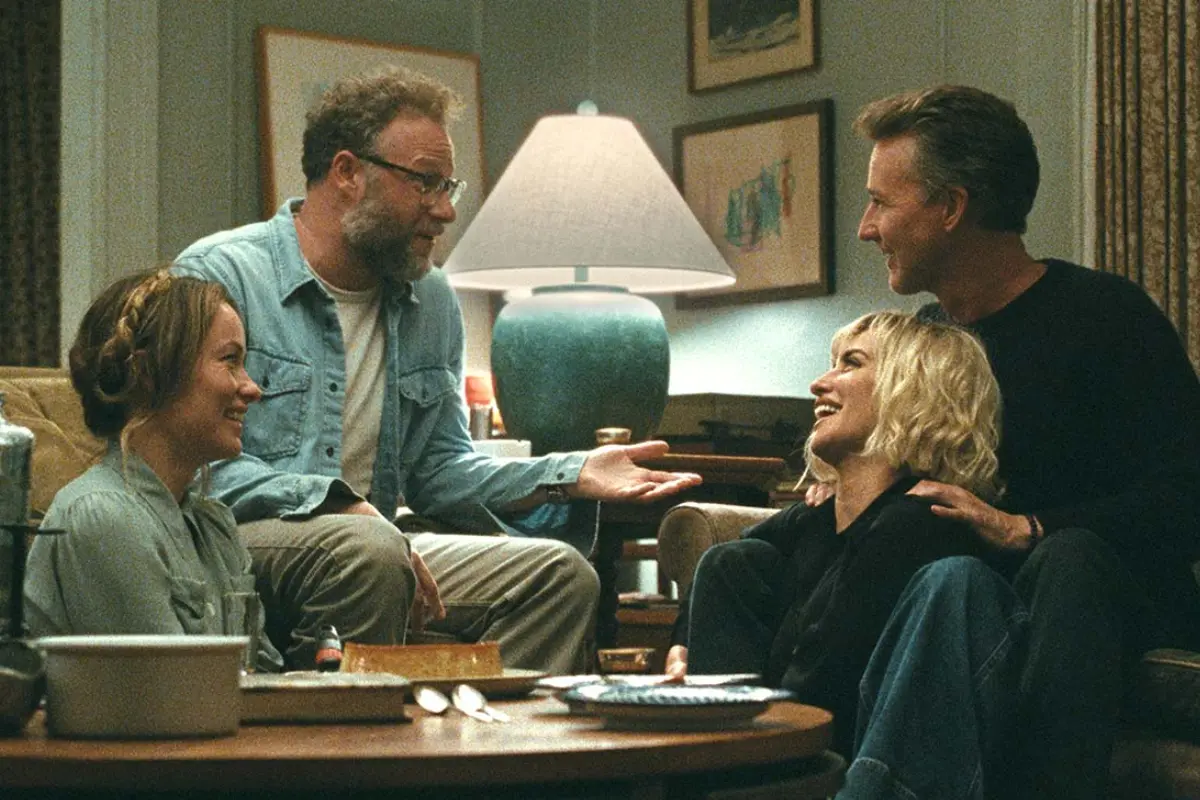
In Olivia Wilde's ‘The Invite’ Joe, played by Seth Rogen, tells his wife Angela, "You're supposed to want me, you're my wife." Her answer, it's hard to want someone who's chosen to be miserable.
The instinct is to defend Joe. He's got a bad back, a stalled music career, a joyless teaching job, and an apartment he inherited and not earned. Of course he's unhappy. But the line lands anyway as the truest thing in the film.
Two people, two ways of grieving a dream
Joe once had a real shot, a band, hit song and a future that never arrived. Angela went to art school and now channels that same hunger into decorating their apartment. On the surface, she seems to be coping better, still making things and still trying. Joe just teaches music resentfully, treating it like a consolation prize.
But Angela isn't at peace either. The apartment may be less about fulfillment than about avoiding how far she's drifted from what she once wanted. Neither of them has the life they imagined. The difference isn't the depth of the disappointment, it's what each does to the person standing beside it.
When someone else's sadness becomes the whole climate
Joe doesn't just come home unhappy, he comes home as unhappiness. He's on the floor with his back before he's said hello. He forgot the wine. He wants to cancel dinner. He'd rather complain about the neighbors' sex life than meet them. It's a weather system Angela has lived inside for years.
That's what her line is really about. Not a demand that Joe perform happiness, but the observation that his resentment has grown so loud there's no room left for the version of him she once wanted to be near.
Also Read: Dating after breakup or divorce? The red flags we learn to explain away
The upstairs neighbors, Hawk and Piña louder, freer, more sexually alive, don't create the cracks in this marriage. They just make them impossible to ignore.
Is unhappiness a choice? Wrong question.
The word ‘chooses’ is the sharpest part of the line. From inside a relationship with someone struggling, unhappiness can start to look like a decision, every declined invitation, every excuse, every rebuffed attempt at closeness reads as evidence. Eventually, managing someone's mood replaces trying to fix it.
But for the person inside that unhappiness, being told it's a choice can feel like an insult, when it's the only thing they have energy left for.
The real question the film raises isn't whether unhappiness is chosen. It's narrower, is some part of a person still willing to believe life could feel different? That's not the same as being cheerful.
Also Read: The weirdest life advice from the most interesting people we know (and why it works)
What people actually owe each other
No one can want someone else's life for them. Listening, making space, reminding a partner who they used to be, all possible. Wanting on their behalf is not and struggling doesn't obligate anyone to perform being fine. A bad season, a lost year, a version of self that isn't thriving, is all yet allowed.
What may still be owed is some evidence of still being in the game, some sign that pain isn't curdling into someone else's punishment.
By the end, Joe sits at a piano he's avoided for years, and Angela joins him. Not clearly a happy ending, they could be finding their way back, or sharing one last moment before parting. But Joe is moving again. Angela can sit beside that. She just can't play it for him.
Unhappiness isn't always a choice. But what gets done with it, who it punishes, whether anyone is let in, usually is.