‘Freedom at Midnight 2’: A powerful retelling of India's aftermath of freedom
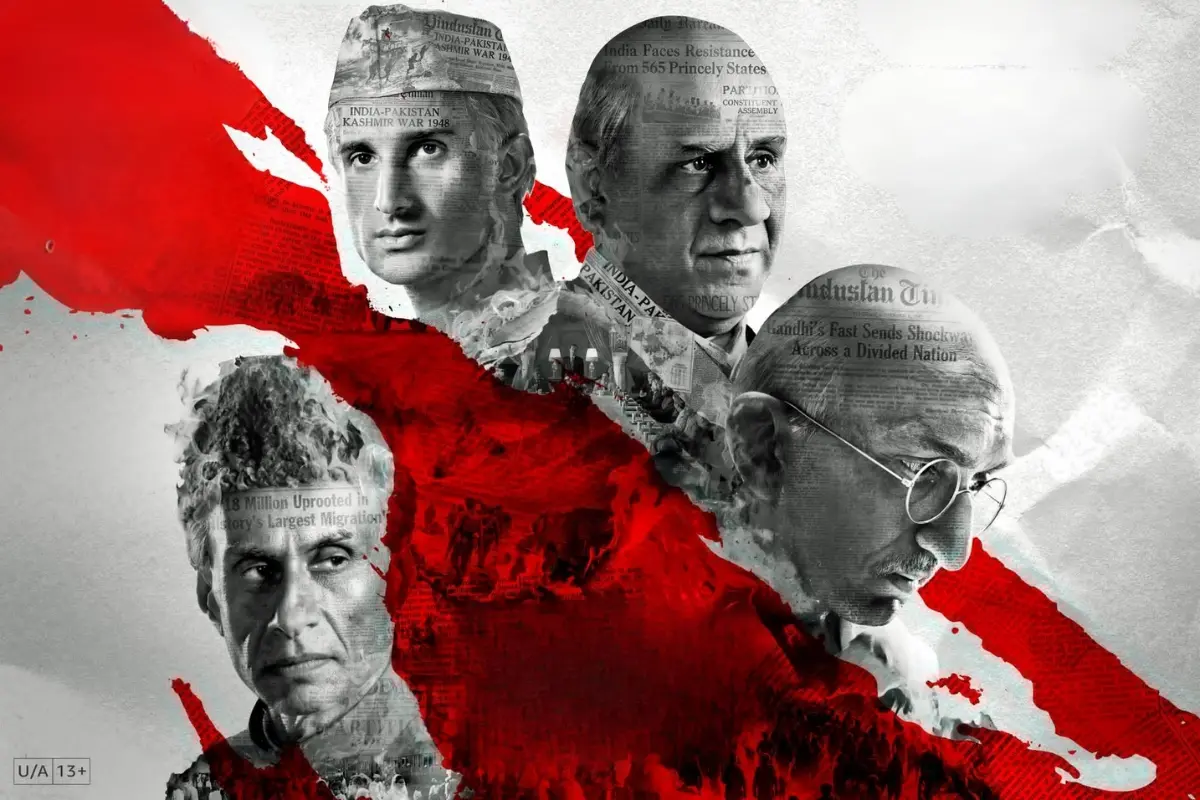
History doesn’t arrive gently in Freedom at Midnight; it storms in, restless and unresolved. In its second season, Sony LIV’s series, created and directed by Nikkhil Advani, returns to the defining hours around India’s Independence with renewed depth and confidence. Carefully crafted and anchored by powerful performances, the show unfolds like a living classroom, where political decisions, personal dilemmas, and the weight of a nation in transition collide. It remains a compelling watch that doesn’t just recount history, but urges viewers to pause, reflect, and grasp the human cost behind that midnight moment.
While the first season traced India’s struggle for freedom and the circumstances under which Indian political leaders, including Jawaharlal Nehru (Sidhant Gupta) and Sardar Vallabhbhai Patel (Rajendra Chawla), gave in to Muhammad Ali Jinnah’s (Arif Zakaria) demand for a separate nation for Muslims, Pakistan, leading to the division of the country into two, the second season picks up at a defining moment.
The second season, which dropped on Friday, begins “At the stroke of the midnight hour”, when India wakes up to life and freedom.
Spread across seven episodes, or rather chapters, the new season opens by reflecting on the partition of undivided India into India and Pakistan, along with the creation of the Radcliffe Line that drew a brutal boundary between the two nations. Beyond depicting the bloodshed that followed Independence, the massive influx of refugees, and the political shifts on both sides of the border, Freedom At Midnight 2 also charts the accession of over 500 princely states, including Kashmir, Junagarh, and Hyderabad, to the Union of India. The series culminates in one of the nation’s darkest moments, with the assassination of Mahatma Gandhi. In all, the season reflects on major events that started from July 1947 to January 1948.
‘Freedom At Midnight 2’, much like its predecessor, stands firmly on the shoulders of powerful, meticulously researched writing. Here, Nikkhil's team of writers, comprising Abhinandan Gupta, Gundeep Kaur, Adwitiya Kareng Das, Divy Nidhi Sharma, Revanta Sarabhai, and Ethan Taylor, have shown brilliance in the mammoth task of adapting Dominique Lapierre and Larry Collins's book ‘Freedom at Midnight’ onto the screen.
The strength of the series lies not merely in its dialogue, but in its confidence to let silence, imagery, and staging carry meaning. Each scene is composed to speak for itself, with or without words. A striking example is the moment that shows British lawyer Sir Cyril Radcliffe aboard a flight back to London after drawing the Radcliffe Line. As he calmly cuts a piece of steak into two, blood seeps across the plate. The visual lands with chilling clarity, echoing the violence, bloodshed, and human cost unleashed by the Partition. It is in such wordless moments that the series finds its sharpest voice, transforming history into something deeply felt rather than simply observed.
The series has also successfully managed to not fall under the label of a propaganda, as it sticks close to the text and also shows the mistakes of the then-government. Instead of just focusing on Gandhi or Nehru, ‘Freedom at Midnight’ also throws light on the works of Patel in building up a newly born nation.
Moving forward, if the writing, direction, and screenplay form the heartbeat of the series, performances are the soul that breathe life into it. Each actor, whether Chirag Vohra as Mahatma Gandhi, Arif Ali as Muhammad Ali Jinnah, Ira Dubey as Fatima Jinnah, or Luke McGibney as Lord Mountbatten, brings a striking authenticity to their real-life counterparts. Yet, it is the performances and on-screen chemistry of Sidhant Gupta and Rajendra Chawla as Jawaharlal Nehru and Sardar Vallabhbhai Patel that stand out the most, lending the series its emotional gravitas and enduring impact.
Amidst all the goods, the series does falter at one point. Designed as a slow-burner, it holds your attention firmly in the beginning but experiences a slight dip in pace midway through its run. That said, these minor odds do little to dilute its impact. ‘Freedom At Midnight 2’ remains a must-watch for the way it thoughtfully captures the many challenges India faced during and immediately after gaining its Independence, turning history into a compelling and reflective viewing experience.
Rating: 3.5 stars out of 5