Who was Singeetham Srinivasa Rao? The filmmaker who never stopped experimenting
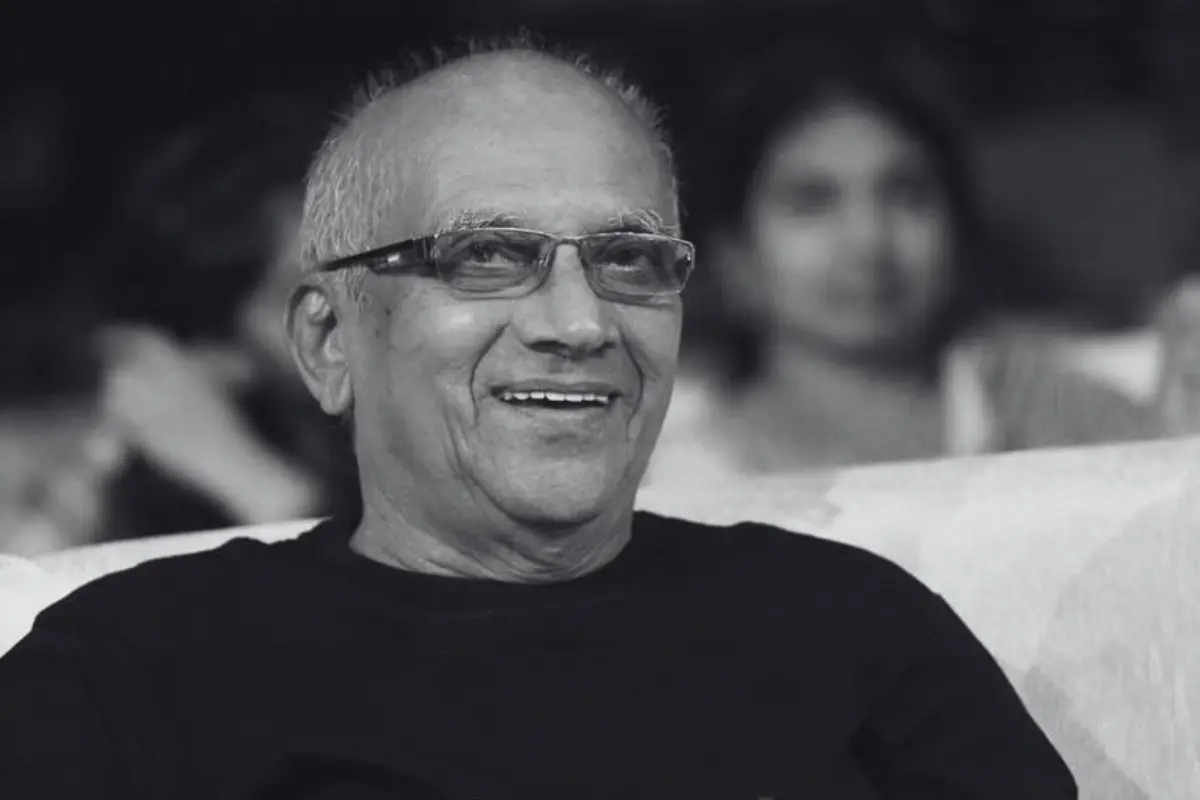
Singeetham Srinivasa Rao was not a filmmaker who stayed within one genre or one language. Across a career spanning more than six decades, he moved between comedy, fantasy, science fiction, drama and experimental cinema, often trying ideas that were ahead of their time.
The filmmaker, known for films such as ‘Pushpaka Vimanam’, ‘Aditya 369’, ‘Mayuri’ and ‘Bhairava Dweepam’, passed away at the age of 94 at a hospital in Chennai on Saturday night while undergoing treatment for age-related ailments.
Even in his nineties, Singeetham continued to work. His final film, ‘Sing Geetham’, a musical fantasy produced by Nag Ashwin, released in June 2026.
Singeetham Srinivasa Rao’s early life and family
Singeetham was born on September 21, 1931, in Andhra Pradesh. His father, Ramachandra Rao, was a headmaster, while his mother, Sakunthala Bai, was a violinist. Growing up in a family with an interest in music, Singeetham developed an early connection with both music and theatre.
He studied Physics at Presidency College in Chennai. During his college years, he was also involved in theatre and writing, interests that would eventually lead him towards cinema.
His wife, Lakshmi Kalyani, was also involved in his creative life and contributed to the story of Pilla Zamindar. She died in Chennai in 2022 after a prolonged illness. Singeetham later wrote ‘Srikalyaniyam’ in her memory.
How Singeetham entered cinema
Singeetham's route into filmmaking began with one of the most influential names in Telugu cinema, KV Reddy.
After repeatedly trying to meet Reddy, Singeetham finally got the opportunity in the 1950s. Reddy gave him a copy of W. W. Jacobs' The Monkey's Paw and asked him to develop a screenplay from it. Impressed by his work, Reddy took him on as an apprentice. Singeetham later worked as an associate director on several of Reddy's films.
His early credits included ‘Donga Ramudu’, ‘Mayabaza’r and ‘Jagadeka Veeruni Katha’. Working under Reddy gave him an opportunity to learn filmmaking at a time when Telugu cinema was producing some of its most ambitious films.
Before becoming a director, Singeetham also explored writing and theatre. He was drawn to unusual stories and ideas, something that would remain a defining feature of his later work.
From ‘Neeti Nijayithi’ to a six-decade career
Singeetham made his directorial debut with the Telugu film ‘Neeti Nijayithi’ in 1972. He went on to direct around 60 films across Telugu, Kannada, Tamil, Hindi and English cinema.
His filmography was remarkably varied. He directed social dramas, comedies, fantasy films, science fiction and experimental projects instead of settling into one particular style.
He also made a strong mark in Kannada cinema, particularly through his collaborations with Rajkumar. His work across languages established him as a filmmaker who could move comfortably between different film industries.
‘Mayuri’ and the story of Sudha Chandran
One of his notable films was ‘Mayuri’, based on the life of classical dancer Sudha Chandran.
The film followed Chandran's journey after she lost a leg and eventually returned to dancing. It became a major success and received several Nandi Awards. The story also reflected Singeetham's interest in real-life struggles and characters who refuse to be defined by their circumstances.
His creative partnership with Kamal Haasan
Singeetham's collaboration with Kamal Haasan produced some of the most memorable experimental films in Indian cinema.
Their most celebrated work remains ‘Pushpaka Vimanam’, the 1987 dialogue-free black comedy. Kamal Haasan played an unemployed graduate who pretends to be a wealthy hotel guest. Amala Akkineni also starred in the film.
The absence of conventional dialogue did not stop the film from becoming a widely admired comedy. Instead, Singeetham relied on performances, visual storytelling and timing to tell the story.
He and Kamal Haasan also worked together on films including ‘Raja Paarvai’, ‘Apoorva Sagodharargal’, ‘Michael Madana Kama Rajan’, ‘Magalir Mattum’, ‘Kaathala Kaathala’ and ‘Mumbai Xpress’.
Aditya 369 and his love for science fiction
In 1991, Singeetham ventured into time-travel science fiction with ‘Aditya 369’, starring Nandamuri Balakrishna.
The film combined history, fantasy and science fiction and became one of the most remembered Telugu films of its kind. Singeetham wrote the story himself, continuing his habit of experimenting with ideas that were relatively unusual for mainstream Indian cinema at the time.
He later directed Balakrishna in ‘Bhairava Dweepam’, a fantasy adventure that became another notable title in his filmography.
A filmmaker who worked across languages
Singeetham did not restrict himself to Telugu cinema. He worked extensively in Kannada and Tamil cinema and also directed Hindi and English-language projects.
His English film ‘Little John’ was another example of his willingness to experiment with different formats and audiences.
His work earned him several honours over the years, including National Film Awards, Nandi Awards, Karnataka State Film Awards and Filmfare Awards South.
‘Sing Geetham’: His final film
Singeetham stayed creatively active long after many filmmakers would have retired.
After nearly a decade away from feature-film direction, he returned with ‘Sing Geetham’, originally announced under the title SSR61. Produced by Nag Ashwin under Vyjayanthi Movies, the film was conceived as a musical fantasy in which characters express themselves through songs.
The idea had reportedly been with Singeetham for decades. The film starred Ayaan, Ahilya Bamroo and Shalini Kondepudi, with music by Devi Sri Prasad. It was released worldwide in June 2026.
The film's release at a time when Singeetham was 94 offered a fitting final chapter to a career built around experimentation.
The legacy Singeetham leaves behind
Singeetham's importance lies not only in the number of films he made, but in the range of ideas he was willing to put on screen.
He could move from a dialogue-free comedy to time-travel science fiction, from a dancer's biographical drama to fantasy adventure, without being tied to a single filmmaking formula.
That spirit remained intact until his final years. ‘Sing Geetham’ was another reminder that for Singeetham Srinivasa Rao, age never seemed to be a reason to stop looking for a new way to tell a story.