‘Recognition after Kalpana's death felt meaningless…’: Urvashi
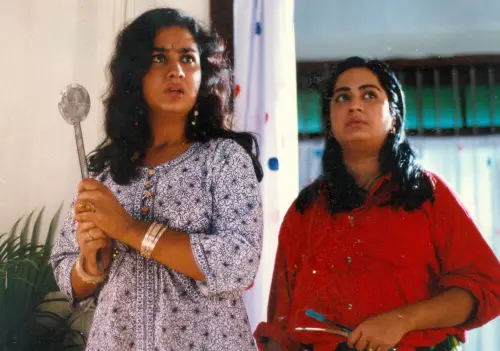
Urvashi, one of Malayalam cinema’s most celebrated actresses, recently opened up about her personal and professional life, reflecting on her childhood, her sister Kalpana's struggles in the film industry, and her experiences as a mother both on-screen and off. In an interview with Grihalakshmi, she shared how recognition after Kalpana’s death felt hollow, given the lack of appreciation her sister received during her lifetime.
Urvashi spoke at length about her late sister Kalpana, who was a versatile artist excelling in mono acting and mimicry during her college years. Despite her immense talent, Kalpana often found herself typecast in comedic roles in Malayalam cinema, a reality that deeply frustrated her.
“Kalpana longed for serious roles, but the industry largely confined her to comedy,” Urvashi said. “She did get recognition in Tamil cinema, but in Malayalam, barring a few films like 'Pakal Nakshatrangal' and 'Charlie,' she was underappreciated.”
Urvashi recalled how she turned down a role in the Tamil remake of 'Charlie,' saying, “I couldn’t match the brilliance with which Kalpana portrayed that character.”
After Kalpana’s death, accolades and tributes poured in, but for Urvashi, it felt too little too late. “She often had to perform comedy skits at award shows—roles that diminished her true potential. Recognition after her death felt meaningless when she didn’t receive it while she was alive,” she remarked.
Born into a family with a deep connection to the arts, Urvashi spent much of her childhood at her father’s theatre camp in Thiruvananthapuram. Her father, a prominent figure in theatre, and her mother, a talented dancer, surrounded her with artistic influences.
“I never saw any of my father’s plays on stage because he wasn’t keen on us getting involved in theatre. My mother, who was a skilled dancer, had to give up her passion when my elder sister Kala fell ill,” she reminisced.
As a mother, Urvashi reflected on how parenting has evolved over generations. “I grew up in a joint family where we all slept together under the care of two grandmothers, with doors left unlocked. But today, I will never enter my daughter’s room without her permission,” she said.
Initially, Urvashi struggled with the independence her children displayed, particularly her daughter’s solo travels and decision-making. However, she acknowledged the importance of letting them grow freely. “Children shouldn’t be raised the way I was. They need the freedom to carve their own paths,” she said.