From Darth Vader to Mufasa: Who was James Earl Jones, the iconic voice actor?
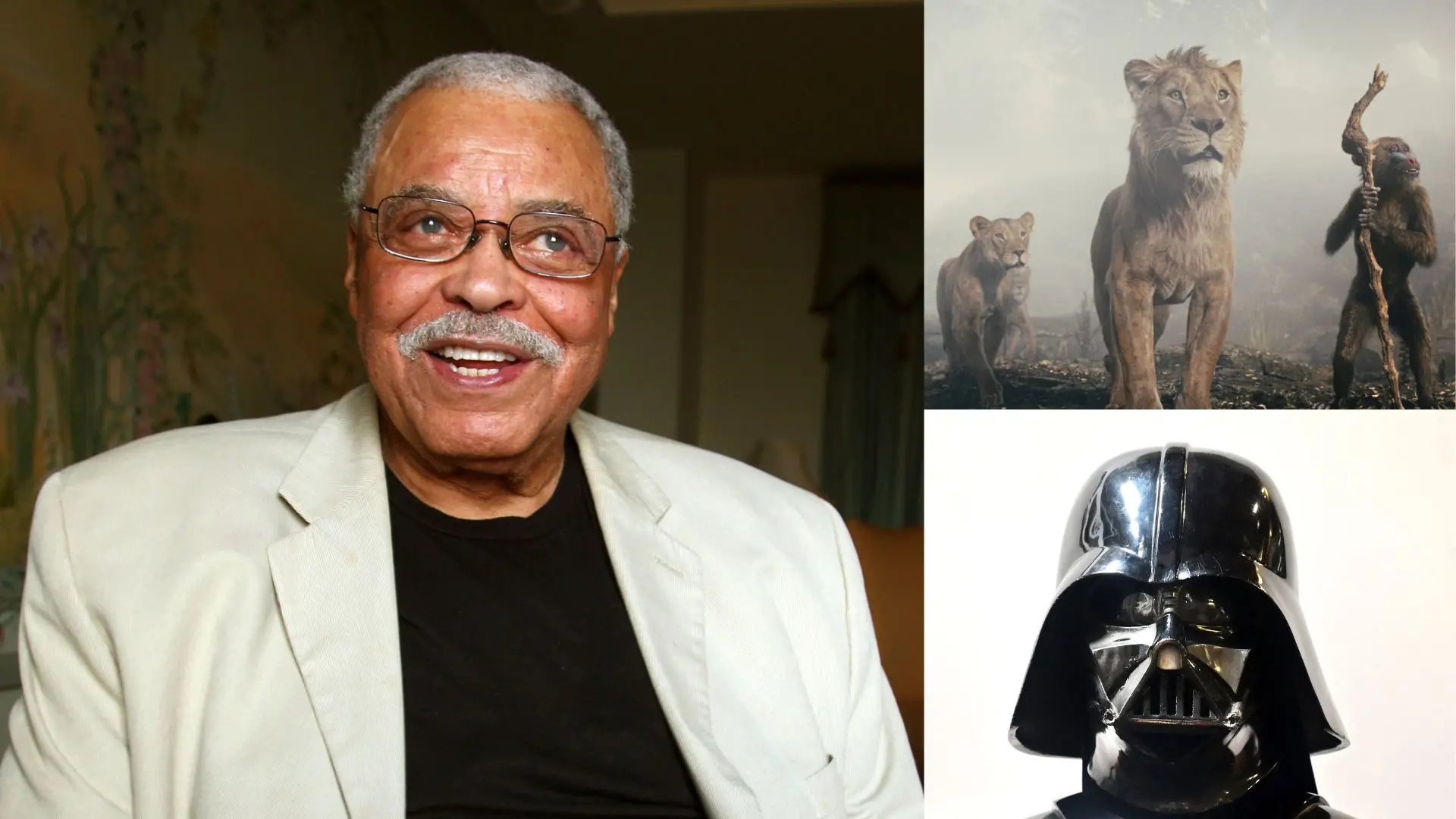
James Earl Jones, the legendary actor known for his iconic voice roles as Darth Vader in 'Star Wars' and Mufasa in 'The Lion King,' passed away this morning at his home in Dutchess County, New York, at the age of 93, per Deadline. Born on January 17, 1931, in Arkabutla, Mississippi, Jones possessed one of the most recognizable voices in cinematic history.
James Earl Jones' career on stage and screen
Jones' deep, commanding tone brought iconic characters to life, including Mufasa in Disney's 'The Lion King' (1994), Voice Box in 'Robots' (2005), and The Giant in 'Jack and the Beanstalk' (2009). Beyond animated roles, Jones also starred in live-action films, including 'The Sandlot' (1993) as Mr. Mertle and 'Coming to America' (1988) as King Jaffe Joffer.
With a distinguished career spanning stage and screen, Jones is celebrated as one of the greatest actors of his time. He is a rare EGOT recipient, having earned an Emmy, Grammy, Oscar, and Tony Award. While his Academy Award was honorary, Jones also won two Primetime Emmy Awards, a Daytime Emmy, a spoken-word Grammy in 1977, and three Tony Awards. In 2022, Manhattan's Cort Theatre was renamed The James Earl Jones Theatre in honor of his storied career in theater. This was especially significant as it was the same venue where Jones performed in 'Sunrise at Campobello' in 1958, marking the beginning of his Broadway journey. Over the course of his career, Jones became known as one of the finest stage actors, with standout performances that earned him three Tony Awards, including one for Lifetime Achievement in 2017.
Overcoming challenges through pioneering roles
James Earl Jones, who overcame racial prejudice and a severe stutter to become a celebrated icon of stage and screen, eventually lent his deep, commanding voice to CNN, 'The Lion King,' and Darth Vader. His agent, Barry McPherson, confirmed Jones died Monday morning at home in New York's Hudson Valley region. The cause was not immediately clear.
Jones was a pioneering figure who, in 1965, became one of the first African American actors in a continuing role on a daytime drama ('As the World Turns'). He worked deep into his 80s and won multiple prestigious awards, including two Emmys, a Golden Globe, two Tony Awards, a Grammy, the National Medal of Arts, and the Kennedy Center Honors. He was also given an honorary Oscar and a special Tony for lifetime achievement.
Jones cut an elegant figure late in life, with a wry sense of humor and a ferocious work ethic. In 2015, he arrived at rehearsals for a Broadway run of 'The Gin Game' having already memorized the play and with notebooks filled with comments from the creative team. He said he was always in service of the work. "The need to storytell has always been with us," he told The Associated Press. "I think it first happened around campfires when the man came home and told his family he got the bear, the bear didn't get him."
Iconic roles and voice acting legacy
Jones created memorable film roles as the reclusive writer coaxed back into the spotlight in 'Field of Dreams,' the boxer Jack Johnson in 'The Great White Hope,' the writer Alex Haley in 'Roots: The Next Generation,' and a South African minister in 'Cry, the Beloved Country.' He was also a sought-after voice actor, famously voicing the villainy of Darth Vader ("No, I am your father," commonly misremembered as "Luke, I am your father") and the benign dignity of King Mufasa in both the 1994 and 2019 versions of Disney's 'The Lion King.' He announced "This is CNN" during station breaks, and won a 1977 Grammy for his performance on the 'Great American Documents' audiobook.
Early life
Jones was born by the light of an oil lamp in a shack in Arkabutla, Mississippi, on January 17, 1931. His father, Robert Earl Jones, had deserted his wife before the baby's arrival to pursue life as a boxer and, later, an actor. When Jones was six, his mother took him to her parents' farm near Manistee, Michigan, where his grandparents adopted and raised him. "A world ended for me, the safe world of childhood," Jones wrote in his autobiography, 'Voices and Silences.' "The move from Mississippi to Michigan was supposed to be a glorious event. For me, it was heartbreak, and not long after, I began to stutter."
Too embarrassed to speak, he remained virtually mute for years, communicating with teachers and fellow students through handwritten notes. A sympathetic high school teacher, Donald Crouch, discovered that Jones wrote poetry and demanded that he read one of his poems aloud in class. He did so faultlessly, and they worked together to restore the boy's normal speech. "I could not get enough of speaking, debating, orating — acting," he recalled in his book.
Journey into acting
At the University of Michigan, Jones failed a pre-med exam and switched to drama, also playing four seasons of basketball. He served in the Army from 1953 to 1955. In New York, he moved in with his father and enrolled in the American Theater Wing program for young actors. Father and son waxed floors to support themselves while looking for acting jobs.
True stardom came suddenly in 1970 with 'The Great White Hope.' Howard Sackler’s Pulitzer Prize-winning Broadway play depicted the struggles of Jack Johnson, the first Black heavyweight boxing champion, amid the racism of early 20th-century America. In 1972, Jones repeated his role in the movie version and was nominated for an Academy Award as Best Actor.
Personal life
Jones’ two wives were also actors. He married Julienne Marie Hendricks in 1967. After their divorce, he married Cecilia Hart, best known for her role as Stacey Erickson in the CBS police drama 'Paris,' in 1982. (She died in 2016.) They had a son, Flynn Earl, born in 1983. In 2022, the Cort Theatre on Broadway was renamed after Jones, with a ceremony that included Norm Lewis singing 'Go the Distance,' Brian Stokes Mitchell singing 'Make Them Hear You,' and words from Mayor Eric Adams, Samuel L. Jackson, and LaTanya Richardson Jackson.
"You can’t think of an artist that has served America more," director Kenny Leon told the AP. "It’s like it seems like a small act, but it’s a huge action. It’s something we can look up and see that’s tangible." Citing his stutter as one of the reasons he wasn’t a political activist, Jones nonetheless hoped his art could change minds. "I realized early on, from people like Athol Fugard, that you cannot change anybody’s mind, no matter what you do," he told the AP. "As a preacher, as a scholar, you cannot change their mind. But you can change the way they feel."
Tributes from fans and industry
Famous fans and collaborators have been paying tribute to James Earl Jones, celebrating his profound impact on the entertainment industry. Actor Mark Hamill, who played Vader's son Luke Skywalker in the 'Star Wars' movies, said, "One of the world’s finest actors whose contributions to 'Star Wars' were immeasurable. He’ll be greatly missed." Kevin Costner, who starred in 'Field of Dreams' with Jones, expressed, "That booming voice. That quiet strength. The kindness that he radiated. So much can be said about his legacy, so I’ll just say how thankful I am that part of it includes 'Field of Dreams.'" Debbie Allen, who directed Jones in the 2008 Broadway production of 'Cat on a Hot Tin Roof,' wrote, "James Earl Jones will forever be remembered as The GOAT. It was truly a privilege to direct him and a Blessing to be loved by him."
Octavia Spencer, Ava DuVernay, LeVar Burton, and Bob Iger were among others who shared their admiration and gratitude for Jones' contributions to the world of film, stage, and voice acting. From his early beginnings overcoming a severe stutter to becoming one of the most revered voices in cinematic history, James Earl Jones leaves behind a legacy of resilience, talent, and profound influence.
(With inputs from AP, AFP)