A haveli in Lahore, a family from Lucknow: The unlikely bond at heart of 'Batwara 1947'
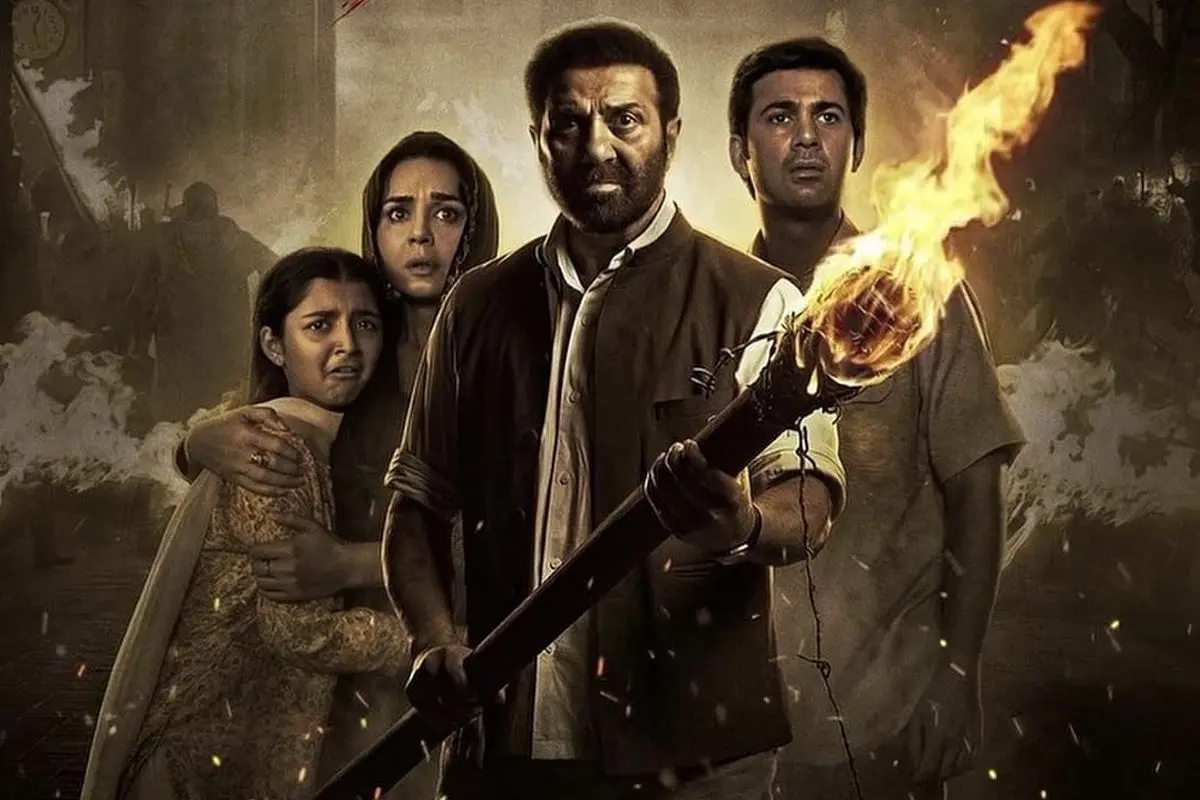
Contrary to common understanding, the word 'Partition' clearly implies a question of humanist emotions rather than pointing out at a political division of countries even within themselves. This feeling of inhumanity that forcibly divides people due to the one-sided decisions made by people in power began long ago when Professor Asghar Wajahat -- a Hindi scholar, fiction writer, novelist, playwright, and an independent documentary filmmaker and a television scriptwriter -- wrote this play in Punjabi based on his emotional experiences of this geographical division.
The play was originally called 'Lahore Nai Vekhya, O Jamya E Nai'. Roughly translated, it means, "The one who has not seen Lahore is not born yet."
Though it was first written and published in 1989, it continues to dog theatre personalities, literary giants and people from the world of cinema right across the globe. It celebrated its 400th show in 2024 in celebration of the 100th year of Amritsar's Hindu College to thunderous applause. The play was staged by Ank Theatre artistes led by Preeta Mathur Thakur, in collaboration with the Hindu college Alumni Association and the FICCI FLO Amritsar.
Hindu College is one of the oldest institutions of education in Amritsar and a hotbed of Indian nationalist movement during the freedom struggle.
The play opens in Lahore in the West Punjab province of Pakistan, just after the 1947 Partition of India and the subsequent division of the Punjab province.
Both India and the newly formed Pakistan were then grappling with a massive refugee crisis, as displaced families seek new homes. Sikander Mirza and his Muslim family, forced to leave their beloved city of Lucknow in the United Provinces state of India, are allotted a beautiful haveli in Lahore that once
belonged to a Punjabi Hindu family.
The immersive story is of an old woman, that the audience knew as "Rattan Ki Maa", who refuses to leave her home to cross the newly drawn lines, during the mass migration in the aftermath of the Partition from the both sides.
Rattan Ki Maa is discovered by haveli's new residents, the Mirzas, who migrated from Lucknow to Lahore. After initial tug-of-war between the former resident and new residents of the haveli to assert their rights over it, the Mirzas warm up to the old woman as she wins them over with her affection and love.
But local Muslim goons turn this harmless, choice-based co-existence into a matter of conflict. While a protest ensues, the old woman dies and the family is advised by a maulvi to perform funeral rites of the woman as per Hindu rituals. Triggered by this ‘act’ of provocation, a mob of local goons, led by their leader, kills the maulvi, bringing in a climax that is both ironic and shocking, just like the subject the play deals with.
This double killing, first of Rattan Ki Maa and then the Maulvi, proves that the violence had nothing to do with their victims because while Rattan Ki Maa was Hindu, the maulvi was Muslim and yet he insisted that the old woman’s funeral rights be done as per Hindu custom.
Receiving thunderous applause from the audience at the end of both the shows, actors of the play said performing in Amritsar was a personal victory of sort as the holy city was known as a twin city of Lahore. "We are very close to Lahore and it feels like we are here for a reason," said Meena Vaibhav, who played the character of Hameeda Begum in The Ank performance in 2024.
If this reminds you of the very old mother of Saleem Mirza in Garm Hawa (1974) directed by MS Sathyu who refused to leave their ancestral home and has to be physically carried out, it would not be wrong at all. In fact, it highlights the strength of the human spirit after all and never mind that Saleem Mirza’s mother was Muslim and Rattan Ki Maa was Hindu because basically, they were just human beings and their communal identity was never a choice, it came along with their birth and grew with memories, a shared culture, a known language, and
common friends and neighbours.
The play was first publicly performed under the directorial wand of Habib Tanvir in 1989 who subsequently took the play through Karachi, Lahore, Sydney, New York and Dubai. It has been performing ever since and has now theatrically released across India under the title 'Batwara 1947', on 13th August, 2026.
It is being directed by Raj Kumar Santoshi, produced by Amir Khan's production house with Sunny Deol leading the acting cast. "We have made certain changes in the original script and have done this in consultation of the author Professor Asghar Wajahat but the ideology behind the story we have not tampered with at all," said Rajkumar Santoshi at a press meet in Kolkata.
He went on to add, "This is not a film either about patriotism or about Partition as these words are commonly understood. It is about the inhumanity inflicted on unsuspecting and innocent groups of people stripping them of their humanity rights. The message we are trying to bring across through this film is the message of universal brotherhood and human solidarity that rises far above feelings of one's communal and religious identities over which we have no control but also that it cannot and should not be taken away from us by people who do not know the meaning of universal solidarity," he summed up.
Sunny Deol went on to add, "We are not making the film to send out any kind of message, political, communal, religious or otherwise. The story of the division of India into two countries is a historical truth that is not only known to the Gen Z but is understood by everyone. We are witness to the incidents happening around us till today. What we wish to convey through this film is that nothing -- no partition, no displacement, no migration -- can and ever should bring around any division between families and people who, basically, are human beings, that is all."
Also Read: 'Batwara 1947' first review: Sunny Deol is ‘terrific’, Preity Zinta, Shabana Azmi earn praise
He continued in the same strain, “The way our young generation has risen above all political constraints through a movement in solidarity in recent times, shows us that they have learnt that we must rise above manipulated constraints and raise our strident voice against all form of injustice, including the division of people through their religion, their geography, their financial means and of course rise above communal conflicts that can create violence at any minute."
Partition is not just about the geographical divisions of one country cut into two. Geographical division engineered and executed by powers-that-be, this time, the British which ruled over the united India. This kind of "partition" by documents, paper drawings and population failed to consider the emotional, linguistic, financial, social, cultural and nostalgic growing up of the people of the same nation suddenly being informed that the country they were born and bred in, ate the food from, wore clothes possibly tailored by a neighbour who belonged to a different faith, was not theirs to live on, that they had to migrate whether they liked it or not, and perhaps forget everything linked to all these years of cherished memories.
Just to jog your memories a bit. The story for the classic 1973 film Garm Hava (Garam Hawa) was based on an unpublished short story by the noted Urdu writer Ismat Chughtai, which was later adapted into the film's screenplay and dialogues by Kaifi Azmi and Shama Zaidi. The main actors were Balraj Sahni, Shaukat Azmi, Faroukh Sheikh and AK Hangal. And this play was written by Professor Asghar Wajahat, a Hindi scholar, and other than Amir Khan who is involved in the production, most of the rest are Hindu. What do you say to that?