Women in Engineering Day: How two Kerala women turned bias into leadership
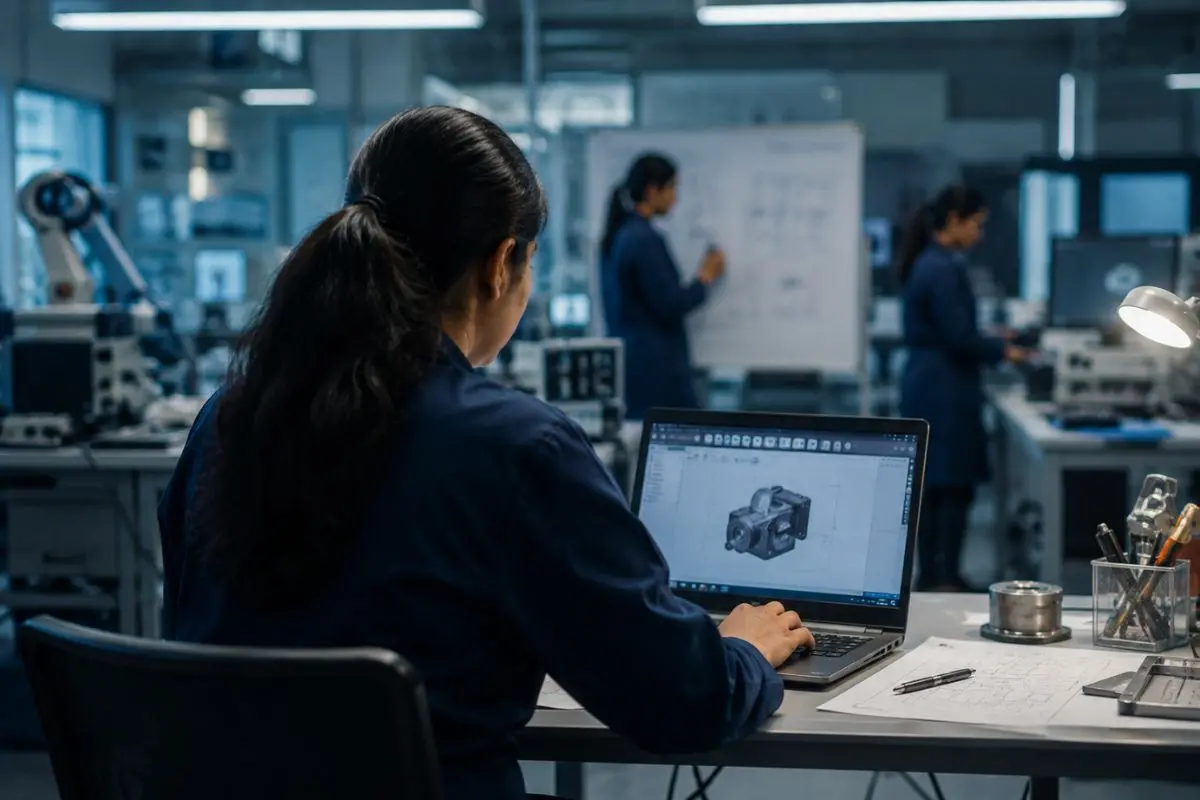
As the world marks Women in Engineering Day on June 23, the journeys of two women from Kerala offer a glimpse into the challenges, biases and breakthroughs that continue to shape the experience of women in India's technology sector.
Both women currently hold leadership positions at Experion Technologies, a Kerala-headquartered product engineering and digital transformation company that develops technology solutions for businesses across industries and global markets.
Their stories, however, are less about corporate success and more about perseverance, self-belief and finding a voice in spaces where women have often been underrepresented.
For Meera Joseph, one of the most defining moments came not in a boardroom but in a college classroom. During her fifth semester, her all-girls team found itself rejected by every boys' project group in class.
Looking back, she recalls how the experience became a lesson in resilience rather than rejection.
'When every boys' group turned us away, the easy response would have been to feel defeated and find a way to quietly attach ourselves to whatever group would take us. But something in me resisted that. I did not want to be accommodated. I wanted to compete on equal terms. So, we formed our own all-girls group, did the work, and delivered a successful project.'
The experience left a lasting impression and would later shape the way she leads teams and mentors younger professionals.
'What it taught me, at a very young age, was that closed doors are not verdicts. They are just situations that require a different response.'
Her story reflects a reality many women in engineering continue to navigate. While technical challenges can be demanding, proving one's credibility often becomes an equally significant hurdle.
'The technical problems in my career were rarely the hardest part; the real struggle was walking into rooms where people had already decided they did not have much to contribute, having their ideas talked over, their expertise questioned, and their credibility tested on a loop,' she said.
A similar story of determination can be found in the journey of Neetu Sara Mathew, a first-generation engineer from Kozhencherry in Kerala's Pathanamthitta district.
With no family background in engineering or corporate life, she entered the technology industry carrying little more than ambition, curiosity and a willingness to learn.
'Coming from a small village in Kerala and being a first-generation woman engineer, my journey into technology and corporate leadership was not built on a predefined path or inherited guidance,' she said.
One of the biggest decisions she made early in her career was leaving home and moving to metro cities in search of opportunities and exposure.
Along the way, she learned to navigate an industry where there were few women role models and even fewer people who could guide her through the unwritten rules of corporate life.
The defining moment, however, came years later during a meeting with international stakeholders.
'I remember sitting in a meeting with global stakeholders, discussing decisions that would shape customer experiences across multiple countries. In that moment, I paused and thought about how far life had come. I was a girl from a small village in Kerala, someone who had grown up without exposure to corporate life or technology careers, and now I was sitting at that table contributing to decisions that mattered at a global scale.'
Both women acknowledge that the technology industry has changed significantly over the years. More women are entering engineering, diversity conversations are becoming mainstream, and organisations are paying greater attention to inclusion.
Yet they believe the challenge now is ensuring women remain in the profession and progress into senior technical and leadership roles.
'There is still tremendous opportunity to bring more women into engineering, especially into senior technical and leadership roles,' Meera said.
Neetu agrees, pointing out that representation often declines at higher levels and that many women leave the workforce mid-career due to competing professional and personal responsibilities.
Today, both women actively mentor younger professionals entering the field. Their advice centres on persistence, continuous learning and not allowing self-doubt to dictate career decisions.
'The first thing I tell them is: your self-doubt is not evidence of your limitations. It is evidence that you are taking what you are doing seriously. Every capable person I have ever met has struggled with it at some point,' Meera said.
Neetu offers a similar message. 'Please do not wait until you feel fully ready before taking an opportunity. I have learned from my own journey that confidence rarely arrives before the first step.'
On Women in Engineering Day, their message is particularly aimed at girls from small towns and villages who may wonder whether they belong in technology.
'Where you come from does not determine where you can go. What matters is curiosity. What matters is the willingness to learn relentlessly and to keep going when it gets hard,' Meera said.
Neetu echoed that sentiment: 'Your starting point does not limit your destination. Talent, curiosity, and consistency can take you much farther than geography ever can.'
Their journeys, rooted in Kerala but shaped on a global stage, underscore a larger truth about India's technology sector: when barriers are lowered and opportunities expanded, talent can emerge from anywhere.