Why your brain saves embarrassment in HD but deletes everyday tasks
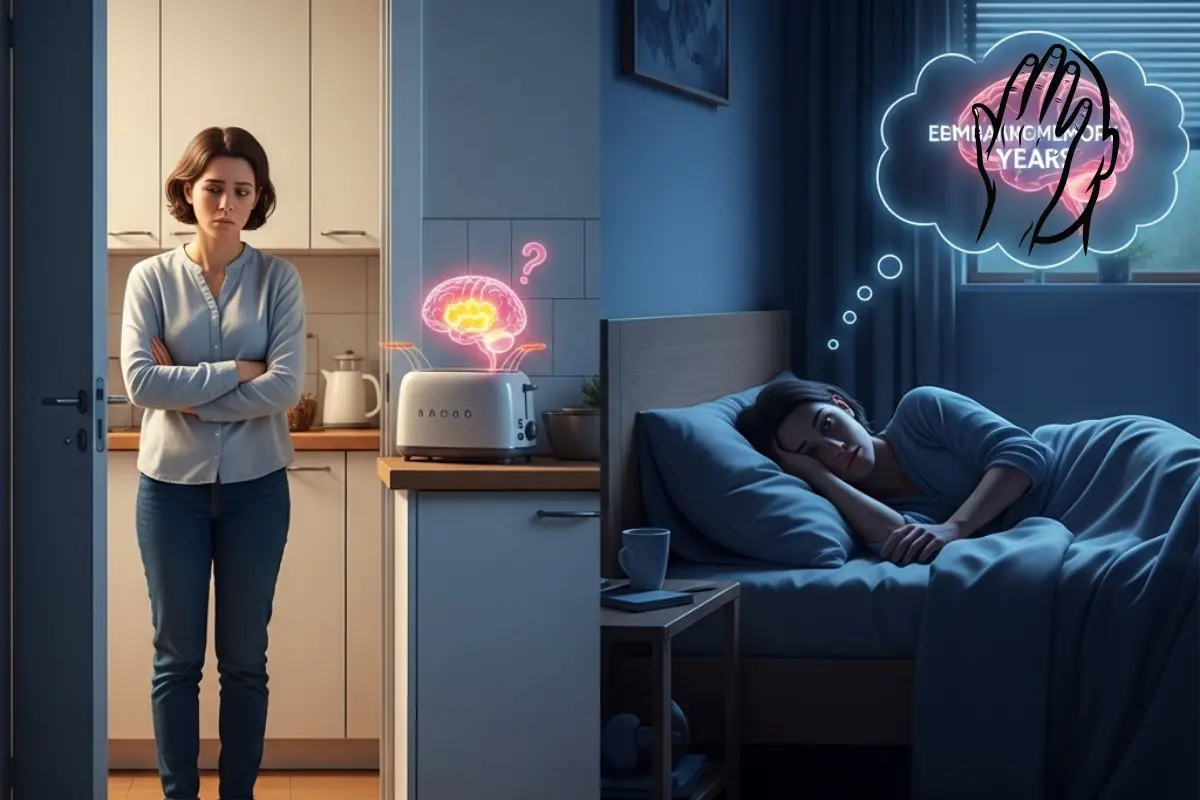
It’s 2:07 AM. You’re wrapped in a blanket, perfectly comfortable, when your brain suddenly decides it’s time to premiere The Ultimate Cringe Collection: 2014 Edition. Front and centre? That moment you accidentally called your teacher “Mom”… in college. Meanwhile, just a few hours earlier, you marched confidently into the kitchen on an important mission, only to stand there blinking at the fridge like it had personally betrayed you. Purpose? Gone. Memory? Deleted. Dignity? Also questionable.
Why embarrassing memories last longer
Embarrassing moments tend to stay with us because they trigger strong emotional responses. When something socially awkward or humiliating happens, the amygdala — the brain’s emotional processing centre — becomes highly active. It then signals the hippocampus, which forms long-term memories, to tag the event as important.
This process, often referred to as emotional tagging, strengthens memory consolidation. The stronger the emotional arousal — whether positive or negative — the deeper the memory is embedded in neural networks. That is why a single awkward mistake from years ago can remain vivid, complete with details such as what you were wearing or how others reacted.
From an evolutionary perspective, this prioritisation makes sense. Social belonging was crucial for survival. Remembering socially painful experiences helped humans avoid repeating mistakes that could lead to rejection.
Also read: He quit a high-paying job, worked 18 hours a day and built an empire: CJ Roy’s story
The doorway effect: why short-term memory fails
In contrast, forgetting why you entered a room involves working memory — a short-term system largely managed by the prefrontal cortex.
Working memory holds information only briefly and is highly sensitive to distraction. When you move from one space to another, such as crossing a doorway, the brain treats it as a change in context. This phenomenon is known as the “doorway effect” or “location updating effect”.
Crossing a physical boundary acts as an “event boundary”. As the brain updates its understanding of the new environment, it may discard information that was relevant in the previous space. The result is a momentary blank: you know you had a purpose, but it has vanished.
Because everyday tasks such as fetching an item carry little long-term importance, the brain allocates fewer resources to preserving them compared to emotionally significant events.
Why memories resurface at night
Old embarrassing memories often resurface at night when trying to sleep. This may be linked to the brain’s Default Mode Network (DMN), which becomes active when the mind is not focused on a specific task.
The DMN is associated with self-reflection and mental time travel. With fewer external distractions, emotionally tagged memories can resurface more easily, sometimes replaying in detail.
It is prioritisation, not poor memory
Remembering emotional events while forgetting routine tasks does not indicate a failing brain. It reflects how the brain prioritises information.
Emotionally charged experiences are stored more deeply because they are perceived as important for learning and survival. Routine actions are temporary and easily replaced.
If you replay an awkward moment from years ago but forget why you walked into the kitchen, it is not a flaw. It is evidence that your brain is doing exactly what it evolved to do.
(Disclaimer: This article is for informational purposes only and is based on current scientific understanding of memory and brain function. It is not intended to serve as medical advice, diagnosis, or treatment. If you experience persistent memory problems, sleep disturbances, or cognitive concerns, please consult a qualified healthcare professional.)