What is Bommai Golu? All about the South Indian Navratri tradition
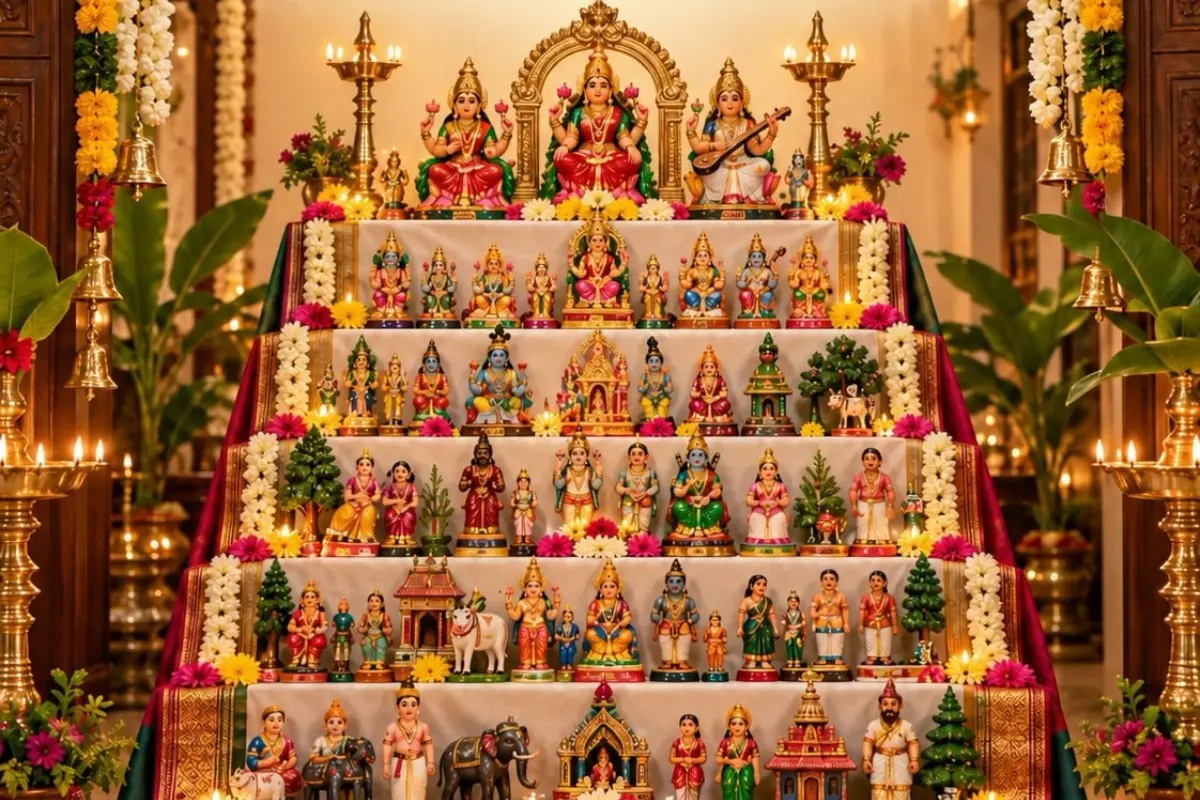
One of the most charming Navratri traditions in South India is Golu, the art of arranging dolls on decorated steps.
Known as Bommai Golu or Kolu in Tamil, Bommala Koluvu in Telugu and Bombe Habba in Kannada, Golu is the tradition of arranging dolls and figurines on a series of steps during Navratri. It is especially associated with Tamil Nadu, Karnataka, Andhra Pradesh and Telangana. The name and some customs vary across regions and families. Bommai Golu is often translated as the “court of dolls”.
The display is usually set up at home, although temples and community spaces may have their own arrangements. It can feature gods and goddesses, characters from Hindu epics, saints, animals, musicians, wedding scenes and figures representing everyday life.
The dolls are arranged on tiers, often in odd numbers such as three, five, seven or nine, depending on the space available and the family's collection. Many families go for nine, one for each night of Navratri.
Why the dolls?
Long ago, when most people could not read, stories were passed on by showing them. Arranging dolls in order was a way of retelling the Ramayana, the Mahabharata and the Puranas to the children of the house.
One popular account links the doll display to the legend of Goddess Durga's battle with Mahishasura and the victory of good over evil. The figures displayed during Golu can represent the deities and other characters associated with these stories.
Families also use the arrangement to pass down religious stories and cultural traditions to younger generations. Each evening, a lamp is lit before the display, often at the heart of a freshly drawn kolam, and hymns are sung. The dolls receive an arati every night.
Why is Golu celebrated during Navratri?
Navratri honours the Divine Mother in her different forms, including Durga, Lakshmi and Saraswati. Golu forms part of this celebration, bringing the stories and figures associated with the festival into the home.
There is an order to a traditional Golu, though homes follow it with their own twists. The Navashaktis, the forms of the goddess, are placed first. Hinduism Today describes the climb up the steps as a journey from human to divine. So ordinary life, with its animals, people and playthings, sits at the bottom, and the gods look down from the top.
How are Golu dolls made?
Part of the charm of Golu lies in the dolls themselves. Some have delicate facial features and elaborate costumes, while others are simple figures painted in bright colours. Their appearance depends on the craft tradition, the material and the artisan making them.
Clay is one of the traditional materials used for Golu dolls. Artisans shape the figures, allow them to dry and finish them with paint and decorative details. The process requires patience, particularly when working on intricate faces, jewellery and clothing.
Papier-mâché is another material used for dolls and decorative figures. In this method, paper pulp is combined with an adhesive, shaped or moulded, dried and painted. Because it is relatively lightweight, it can be useful for larger decorative pieces.
The Marapachi dolls and other traditional favourites
Among the figures that hold a special place in many Golu displays are the Marapachi Bommai, a pair of wooden dolls traditionally representing a man and a woman. They are traditionally part of a bride’s wedding trousseau, handed over by her parents so she can begin her own Golu in her new home. The pair is said to stand for fertility and new beginnings. Many families also keep a set of Thanjavur bobblehead dolls, often a grandmother and grandfather, nodding wisely at everything.
In some families, the pair is associated with Venkateshwara and Mahalakshmi. They are dressed in traditional clothing and may be passed down through generations. Other familiar additions include dolls of Durga, Lakshmi and Saraswati, figures of Krishna and Rama, miniature temples, wedding sets, village scenes and traditional Thanjavur bobble-head dolls.
Many families add at least one new doll each year. Over time, the collection becomes a record of family life: the doll bought during a trip, the set gifted at a wedding or the slightly chipped figure that has appeared on the steps for as long as anyone can remember.
Sundal, songs and visits: The traditions around Golu
The doll display is only one part of the celebration. During Navratri, families may light lamps, offer prayers, sing devotional songs and decorate the area with flowers and kolam designs.
Evenings often bring visitors. Friends, relatives and neighbours are invited to see the Golu, and some gatherings include devotional singing or music. Guests may be served sundal, a savoury dish commonly made with legumes such as chickpeas or black-eyed peas, along with sweets, fruits or other refreshments.
In many households, women guests receive thamboolam, which may include betel leaves, areca nut, turmeric, kumkum, flowers, fruit and small gifts. The exact contents depend on family custom.
The final day, Vijayadashami, marks the end of Navratri. In families that follow the custom, one doll is gently laid down, as if put to sleep, and the kalasha is nudged slightly northward to mark the end of that year’s display. The next day the steps come down, and each figure is wrapped and packed away
Different places have their own specialities:
Thanjavur dolls are the famous head-wobbling kind. The craft is linked to the Thanjavur region and holds a GI tag. The roly-poly king and queen pair, and the Chettiar and Aachi couple, are essential on many steps.
Kondapalli toys from Andhra Pradesh are carved from a soft wood called tella poniki. Each toy is built from several small pieces, joined with a glue made from tamarind seeds.
Chennapatna toys from Karnataka, made with non-toxic paints, are another much-loved wooden sort.
Modern Golu ideas that go beyond the traditional display
Traditional dolls and mythological scenes remain central to many Golu displays, but there is plenty of room for personal creativity. Families have long included scenes from everyday life, and contemporary displays can build on that idea.
Here are a few ways to give your Golu a personal touch while keeping its traditions in view:
Create a miniature town: Arrange tiny houses, shops, roads, trees and people to recreate a neighbourhood or village. A market scene can be a lovely way to show everyday life in miniature.
Build a nature-inspired display: Add small trees, plants, animals and a pond to create a garden, forest or wildlife scene. Use reusable decorations where possible.
Tell a story through the steps: Choose a story from the Ramayana or Mahabharata and arrange the figures to show different moments. This can also be a fun way to involve children in learning the story.
Showcase local culture: A miniature market, traditional craft workshop, music performance or harvest scene can celebrate the culture and occupations of a particular region.
Bring in a contemporary theme: Some families include figures from modern life, public service, sports or popular culture. A theme based on everyday heroes or community helpers can make the display relevant to younger visitors.
Keep it small and thoughtful: If you have limited space, a three-step arrangement or a single shelf can still hold a meaningful collection. Reusing existing dolls and decorations is often more practical than buying a new set every year.
Modern ideas do not need to replace the traditional elements. A display can include the family's older dolls alongside one new scene, a different backdrop or handmade decorations. That balance is often what makes a Golu feel personal.
Making space for the tradition in modern homes
Not every home has room for a large, multi-tiered display. Ready-made steps are available, but families can also use sturdy shelves or existing platforms, provided the arrangement is stable and safe. The number of tiers can be adapted to the available space, and the dolls do not all have to be new or expensive.
If you are starting a Golu tradition for the first time, begin with a few meaningful figures and build the collection gradually. Store the dolls carefully after the festival, especially fragile clay pieces, and wrap them individually to reduce the risk of damage.
You can also involve children in choosing a theme, arranging miniature scenes or making simple decorations. It gives them a role in the preparation and helps the stories behind the dolls become part of their own memories.