The mystery behind the giant stones: My visit to Stonehenge
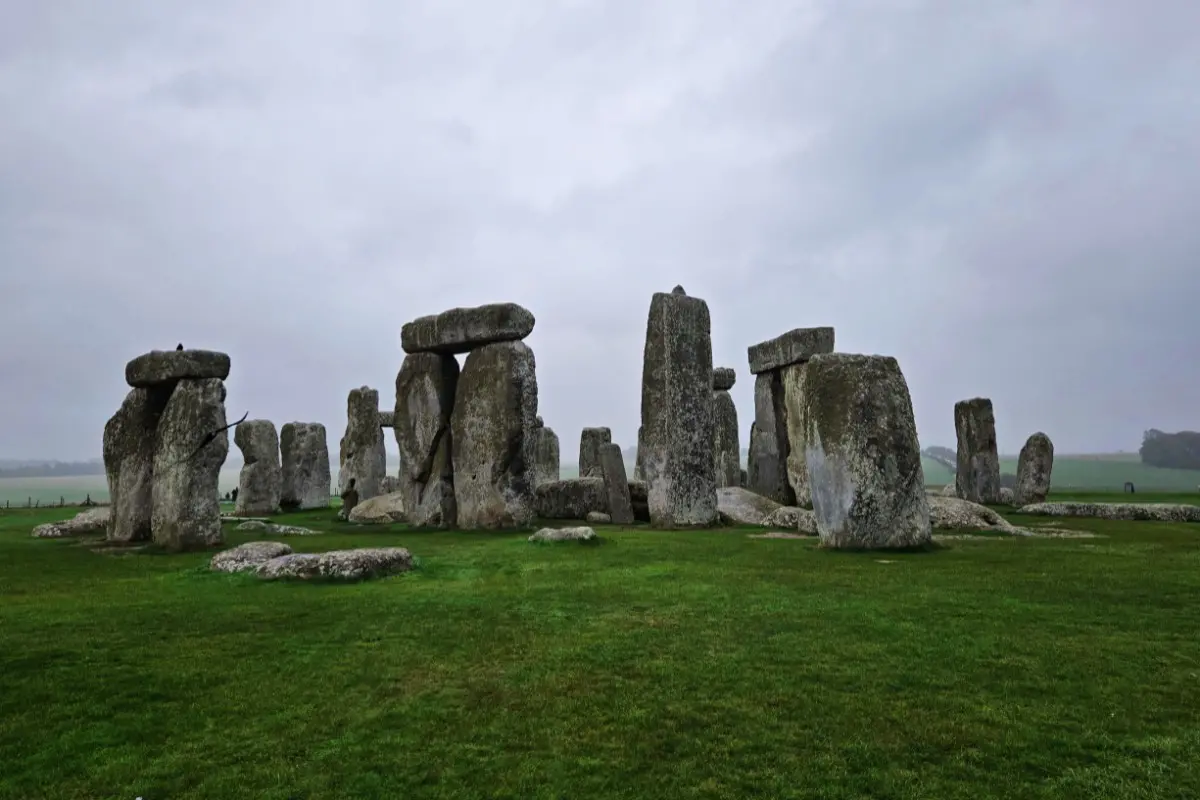
As a Malayali travelling through the UK, visiting Stonehenge was high on my list mainly because of the mystery surrounding it. I had seen pictures of this famous monument, with its huge stones standing in a circle. But seeing it in person was something different.
Stonehenge is in Wiltshire, in southern England, about 140 km from London. It is one of the UK's most famous tourist attractions and a UNESCO World Heritage Site. Every year, visitors from around the world come to see this prehistoric monument.
Also Read: I travelled to Jane Austen’s home and found the tiny table where she wrote
What makes Stonehenge special is that nobody knows exactly who built it or how they managed to move such massive stones into position.
A monument older than the Egyptian pyramids
Stonehenge is believed to be around 5,000 years old, making it older than the famous pyramids of Egypt. It was not built in a single stretch. Work began with a circular ditch and earth bank, and massive stones were added in later stages. The monument took roughly 1,000 to 1,500 years to develop the structure we see today.
Standing on the site, I could see huge stones arranged in circles across a green landscape. The larger stones, known as sarsens, weigh around 25 tonnes each. The smaller bluestones weigh about 4 to 5 tonnes.
Just imagine moving a stone weighing as much as several cars, without cranes, trucks or modern machinery! Some of these stones came from places many miles away.
Also Read: Meet Bagheera, the world’s heaviest Pumpkin weighing 1,295-kg
How did people transport them and lift them into position? Did they use wooden rollers, ropes and human strength? Researchers have suggested different methods, but there is no complete answer to this puzzle.
That is what makes Stonehenge so fascinating. Even after many studies, it continues to hold secrets.
Who built it, and why?
Nobody knows for certain who built Stonehenge. The people who created it lived long before written records were available. Archaeologists believe the monument had religious and ceremonial importance. Excavations have also revealed human remains, suggesting that the area was used for burials. However, its exact purpose remains a subject of debate.
Sun has a special connection with stones
During the summer solstice, around June 21, the sun rises in alignment with important features of the monument. During the winter solstice, around December 21, the sunset aligns with the stones.
Also Read: Why Romans loved bathing in Bath
This has led researchers to believe that the monument was designed, at least partly, to mark important points in the solar calendar.
Imagine people observing the sun and planning such a massive structure thousands of years ago, without modern scientific instruments!
Walking around a prehistoric wonder
Visitors cannot freely walk up to the stones during an ordinary visit, as the monument is protected. Instead, a designated path allows people to walk around the circle and view it from different angles.
The stones look different as you move along the path. Some stand upright, while others rest across the tops of two standing stones, forming impressive stone structures. One feature that caught my attention was the Heel Stone, a large stone standing apart from the main circle.
From the main visitor centre, you can walk to the monument or use the shuttle bus service. The walk gives you more time to enjoy the surrounding countryside, though the bus is convenient if you prefer not to walk.
Also Read: Sally Lunn and the 500-year-old Bun I took home
As I left Stonehenge, I carried with me more questions than answers. How did people move these huge stones? What made them build this monument? We may never know all the answers, but that is what makes Stonehenge so special.