Light is not owned, it is passed, what Bvlgari learned in Jaipur
Luxury has a habit. It walks into a culture, admires it loudly, pockets a few motifs and calls it ‘inspiration.’ So when Bvlgari picked Jaipur’s City Palace for its first-ever global Diwali campaign, Passing the Light, the cynics (hello, us) sharpened their pencils. A Roman maison. An Indian festival. Surely we knew how this ended!
Except, plot twist, it didn’t
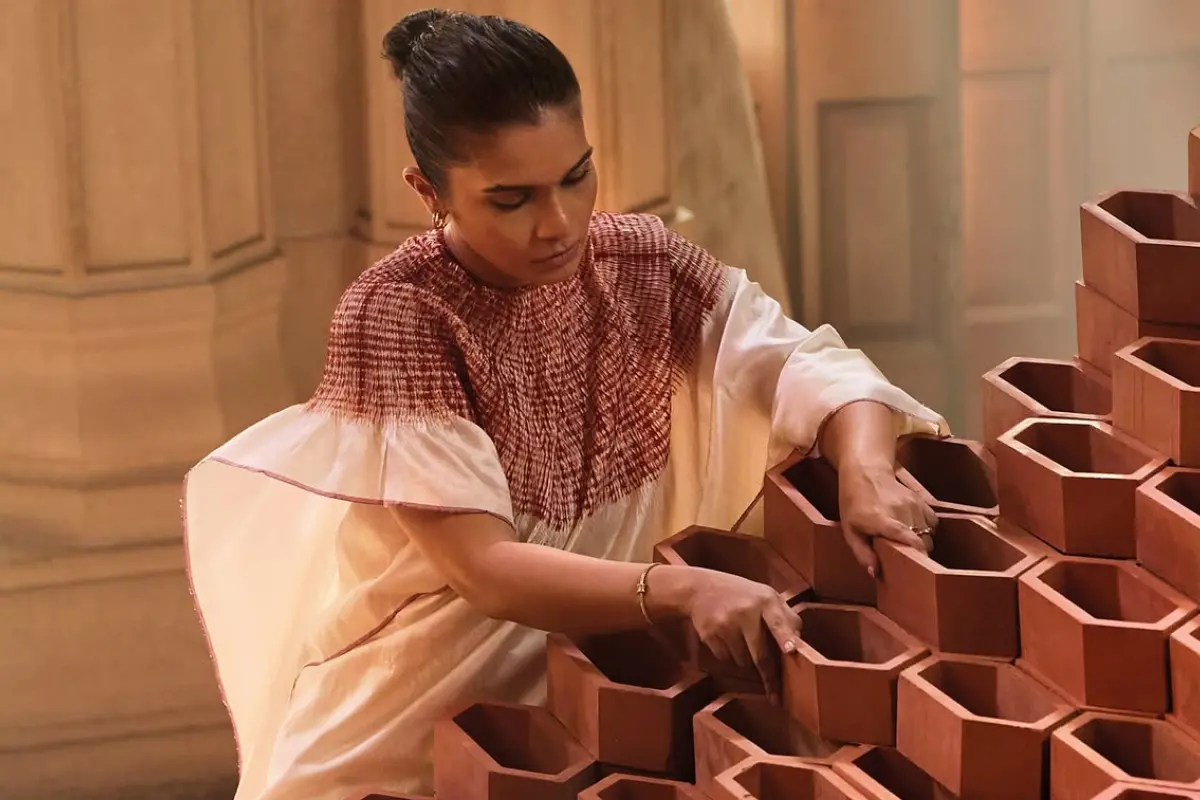
On October 11, the Jaipur Centre of Art lit up with an installation of 4,500 terracotta elements by artist Doyel Joshi.
Each one nods to the humble diya, and together they flow in the hypnotic geometry of Bvlgari’s Serpenti scales. It was monumental and intimate at once. The magic was not the size but the material, earth shaped by human hands, repeated thousands of times until it became one fluid form.
Also Read: Seven places your explore page hasn’t found yet
The diya needs no explanation in India. It is hope, renewal, good over evil, but also an ordinary evening in your grandmother’s house, a ritual so familiar we forget it is sacred. Joshi, who shuttles between Mumbai and New York, said lighting diyas is one of the traditions that keeps ‘home’ alive wherever she lands. She did not decode the festival for an audience. She carried it, personally, into sculpture.
And here is the eye-opening bit. The collaboration did not begin with a brand motif hunting for an artist to decorate it. It began with a question, what is your practice, and how do we build something together around Diwali?
Also Read: No street names, no addresses, a day lost (and found) in Auroville
Joshi spoke of respect for her process and of finding human stories together. The Serpenti arrived later, as a guest.
Twinkle Khanna, on the panel alongside Bvlgari’s Stephane Larher, noted the thin line between appropriation and appreciation, then called this one appreciation. From someone who never hands out compliments for free, that landed.
Now the philosophy, because Diwali always has one. We tend to think of light as something you possess: the brightest brand, the loudest campaign, the biggest name on the invite. But a diya has never worked that way. You light yours from someone else’s flame, and theirs does not dim. Light is the only wealth that multiplies precisely when it is given away. Luxury, at its best, behaves like a diya. At its worst, it behaves like a lock.
The installation also bowed to Rajasthan’s Kumhar community, whose pottery traditions have travelled through generations. The terracotta was shaped by local craftswomen, moving their work from the margins of ‘tradition’ into the centre of contemporary art.
Also Read: Djokovic is doing wellness again, and this time he's choosing your lunch
Bvlgari’s CEO Laura Burdese said true luxury is about giving meaning to what we inherit and letting it evolve. Pretty words, corporate decks are full of them. The real test is quieter, how the work was made, whose voices shaped it, and whether the hands behind it are credited as more than executors.
So ask the question every brand, and every one of us who ‘borrows’ a culture, should keep on the mantelpiece, are you taking the light, or passing it?
On one October evening in the Pink City, somebody passed it.
(Disclaimer: All images are courtesy of Bvlgari. We do not claim ownership of the visuals used in this article.)