I felt a natural pull to reconnect with my Kerala heritage: Artist Kumari Nahappan
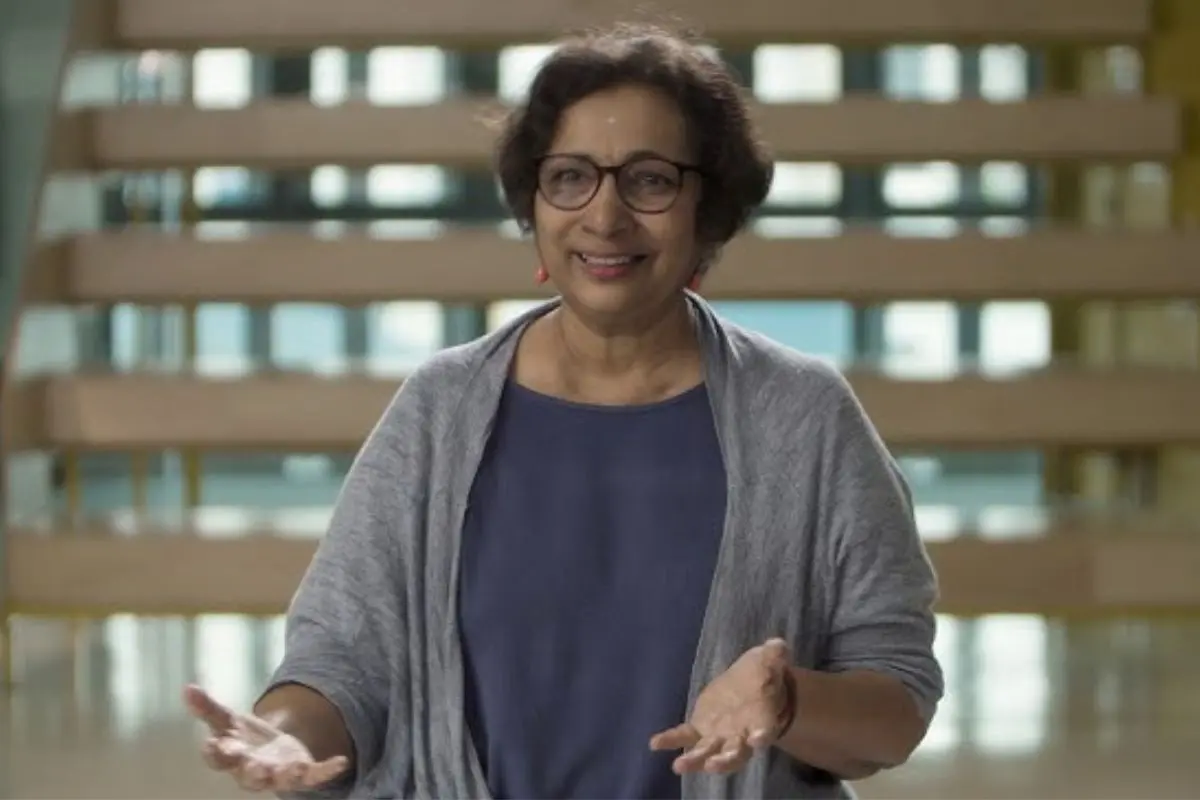
New Delhi: Kumari Nahappan (b. 1953), a Malaysian-born Singaporean artist, is celebrated as one of Southeast Asia’s foremost contemporary voices.
Over the past three decades, she has developed a distinctive practice spanning painting, sculpture, and installation, where natural elements such as seeds, pods, and spices are transformed into monumental works of art.
Her public commissions — including Saga at Changi Airport, Nutmeg & Mace at ION Orchard, and the 45-metre bronze mural Pembungaan at OUE Bayfront — have become landmarks that embody her fascination with organic forms, cultural memory, and the cycles of time.
Nahappan’s works are known for their sensuous scale and meditative quality, inviting viewers to reflect on the interconnectedness of nature, ritual, and history.
Stylistically, Nahappan blends symbolism with abstraction, using vibrant colours and elemental motifs to evoke both personal and collective memory. Scarlet, in particular, has become a recurring language in her art — not merely a hue but a vibration, rhythm, and embodiment of Shakti.
Her canvases pulse with chromatic energy, while her sculptural installations distill the essence of seeds and spices into iconic forms that transcend geography. Exhibited at institutions from the Mori Art Museum in Tokyo to the Tropenmuseum in Amsterdam, and in the collateral programme of the Venice Biennale, her work bridges Asia and the global stage.
With her first India presentation, ‘Chromatic Currents’, Nahappan brings her poetic visual language into dialogue with a land whose myth, memory, and sensorial traditions resonate deeply with her artistic spirit.
The show reflects a homecoming — one that traces the spice routes connecting India and Southeast Asia, while rooting itself in the Kerala and Andhra traditions that shaped her childhood imagination.
In an exclusive interview with Mathrubhumi, she spoke of her heritage, her process, and the power of colour.
Q. You have ancestral roots in Kerala and Andhra Pradesh. Do they influence your work?
My connection runs deep through cultural memories — from hibiscus flowers at the altar to rituals steeped in red. Scarlet carries the essence of both regions: the bindi, wedding ceremonies, and garlands for deities. While I don’t directly reference traditional art forms, the spiritual and cultural foundations of Kerala and Andhra flow through everything I create.
Q. How did the idea of this solo exhibition in India come about?
It was the vision of Pristine Contemporary. After decades of showing internationally, I felt a natural pull to reconnect with my heritage. At this stage in my life, it felt like the right moment to let these scarlet threads speak in their native tongue.
Q. How does this ‘homecoming’ feel?
Like completing a circle. These works have travelled the world, but returning them to the soil of my ancestry is deeply moving. Here, audiences instinctively understand the cultural codes — the significance of scarlet, seeds, and ritual.
Q. Why the title ‘Chromatic Currents’?
Because colour flows like water — dynamic, ever-changing, yet connected. The title also reflects the spice routes, where traditions moved fluidly across borders. Colour, for me, is never static — it transforms meaning across time and space.
Q. Seeds and spices are recurring motifs. Why are they important?
They hold potential, mystery, and transformation. Seeds embody continuity, spices carry memory across cultures. In my work, they become cosmic symbols, vessels of preservation and rebirth, bridging the tangible with the mystical.
Q. Was the process of putting the exhibition together exhausting?
Not at all. With curator John Tung, it felt like co-creation. Reimagining older works and selecting across three decades was energising — every decision felt guided by the work itself.
Q. What do you hope audiences take away?
That humble materials like seeds, spices, and natural forms can carry infinite potential. I want viewers to experience colour as energy, to see how cultural memory flows across borders while retaining its power. Ultimately, I hope it inspires reflection on time, space, and ritual in our contemporary world.