International Women’s Day 2026: Why rights without justice remain an unfulfilled promise
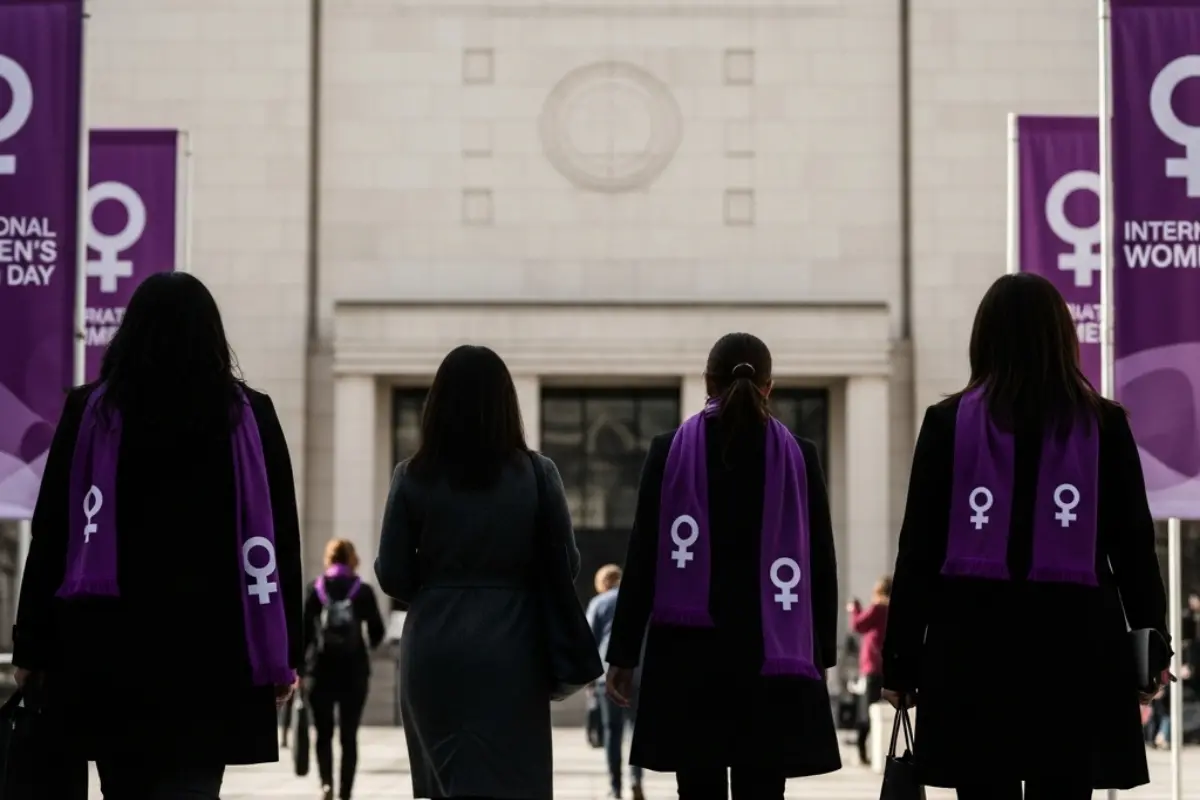
International Women’s Day (IWD) 2026 arrives at a moment when the global conversation about gender equality is becoming more direct and urgent. While the day has traditionally been marked by celebrations, campaigns and symbolic gestures, this year’s message emphasises a deeper reality: legal rights alone do not guarantee justice for women and girls.
Two major themes are shaping the global discussion in 2026. The International Women’s Day campaign has introduced the theme “Give to Gain,” which highlights the importance of supporting women through collaboration, mentorship and investment. At the same time, the United Nations has called for “Rights. Justice. Action. For All Women and Girls,” stressing that legal equality must be backed by effective systems that enforce those rights.
Together, these messages underline a growing global recognition that gender equality cannot be achieved without closing the gap between laws and lived experiences.
Women still have only 64% of men’s legal rights
Recent data from the World Bank and UN Women shows that women worldwide hold only 64% of the legal rights that men do. Although many countries have introduced reforms to improve gender equality, no nation has yet achieved complete legal parity between men and women.
In several parts of the world, women still face legal or social barriers in key areas of life. These include equal pay for equal work, property inheritance rights, access to employment, and freedom to make decisions about where they live or work. Such restrictions continue to affect women’s economic independence and social mobility.
The statistic has become a central reference point in discussions around International Women’s Day 2026, highlighting how far the world still has to go to achieve genuine equality.
The justice gap: when rights exist but enforcement fails
Even where progressive laws exist, many women struggle to access justice. One of the major challenges is the implementation gap, where legal protections are not effectively enforced.
In some countries, courts lack resources or gender-sensitive procedures. Legal aid services may be limited, and police authorities may hesitate to register complaints in cases involving discrimination or violence against women. These barriers prevent many women from using the rights they are legally entitled to.
Another major obstacle is the cost of justice. In more than 40% of countries, pursuing a legal case can require significant financial resources and time. For many women, especially those in low-income communities, the cost of legal action makes justice practically inaccessible.
Digital abuse emerges as a growing challenge
A new dimension of the justice gap in 2026 is the rapid rise of digital abuse and online harassment. Advances in artificial intelligence have made it easier to create deepfake content and other forms of manipulated media that target women.
These technologies are increasingly being used for harassment, blackmail and reputational harm. However, legal systems in many countries are still developing frameworks to deal with such crimes effectively. As a result, many victims find that existing laws are not equipped to address these emerging forms of digital violence.
Experts argue that modernising legal frameworks to address online threats has become an urgent priority in the global push for gender equality.
“Give to Gain”: a new approach to supporting women
Alongside calls for structural reform, the “Give to Gain” campaign promotes a collective approach to advancing women’s opportunities. The idea behind the campaign is that supporting women is not an act of charity but an investment in social and economic progress.
Support can take many forms, including mentorship, sponsorship, recognition of women’s work and investment in female-led businesses. Advocates argue that when women receive equal access to opportunities, societies benefit through stronger economies and more inclusive growth.
Research has consistently shown that closing gender gaps in employment and leadership can significantly increase economic productivity and innovation.
Action priorities for 2026
International Women’s Day 2026 has also highlighted several key action areas for governments, organisations and individuals.
One priority is removing structural barriers in workplaces and institutions. This includes reviewing pay structures, hiring practices and promotion pathways to identify hidden gender bias.
Another critical area is supporting organisations that work to prevent violence against women. Many grassroots groups providing legal, medical and psychological support face funding shortages, limiting their ability to operate effectively.
A third focus is modernising legal systems to address contemporary challenges such as digital harassment and climate-related displacement, which often affects women disproportionately.
A turning point for gender equality
International Women’s Day 2026 serves as a reminder that achieving gender equality requires more than awareness campaigns. While progress has been made in many areas, significant gaps remain between legal promises and everyday realities.
The themes of rights, justice and action reflect a growing consensus that meaningful change requires both institutional reform and collective participation. Bridging the gap between rights and justice remains one of the defining challenges in the global movement for gender equality.
As discussions continue around the world, the central message of 2026 is clear: real equality will only be achieved when women’s rights are not only recognised in law but also protected and enforced in practice.