Why you can't sleep in a new place? Understanding the first-night effect
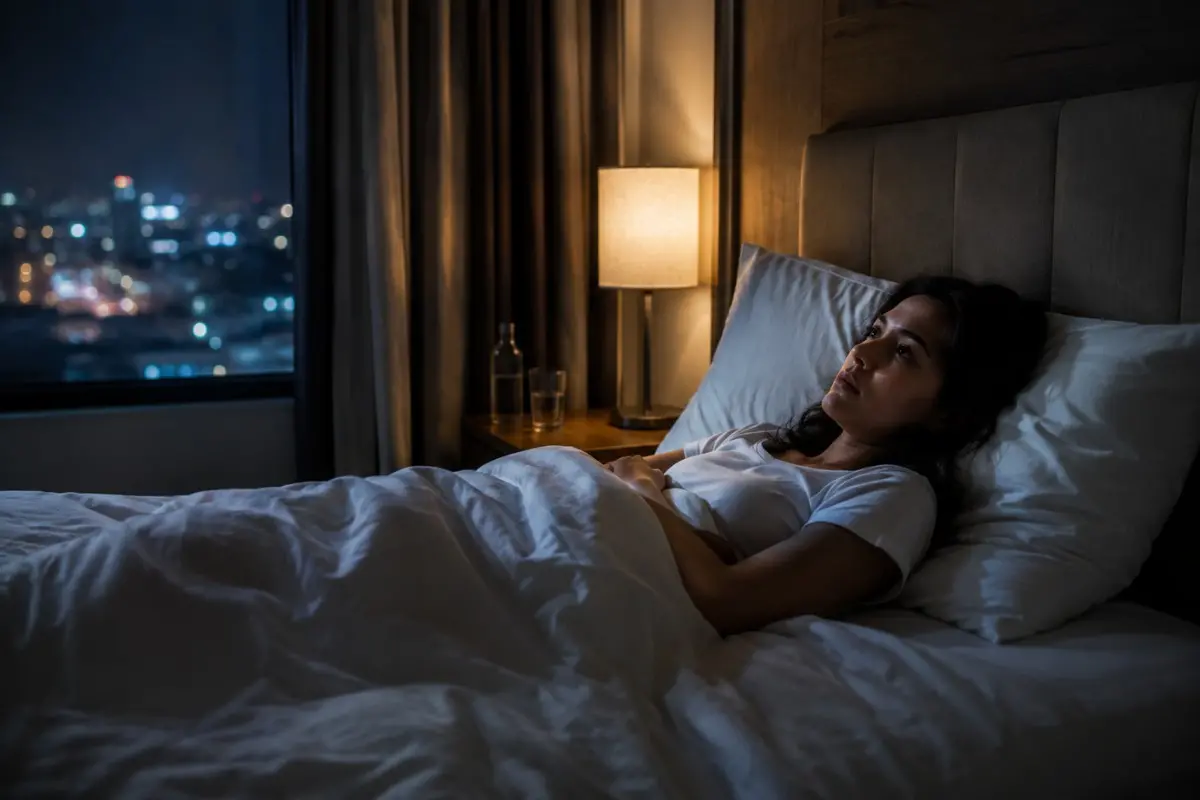
Why is it that you can sleep through every little noise at home, but suddenly notice every sound when you're staying somewhere else? If you've ever spent the first night of a holiday staring at the ceiling at 2am, you're probably familiar with the feeling. You may be tired, but sleep just doesn't come as easily as it does in your own bed. Then, by the second night, things often feel a little easier.
There is a well-studied reason why sleeping in a hotel, a friend's house or even a new bedroom can feel strangely difficult. Sleep researchers call it the first-night effect.
Research has found that people tend to sleep less soundly in an unfamiliar environment, with changes including taking longer to fall asleep, waking more during the night and spending less time asleep overall. The effect usually becomes smaller as the surroundings become familiar.
Your brain hasn't quite decided that the new place is safe
The first-night effect has been confirmed in numerous sleep studies and is thought to have evolutionary roots, according to Anna Wick, a senior sleep researcher at the University of Freiburg in Switzerland.
Also Read: Are you eating too fast? It could be affecting your health
“It’s assumed to be an adaptation response that the sleeping brain remains vigilant in this unfamiliar environment,” Wick said.
In simple terms, your brain may not completely switch off when you sleep somewhere new. It is still taking in the unfamiliar sounds, smells and movements around you.
One study found evidence of this unusual state of alertness at the level of the brain. Researchers observed that one hemisphere could remain more vigilant during the first night in an unfamiliar setting, responding more strongly to unusual sounds or other outside stimuli. The effect was not seen in the same way during later sleep sessions.
So, while you may be peacefully lying under a hotel duvet, part of your brain may still be thinking, Where exactly are we? What was that noise?
Ahmad Mayeli, a psychiatry professor and sleep researcher at the University of Pittsburgh, says most people experience the effect to some degree, even if they don't consciously notice it.
On average, people sleep about 20 to 30 minutes less in a new environment, according to the research he discussed.
His research also found greater activity in the frontal lobe, an area involved in deeper stages of sleep and other important brain functions, suggesting that the brain remains somewhat more alert.
“They are saying that, like in dolphins, part of the brain is awake when you are sleeping,” Mayeli said. “It’s not exactly like dolphins, but still, studies show part of the brain is sleeping less.”
The comparison sounds strange, but there is a reason researchers find it interesting. Earlier research on the first-night effect has suggested that the brain can maintain a kind of "night watch" in unfamiliar surroundings.
Why would the brain do this?
The obvious question is: why should your brain care whether you're sleeping in your own bedroom or a hotel room in another city?
Mayeli believes the answer may lie in how humans once had to sleep.
Also Read: What really happens if you sleep without washing your face?
“Maybe it’s the sweet spot,” he said, referring to people in their 20s being less affected by the phenomenon. The effect appears to be more pronounced in children, adolescents and older adults, according to Mayeli, although individual experiences vary.
He suspects that the brain may be wired to be cautious in unfamiliar surroundings because, historically, a new place could have meant greater danger.
“It doesn’t matter if it’s a Marriott hotel or it’s the savannah,” he said. “Your brain hasn’t gotten the memo that this place is completely safe.”
Of course, there are no predators waiting outside your hotel room. But your brain does not necessarily know that simply because the rest of you does.
It isn't always about the room
There is another reason your first night away from home may be rough: sometimes the unfamiliar surroundings are only part of the problem.
Lisa Strauss, a psychologist who specialises in cognitive behavioural treatment for sleep disorders, says travel itself can interfere with sleep, even when you haven't crossed time zones.
Think about the small things you normally don't notice at home. Perhaps the hotel has a blinking light from a smoke alarm. Maybe the room faces a busy road. Even the bed can feel wrong.
Then there is the emotional side of travel. Visiting relatives you aren't particularly close to, worrying about an early meeting or simply feeling out of your usual routine can make it harder to settle down.
And sometimes, surprisingly, the opposite happens.
A person who normally struggles to sleep at home may sleep better somewhere new because the new environment doesn't carry the same memories of lying awake night after night.
Also Read: Packing too much? The 5-4-3-2-1 formula will help you travel with less luggage
Strauss also points out that exhaustion can work in your favour. After a long day of travelling, sightseeing or moving around, you may simply be tired enough to sleep despite the unfamiliar surroundings.
The more you worry about sleep, the harder it can become
Anyone can experience the first-night effect, but Strauss says people who are already more anxious may be particularly vulnerable.
It can quickly turn into a frustrating cycle. You lie down thinking, you have to sleep because you have an early flight tomorrow. Then you check the clock. It's 12.30am. You really need to sleep. You check again and it’s 1.15am. Now you're not only awake. You're worried about being awake.
Strauss describes this as a self-fulfilling prophecy. The fear that you won't sleep can itself keep you alert.
So, how can you sleep better somewhere new?
You cannot completely convince your brain that a hotel room is your bedroom, but you can make the transition easier.
Keep your usual bedtime routine
If you normally shower, brush your teeth, read for 20 minutes and then go to bed, try to do roughly the same thing while travelling.
A familiar sequence can make an unfamiliar room feel less strange. General sleep guidance also supports keeping a consistent sleep schedule and having a relaxing routine before bed.
It is worth starting this routine before an important trip rather than trying to overhaul your sleep habits on the night before a big event.
Make the bed feel a little more familiar
Strauss suggests spending some quiet time in the new bed before you actually try to sleep.
Read a book. Listen to something calming. Do another familiar, peaceful activity.
The idea is simple: give your brain time to get used to the surroundings instead of expecting it to immediately switch from new place to sleep mode.
You can also bring small familiar objects from home. A favourite pillow, blanket or even a familiar pillowcase can make a hotel room feel slightly less unfamiliar.
Deal with the obvious distractions
If the room is too bright, use an eye mask or make the room darker. If outside noise is bothering you, earplugs may help.
Also Read: The secret to experiencing Jaipur like a local lies in these two August days
A cool, dark and quiet bedroom is generally considered more suitable for sleep, so there is no harm in adjusting the room where possible.
And don't forget the simple things. If the air conditioner is making an irritating noise, change the setting. If a flashing light is bothering you, see whether you can cover it safely.
Don't make sleep another task to complete
This one can be difficult, particularly when you have an early flight, presentation or wedding the next morning.
But watching the clock and repeatedly calculating how many hours of sleep you have left rarely makes you feel more relaxed.
If you're already anxious, Strauss suggests visualising yourself somewhere familiar and safe, such as a favourite beach or walking trail. Notice the anxious feeling rather than fighting it, and use calming phrases to remind yourself that you are safe.
Her suggested words are: “May you know that you are safe. May you know that you are loved. May you be at peace.”
What if you have an important day the next morning?
If tomorrow really matters, don't leave your sleep to chance. Mayeli recommends arriving a day early when possible, giving yourself time to settle into the surroundings before the important event.
It may feel excessive when you're booking the trip, but it can make sense if you have a major meeting, examination, presentation or other event where being well rested matters.
“If tomorrow matters, get there a night early,” he said, “so you’ll sleep like yourself when it counts.”
The good news: it usually gets easier
The first-night effect can make a perfectly comfortable room feel oddly uncomfortable, but it doesn't necessarily mean you'll struggle throughout your trip.
Research consistently shows that sleep in unfamiliar surroundings differs from sleep in familiar ones, and the effect generally becomes less pronounced as the environment becomes familiar.
So if you spend your first night in a new hotel listening to every unfamiliar sound, don't immediately conclude that you've suddenly developed insomnia. Your brain may simply be taking its time getting acquainted with the room.
Sometimes, all it needs is another night.
With agency inputs
(Disclaimer: This article is for general informational purposes only and is not a substitute for medical advice, diagnosis or treatment. If you experience persistent sleep problems, speak to a qualified healthcare professional)