‘Emergency care is complex... ’: Blinkit CEO reflects as ambulance service completes one year
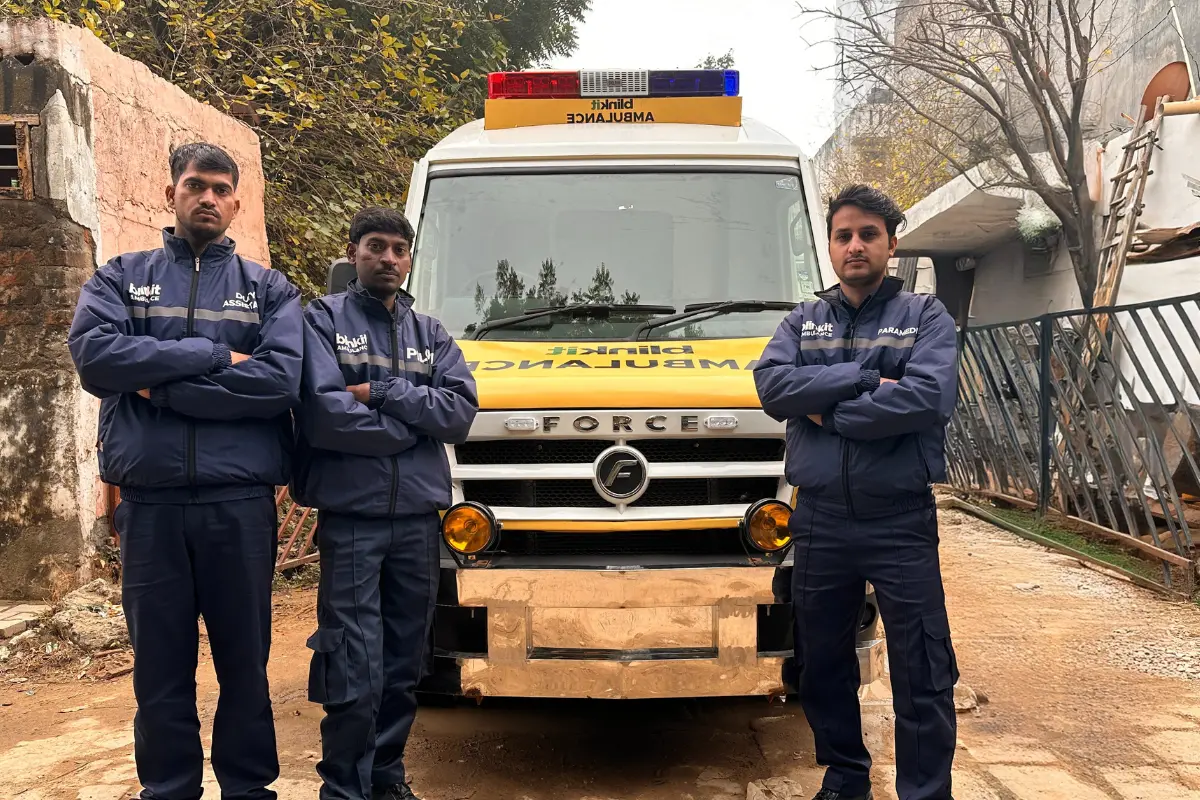
New Delhi: Quick-commerce platform Blinkit marked one year of its ambulance service on Friday, with CEO Albinder Dhindsa highlighting the scale, challenges and learning curve of running an emergency medical response system where “every minute counts”.
Sharing details in a post on X, Dhindsa said the service was launched in Gurugram a year ago with a simple objective — to make emergency medical help reach people faster.
“A year ago on this day, we started the Blinkit Ambulance service in Gurugram with a simple intent - to see if we could make emergency medical help reach people faster, when every minute counts. It was uncomfortable territory. Emergency care is complex, sometimes outcomes are unforgiving, and there’s very little margin for error. And training people to make the right calls under pressure is a long, deliberate process,” he wrote.
Detailing the progress made over the past year, Dhindsa said, “Over the last year, this is what that effort has grown into:
• Our ambulance team has handled 4,200+ cases out of which 1,810 were time sensitive medical emergencies
• We now operate 25 ambulances across most of Gurugram & Manesar, and some parts of Delhi (Lajpat Nagar, Malviya Nagar, Patel Nagar, Dwarka, Greater Kailash)
• Our ambulances reached the patients within 10 minutes, 87% of the time
• We have trained and deployed 70 paramedics from the Blinkit Academy in our ambulances
All of this without charging any money from the families that needed this service.”
The Blinkit CEO stressed that the effort behind the numbers was more significant than the figures themselves.
“But the work behind these numbers matters more than the numbers themselves. We learned that we would have to invest massively in training paramedics. It requires infrastructure, investment, and constant review, especially when decisions need to be made in seconds, often with incomplete information,” he said.
Dhindsa also noted that responsible expansion sometimes required restraint.
“We also learned that expanding responsibly sometimes means saying no - to moving too fast and to launching areas or cities before systems are ready.
We’re still early in this journey. We’ll keep expanding carefully, investing deeply in training, and work towards building a world class ambulance service.
Grateful to the teams on the ground who carry this responsibility every day,” he added.
The emphasis on faster emergency response comes amid a broader policy push by the Centre. In December 2025, Union Minister for Road Transport and Highways Nitin Gadkari told the Rajya Sabha that the government is working on an ambitious plan to ensure specialised ambulances reach road accident sites within 10 minutes.
Informing the House, Gadkari said the government is developing a model centred on a centralised emergency helpline integrated with upgraded ambulance services. Under agreements with state governments, modern ambulances would be deployed to significantly cut response times, with a target of reaching accident spots within 10 minutes in key areas.