Father's Day 2025: Why dads don't need to be superheroes to matter
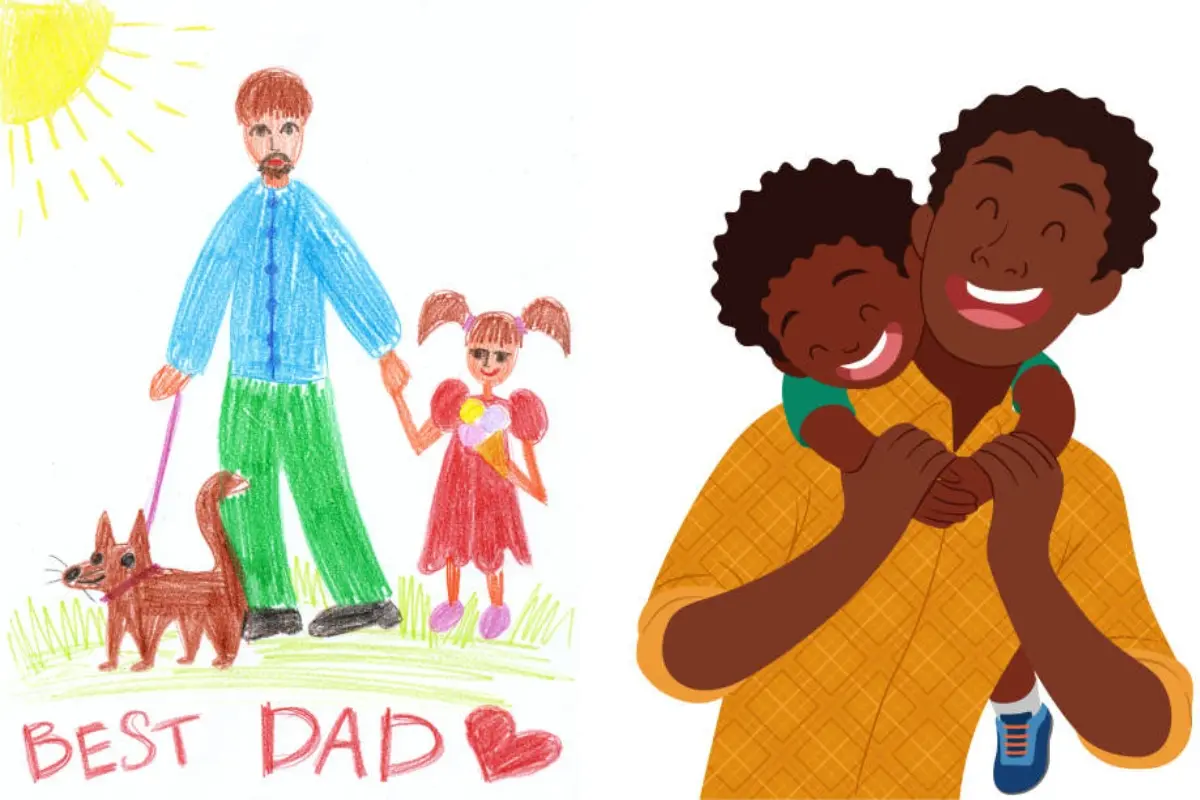
Father’s Day often arrives with glossy cards and superhero capes, celebrating dads as strong, steady and always in control, always be the superhero to his children. But the truth is more complex — and more human.
Today's fathers are navigating new terrain: parenting from afar, raising children alone, or learning to connect emotionally in a way previous generations didn’t know how to.
This Father’s Day, instead of idealising perfection, we honour the effort — the silent, persistent kind that builds bonds, sometimes across oceans, sometimes through grief. Because being a father today isn’t just about being there — it’s about learning to show up, in every way that matters.
Parenting across borders: “I never thought I’d be the NRI father”
One 36-year-old father, who lives and works abroad, told Mathrubhumi how his own childhood shaped his dreams — and how reality reshaped them.
“I used to think, as a child of an NRI father, that I would never go away from home. I always imagined living and working in my native place,” he said. “But once I started working, I realised opportunities don’t come to us — we need to move and adapt for the betterment of our career, finances, and family.”
Today, his sons are 5 and 9. He may not be home every day, but he has found his own way of being present. “I can confidently say I’m the best friend to my boys. Thanks to digital tools like video calls and messages, and with the constant support of my wife, we stay deeply connected. Whenever I can, I come home — we talk, we listen, and I always try to take them out or go on a vacation at least once a year.”
This Father's Day, he won't be home — but he’ll be on the phone, video calling his sons, making silly faces and telling bedtime stories across time zones. It’s a new kind of tradition, but one that still carries warmth and love.
The late learner: “My daughter told me it was okay to be weak”
Some fathers come into their role the hard way — through loss. A 72-year-old man, widowed at 52, shared how he had to rediscover what it meant to be a parent when his wife, the emotional core of the family, passed away. “When she died, I wasn’t just mourning my partner. I realised I didn’t really know my children — what they liked, how they felt, how to talk to them. It had always been their mother who understood all that.”
For two years, he struggled, locked in grief. Until one unexpected moment changed that.
“My daughter came to me after I had a fight with her younger brother. She hugged me and said, ‘It’s okay, Acha. We know you’re hurting too. You can be weak with us. We have each other.’ That moment broke me — in the best way.”
Since then, he's worked to connect — not with authority, but with vulnerability. On this Father's Day, he’s not looking for thanks. He just wants to cook lunch for his kids, hear their stories, and share a quiet laugh. That’s enough.
Not a superhero — something better
We often ask fathers to be providers, protectors, disciplinarians — but rarely do we give space for them to be learners, listeners, or even simply tired human beings. These stories remind us that:
A good father isn’t necessarily always there — but he shows up when it matters.
He may not always have the words — but he listens.
He may not have been taught how to express love — but he tries anyway.
This Father’s Day, let’s move beyond the capes. Let’s celebrate the fathers who make space for emotions, who adapt to new roles, who rebuild connections — even when it's hard.
Because that kind of quiet strength? That’s what real heroism looks like.