Crimson mirrors, sheer capes and appliqué fishtails: Best looks from Great Indian Wedding Book 6th edition
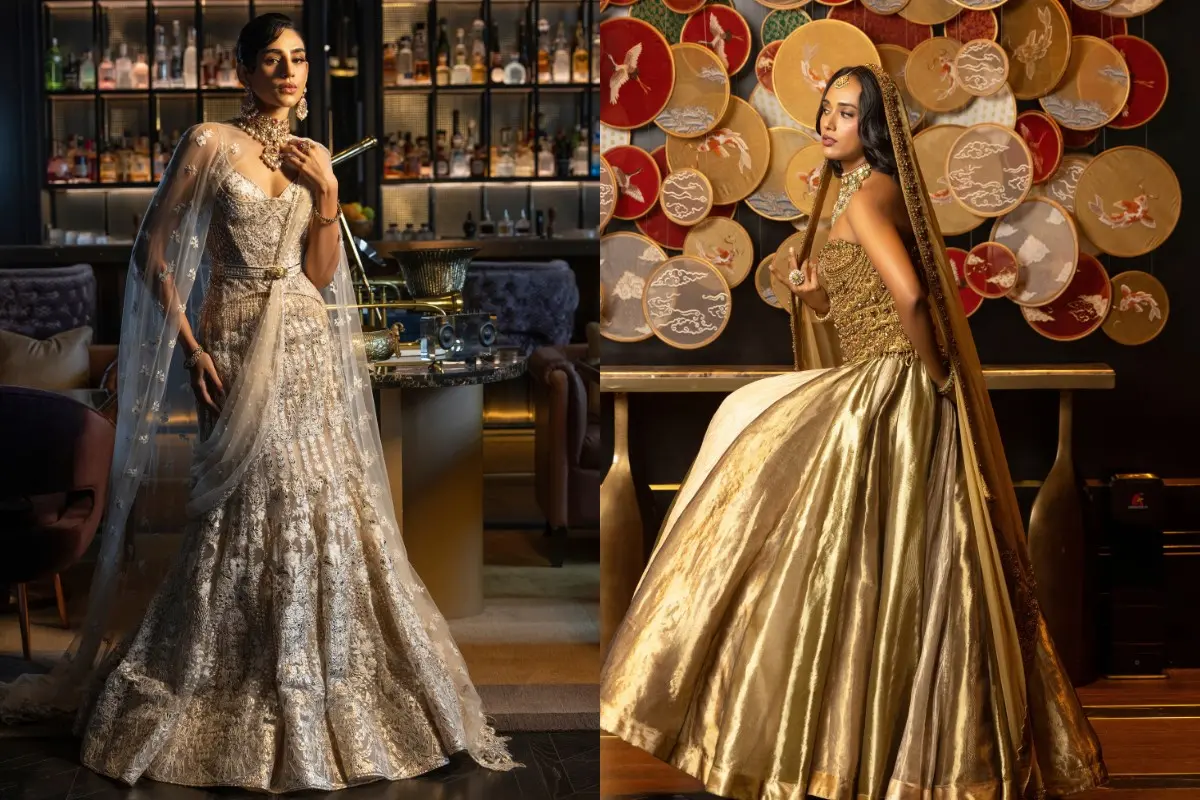
Picture three brides at three different weddings. One glints in crimson, her skirt scattered with tiny mirrors. One drifts in ivory, a transparent cape trailing behind her. The third wears beige cut close to the body, with a veil that seems to go on forever. All three are in the pages of the sixth edition of The Great Indian Wedding Book, which was unveiled by Tiger Shroff at the Jio World Convention Centre in Mumbai during India’s Best Wedding Makers 2026.
Its opening chapter, The Great Indian Bride, gathers 10 design houses: Manish Malhotra, Falguni Shane Peacock, Abhinav Mishra, JJ Valaya, Amit Aggarwal, Ritika Mirchandani, Shantnu Nikhil Couture, Aisha Rao, Anita Dongre and Itrh.
The publisher’s stated aim is to widen the bride’s frame of reference, so that she sees how many ways there are to dress for her own wedding. Here are the looks that make that case best.
Two reds, two temperaments
Red remains the colour brides are expected to choose, and two houses use it very differently.
Abhinav Mishra’s CRIMSON takes its cue from the Rangoon flower. It is built on the technique the label is best known for, and Mishra’s own reading is that he has kept classic bridal red but made it feel current. His mirror work is no mere sprinkle. It is packed densely across pastel organzas and luminous silks in patterns that feel both structured and fluid. The label also often pairs mirrors with gota patti and takes inspiration from art and architecture. Under studio lights, the effect is a red that moves.
Shantnu Nikhil Couture’s crimson lehenga comes from Becoming, a collection that treats the lehenga as the main event. The house describes it as sculpted corsetry, sweeping volume and elaborate surfaces of hand embroidery and metallic detail. In the editorial, the sculpted bodice and tonal embroidery let the silhouette do the talking, so this red is about shape and volume rather than sparkle. The designers frame the collection around a bride who carries two families and two cultures into one marriage, and who decides what she keeps from each.
The quiet ones
Not every bride wants a blaze of colour, and the edition makes room for softer ground.
Aisha Rao’s Beatrice, from the Priyasi collection, is a beige appliqué fishtail lehenga paired with a long veil. Priyasi was shown at India Couture Week 2026 and drew on Out of Africa and Anna Karenina, with appliqué remaining central to the label’s language and bio-fabrics such as BioResham and BioBadla entering the mix. Appliqué, in which cut fabric shapes are stitched onto a base, is also how the label has long worked with upcycled materials, including lehengas made from sock waste. That is what Rao means by purposeful luxury: beauty with a reason behind it.
Falguni Shane Peacock’s ivory ensemble pairs fine embroidery with a sheer cape. The designers describe the intention as soft, timeless and unmistakably bridal, with a modern edge. The cape is also very much of the moment. This season at Couture Week, sheer embroidered capes and detachable overlays turned up repeatedly as a fresh alternative to the traditional bridal silhouette.
Heirloom thinking
Three houses in the line-up treat the wedding outfit as something to keep, not merely something to wear once.
Manish Malhotra’s EVARA pairs zardozi and zari with sculpted silhouettes. Zardozi is metal-thread embroidery, and zari is thread spun with metallic content. The label’s own notes on EVARA describe a collection that weaves handloom together with zardozi and traditional zari, honouring the craftsmen and weavers who carried the skills through generations. Malhotra’s advice to brides follows the same logic: let heritage guide you, let craft tell your story, and choose pieces that stay part of your life long after the wedding.
Anita Dongre’s Forest Rose is a silk lehenga worked in threadwork, zari and sequins, with motifs drawn from a wild rose. It sits comfortably within a house known for Pichwai hand painting, gota patti and sequin embroidery. Her counsel is gentle: begin with the emotion you want to remember, then dress for that.
JJ Valaya’s Siddi is the most narrative collection of the 10. It was presented at Hyundai India Couture Week 2026, where Valaya explained that he was fascinated by the Siddis of India and by how African origins merged with the cultural influences absorbed over generations. The palette ran through antique gold, ivory, noir, champagne and deep jewel tones, worked in zardosi, aari, dori, metallic embroidery and crystal. Valaya’s stated goal was a collection that feels rooted without being nostalgic.
When the dress becomes architecture
Ritika Mirchandani’s The Third Path is built on the idea of a space between opposites. Every piece is handcrafted using bugle work, zari, aari, pita, kashida and kasab embroidery, and the bridal edit is deliberately small, with four to five looks that step away from heavy traditionalism. Her advice is practical: choose pieces that celebrate who you are, and put comfort first.
Amit Aggarwal’s label is built on blending organic and industrial materials, and he is known for sculptural work that sometimes uses unconventional materials such as recycled plastic and polymeric blends.
Itrh, meanwhile, is known for reviving crafts such as Kalamkari, Madhubani, chikankari and gota-weaving, and recently showed a bridal collection built around thousands of mirrors forming a single tapestry.
The world around the clothes
Photographer Pravin Talan shot the editorial at Fairmont Mumbai, using its scale and sleek interiors as a counterpoint to the embroidery.
Stylist Tanya Ghavri kept the 10 looks in one world through jewellery, draping and a careful balance between outfit and accessory. She calls the approach a modern, cinematic take on bridal couture, with every look telling its own story.
Hair and makeup artist Shradha Luthra works on restraint. Her philosophy is that cohesion comes from knowing where to stop.
Placed side by side, the ten looks make the same point from different angles. Red can be dense with mirrors or sculpted and tonal. Neutral can be airy or architectural. Heritage can be worn plainly or reworked. Whichever route a bride takes, the best advice in these pages is that the clothes should feel like her.