Zorawar, the light tank that can give India edge over China at LAC
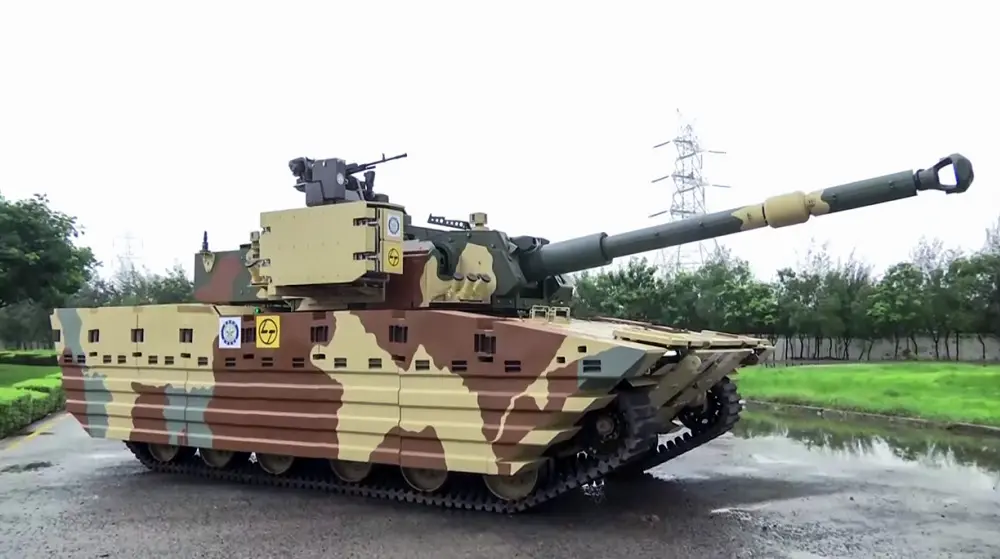
Defence Research and Development Organisation (DRDO) and Larsen & Toubro (L&T) have officially revealed Zorawar, India's new light tank. Named after Zorawar Singh, famous for his Himalayan expeditions, the tank is still in its extensive development phase, which started in January 2024.
The tank will undergo thorough testing on various terrains -- including deserts and the rugged landscape of Ladakh. Expected to be fully operational by 2027, Zorawar marks a significant boost to India’s defence capabilities.
Light tanks, such as the Zorawar, are crucial in high-altitude operations due to their agility and versatility, outperforming heavier tanks. With ongoing tensions along the Line of Actual Control (LAC), the Indian Army’s plan to buy 354 Zorawar tanks highlights their importance in boosting border defences.
The immediate procurement of 59 units from the DRDO and L&T shows the urgency of enhancing India’s defensive capabilities. Additionally, a competitive bidding process for the remaining 295 tanks aims to encourage innovation in India’s defence industry and strengthen local manufacturing.
India’s response to Chinese threat
The development of the Zorawar tank is viewed as a response to China’s deployment of similar tanks. The army plans to acquire light tanks with sufficient firepower for use in high-altitude areas. The goal is to improve agility, maneuverability and operational capability.
Since the clashes in eastern Ladakh's Galwan Valley, the army has taken several steps to boost its combat capabilities. It has deployed a substantial number of easily transportable M-777 ultra-light howitzers in mountainous areas along the LAC, including Arunachal Pradesh. The M-777s can be swiftly transported using Chinook helicopters.
In eastern Ladakh, the army has also stationed heavy tanks, such as the T-90 and T-72, as well as infantry combat vehicles. Additionally, the artillery units have deployed K-9 Vajra-tracked, self-propelled howitzers, Pinaka rocket systems and Dhanush gun systems along the border with China.
Since May 2020, the militaries of India and China have confronted each other on the border and a reasonable settlement of the border dispute is not yet in sight. Both sides, however, have pulled back from several areas of conflict.
Zorawar: Agile and Advanced Tank
Weighing around 25 tons and powered by a strong 750 horsepower engine, the Zorawar light tank combines powerful weaponry with excellent mobility.
Its main weapon is a 105mm gun that can fire different types of ammunition, including anti-tank guided missiles (ATGMs) launched from the tube.
It also features a 7.62mm coaxial machine gun and smoke grenade launchers for increased operational versatility, reports Bharat Shakti.
The tank provides excellent situational awareness, which is essential for modern warfare. It is equipped with two advanced electro-optical systems for hunter-killer capabilities, which are key to the tank’s ability to detect, track and engage targets effectively.
It also includes thermal imaging, which allows the tank to see heat signatures and detect targets even in darkness or poor visibility, and laser range finders that measure the distance to a target accurately, helping with precise aiming and targeting.
The tank’s lightweight design offers clear benefits in high-altitude missions. It excels at overcoming such obstacles as river crossings, rocky terrains and snow-covered areas, where heavier tanks often struggle.
The Zorawar tank can be airlifted by a C-17 aircraft making it strategically more flexible. This allows for quick deployment of up to two tanks at once to remote and crucial areas along the challenging terrain of the LAC.
Zorawar’s Unique Design & Features
Speaking to the Times of India about Zorawar’s unique features, DRDO tank lab director Rajesh Kumar explained that there existed three types of tanks and they were categorized by weight -- heavy, medium and light. Each has a specific role.
Heavy tanks focus on protection, medium tanks on offence and light tanks on both.
What makes this tank unique is its weight and the combination of key features -- firepower, mobility and protection. All three essential features are optimized to maintain a balanced weight without compromising on any parameter.
India's Zorawar vs China's Type 15
Zorawar’s Power-to-Weight Ratio: China’s deployment of the 35-ton Type 15 tank, armed with a 105mm gun and a 1000-horsepower engine, poses a major strategic challenge along the LAC. On the other hand, India's 25-ton Zorawar light tank has a 750-horsepower engine. The Zorawar’s power-to-weight ratio is 30, which is a significant improvement on the Type 15’s ratio of 28.5, highlighting its efficiency.
Zorawar’s Tactical Advantages: Despite being lighter, the Zorawar matches the Type 15 in firepower and tactical abilities. It excels in maneuverability and logistical flexibility, which are crucial for staying operational in Ladakh’s tough terrain and unpredictable weather.
Zorawar’s Operational Advantages: The Zorawar’s comparable firepower allows it to effectively engage such targets as the Type 15. Its superior agile movement through mountainous and high-altitude areas supports quick deployment and strategic positioning in both defensive and offensive operations. Additionally, Zorawar’s logistical flexibility ensures efficient operation in remote and harsh environments, overcoming the logistical challenges posed by Ladakh’s geography.
The author of this article is a Defence, Aerospace & Political Analyst based in Bengaluru. He is also Director of ADD Engineering Components, India, Pvt. Ltd, a subsidiary of ADD Engineering GmbH, Germany.