SPECIALSThe real story behind HAL’s delayed Mk-1A delivery
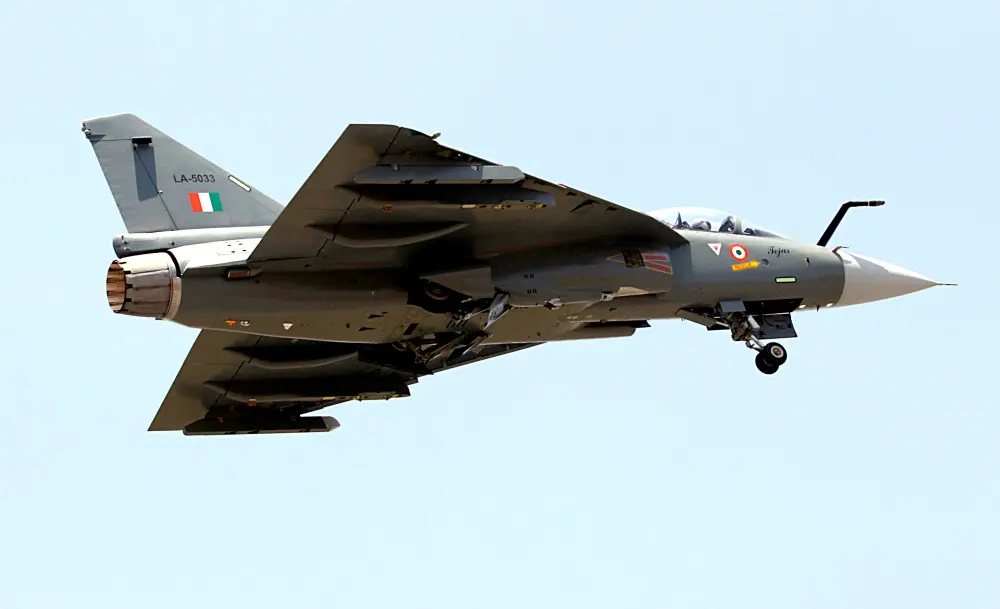
Hindustan Aeronautics Limited (HAL) is once again making headlines with its Tejas Mark 1A fighter jets. A massive deal worth Rs 1.09 lakh crore with the Indian Air Force for 180 advanced fighter planes is currently under review. These aircraft were promised to reach IAF hands by 2024, but delivery is running late by nearly two years. While headlines today sound alarming, a closer look shows the picture is not as sudden or shocking as it appears.
A senior HAL insider, who preferred not to be named, shared a very important point. The pending issues around radar integration and weapons being highlighted now are not fresh revelations at all. The HAL has been openly speaking about these challenges for many months.
Also Read: HAL's hidden crisis: Hard truths that chief Kota Ravi must confront
Back in February-March 2026, the then CMD Dr DK Sunil had clearly stated in interviews that ASRAAM missile integration and radar work were still pending. So today's news wave is really old wine in a new bottle -- the same known challenges being painted as a sudden storm.
Another important context often missed is the radar story itself. The original plan was to fit the indigenous Uttam AESA radar developed by DRDO. But for the first contract of 83 jets, Uttam was not yet fully ready for production timelines. So HAL took a practical decision to go with the Israeli EL/M-2052 AESA radar as a reliable interim solution.
To be technically precise, this Israeli radar is a proven and high-performing system by itself. The real bottleneck is software integration -- getting this radar to "talk" smoothly with our domestic Electronic Warfare suite and the onboard mission computer. The hardware is solid; the wiring of software simply needs more time.
To understand this in simple terms, imagine you buy a top-class smartphone and connect it to a brand new car music system. Both gadgets are excellent on their own. But making them pair perfectly through Bluetooth takes some patience and tuning. Same is the story with Tejas.
Engine supply trouble from the United States has also added to the wait. But here the news is encouraging -- HAL has already received six GE F404 engines, with another 15 to 20 units expected between June and December 2026, scaling up to 24 engines in FY 2026-27 and 30 annually from FY 2027-28 onwards. Roughly 30 airframes are already built and waiting; once engines arrive, they can be quickly converted into fully flyable jets.
One senior IAF officer recently said -- "We wanted an aircraft that is war-worthy, not just an aircraft that can fly." These words reflect genuine concern for pilot safety. But they should be read alongside HAL's consistent transparency, not against it.
Also Read: HAL's golden ticket: Forging Russia's Sukhoi-57 Felon stealth fighter
Another clarification — the June review does not mean the contract is being cancelled or reduced. Latest updates from mid-May 2026 suggest what is actually under review is the delivery schedule and certain operational relaxations. The IAF is showing healthy flexibility by considering technical "dilutions" on some non-core features. This means squadrons can start receiving jets faster, with smaller upgrades coming later. The core combat power remains non-negotiable. This is mature give-and-take between two responsible partners.
The first batch of 83 jets was ordered in 2021 and a second order of 97 came in 2025. The total money involved is enormous -- coming from hard-earned taxes of every working Indian family. So accountability matters, but so does fairness in reporting.
What HAL is already doing and must continue is straightforward. First, push software integration work round-the-clock with IAF pilots involved daily. Second, fast-track the Uttam radar so future Tejas batches carry fully Indian eyes in the sky. Third, give private Indian companies bigger roles in manufacturing -- boosting speed and creating jobs across many states. Quality cannot take a back seat, and HAL has rightly held firm on this.
Coming to the new CMD Ravi Kota, who took charge on 1st May 2026, people fondly call him the 'LCA man' because he knows the Tejas programme inside-out. This continuity at the top is a real strength. He should focus on three priorities. One, fix the delivery schedule with clear monthly targets and start handing over jets by late 2026, using the agreed relaxations smartly. Two, build stronger family-like bonding between HAL engineers, IAF officers, and private partners. Three, prepare for the future by pushing Tejas Mk-2 and Uttam radar integration forward.
Ravi can also personally inspect production lines in Bengaluru and Nashik. HAL targets 16 to 24 planes every year, very much possible with private support. Visiting workshops and cutting red tape will make a real difference on the ground.
Also Read: Is India's procurement policy killing its aerospace future?
The honest truth is, HAL has not been hiding anything. Leadership communicated these challenges months ago. What we see today is fair scrutiny mixed with some media drama.
Tejas is our very own fighter, born from decades of sweat and dreams of Indian scientists and engineers. Delays do hurt, but with continued transparency and steady action, Tejas can still become the proud backbone of IAF squadrons. Our brave warriors in the sky deserve the best, and HAL has both the talent and the honesty to deliver it.
The author is a Defence, Aerospace & Geopolitical Analyst.