The Beer Man, serial killer of Mumbai
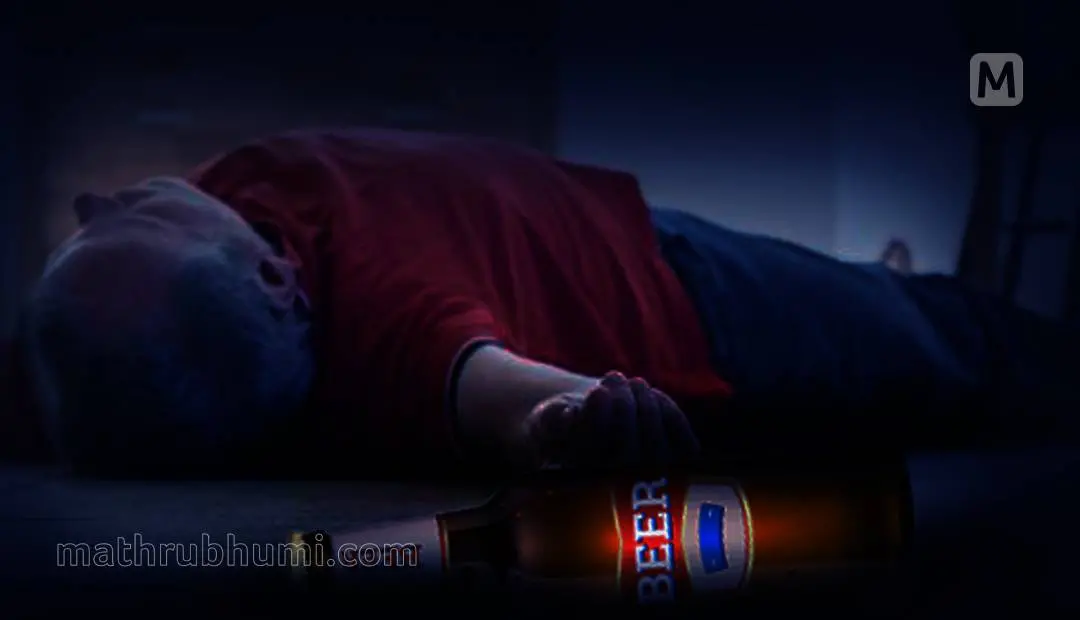
5th Oct 2006, a dead body turns up on the foot overbridge near Marine Lines train station in Mumbai. It was nothing unusual. As per a national daily, in the year 2014 and 2015 a total of 1667 unclaimed bodies reached JJ, Cooper and Bhagwati hospitals. So naturally, the police thought this was just another homeless man.
But investigations revealed that he was a taxi driver named Vijay Gaud. And the case was soon forgotten. However, within the span of a month, two more bodies turned up. The first near Marine Drive, and the next just a kilometre and a half away. Three bodies were not a coincidence.
On 14 December 2006, a homeless man’s body was found near Churchgate station, beaten to death. The only clue: an empty Kingfisher beer can that was found beside the body. And it didn’t stop there.
Between November 2006 and January 2007, seven more bodies turned up, all found between Marine Lines and Churchgate stations—a radius of a few kilometres. None of them could be identified apart from Vijay Gaud.
The victims were all either clubbed or stoned to death and were
naked below the waist, which suggested sexual assault. Due to the beer cans found next to two of the bodies, the Press gave the killer its name – The Beer Man. Much like the Stoneman Murders of Bombay and Calcutta in the 80s’ this case fascinated the public. Even though there were empty beer cans found next to only two of the bodies, the Press made it appear like it was the killer’s signature style.
But the Press and the Police should have realized that many of the homeless people used the thrown-away empty beer cans for storing their water. So, in truth, the cans might not have been left by the killer. But good headlines and ‘Breaking News’ always sell better than logic. As there was sexual assault and beer cans ‘found’ next to the bodies, the police and the press believed that the murderer was a beer-drinking homosexual serial killer.
No one was interested in the exact details. The ‘official’ number of victims varied as each newspaper tried to outdo the other. Some newspapers even started attributing deaths of all homeless people to the serial killer! When a newspaper printed the correct information about beer cans being found only near two of the victims, the other newspapers twisted it and said that the killer had stopped drinking beer!
Every new rumour became a fact, and facts were twisted to become breaking news headlines. Mumbai Police was finding it tough to investigate as the bodies kept piling up in a period of three months. They didn’t know where to start.
And then a handwritten note was found next to one of the victims. ‘The note we have recovered is full of seemingly senseless, disconnected sentences that may reflect his state of mind,’ said a senior policeman investigating the case. But one sentence stood out. It read: ‘Welcome to the clan.’ This made the police believe that the serial killer was indeed a homosexual.
Just then one of the senior investigating officers noticed patterns.
The killer was striking thrice in each area.
8 out of the 10 murders had been committed on a Thursday night.
The police and the public began to wonder whether the murders were ritualistic in nature. The Mumbai Police which had been working hard for a breakthrough finally got one.
In a public toilet, near the Marine Lines railway station, where the last victim was found, a police sniffer-dog retrieved an ironed grey shirt. Pavement-dwellers said it belonged to a member of the Dashrath Rane gang, Ravindra Kantrole.
On 22 January 2007, the sniffer dogs traced the owner of the shirt and the police nabbed Abdul Rahim, the name Kantrole had adopted after his conversion to Islam. The city breathed a sigh of relief. Fireworks were set off in celebration. The nightlife in south Mumbai resumed. People were no longer confined to their homes. But if you thought this was the end, you were mistaken.
Kantrole was no stranger to a police station. He was a boy who grew up in rough neighbourhoods, had shady friends, and an ambition to be successful and rich.
While still a teenager he joined one of the Mumbai Gangs led by Dashrath Rane.
His job was to extort money from hawkers and illegal establishments that were selling country liquor. And so the jail soon became his second home. He did drugs, drank and visited whorehouses for entertainment.
On one of these nights, he met a prostitute by the name of Anjali and fell in love with her. He bought Anjali from her madam by paying Rs.25,000 and married her. He converted to Islam, and chose the name Abdul Rahim, and began leading a straight life and became a police informer.
Hence, when he was picked up by the police, he was very surprised. And the Press once again turned it into a circus.
One report said that he was arrested from the Dhobitalao area, wearing a blood-soaked shirt and holding a chopper/dagger at the time of his arrest. Now imagine if you are wearing a blood-soaked shirt in a washerman’s area – would you not get rid of the shirt and just steal and wear a clean one? Why would the killer keep wearing the incriminating evidence so openly? But the Press was once again not interested in logic.
Abdul Rahim aka Kantrole told the Press that ‘I have always been targeted for my long hair, beard and religion. Even if I try to leave it all and mend my ways, they don’t let me.’
The Mumbai police interrogated him but Abdul Rahim clarified, ‘Sir, I have no clue about the murders! I have a daughter now, and after converting to Islam I have given up all illegal work!’
But the seasoned policemen knew that every criminal who was arrested or picked up always feigned and claimed innocence. The police decided to act on the one piece of evidence that they had – the handwritten note. They asked him to write notes. The police compared the two notes and found that the handwriting matched. They also pointed out that at the time of his arrest they had found a chopper/knife on Rahim. Of the seven known murders by Beer Man, stones were used in two cases, but a chopper was not used in any of them!
Rahim was flown to Bangalore by Mumbai Police for a narco analysis
test. The ensuing report came out positive, claiming that Rahim had confirmed that he had killed fifteen people and was involved in twenty-one criminal cases. The police also confirmed that during the narco test Rahim supposedly confessed that he made the victims drink beer to get them drunk before killing them. But he said that he did not sexually assault them, as homosexuality was against his Islamic religious beliefs and practices.
So who sexually assaulted these victims if Rahim did not? Did a stranger wait for Rahim to first kill the person and disappear into the night, before emerging from the shadows to sexually assault the dead bodies? So were there two killers behind these murders? Was there a serial killer (Rahim) and an unknown homosexual necrophiliac? A leading television news channel even concluded that Rahim had an assistant. This was becoming a hilarious case.
Sushan Kunjuraman was the defence lawyer fighting for Rahim and pointed out the flaws in the case and the way the case had been badly investigated. But the prosecution pointed out that Rahim’s handwriting matched, he had been a drug addict before, and that he was a criminal till just a few years ago working for a gang.
In September 2009, all charges against Rahim were dropped as all the ‘facts’ that had been routinely shared by the police and the media could not be verified. He came out of jail and shaved his beard off, cut his long hair and tried to look less threatening. But the tag of ‘Beer Man’ serial killer stuck on him. No one gave him a job and everyone avoided him.
And every time a body turned up, Rahim would be hauled back into the police station and questioned, harassed and even subjected to DNA tests without court authorization.
The ‘Beer Man’ murders of Mumbai remain unsolved to this date. In the end, it is about a serial killer who got away, while an innocent man was made to pay the price.
It also exposed how the media interference hampered the police investigations. Did the excessive reporting by tv news channels and newspapers give the real killer details about the investigations and helped him to get away? The media-hype definitely created chaos. And the pressure to close the case was too much for the police that their investigation had gaps in them, thus the wrong man getting picked up and arrested.
So who was the real Beer Man serial killer? Is he sitting somewhere reading this article and having the last laugh?
Anirban is a bestselling true crime author and Creator-Producer of the hit TV shows Savdhaan India, and Producer of Crime Patrol. You can read in detail about this case in his bestselling book The Deadly Dozen: India’s Most Notorious Serial Killers.
Anirban’s social media links: www.linktr.ee/anirbanb