The baby killer of Jalandhar: The sickening legacy of Darbara Singh
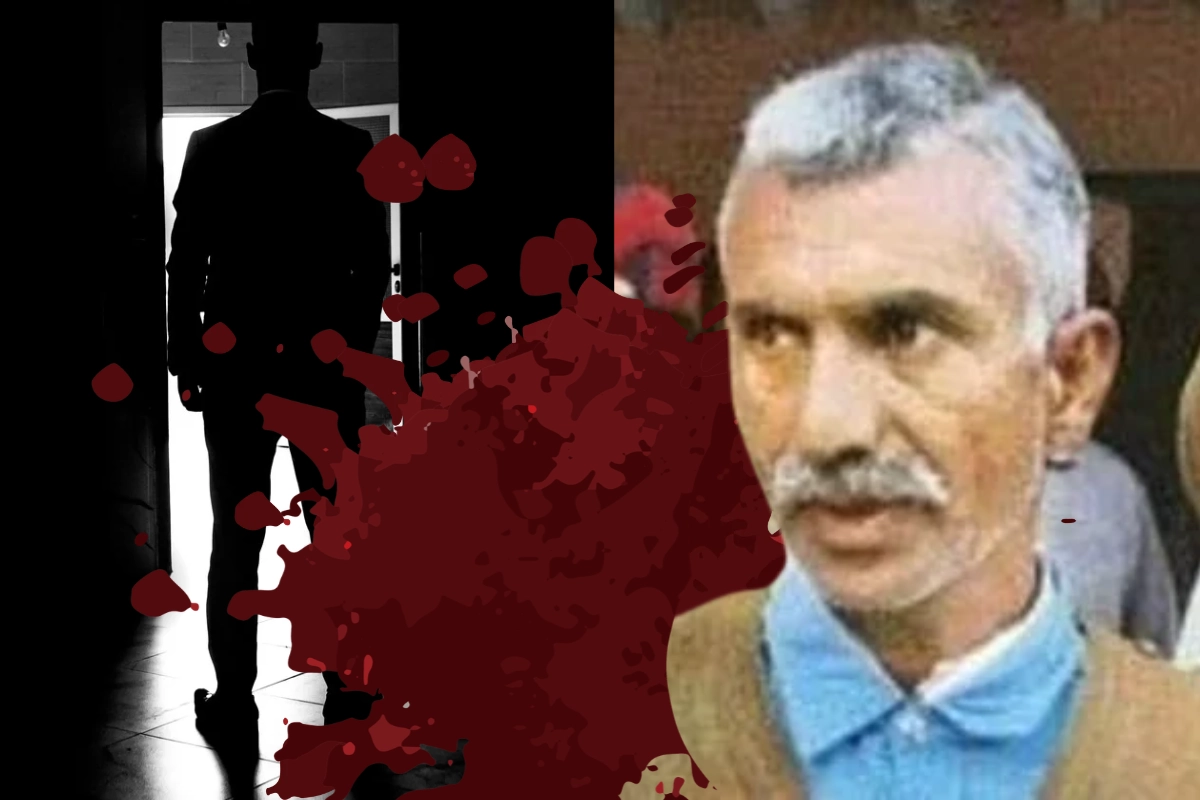
In the dusty, bustling industrial belts of Punjab, thousands of impoverished migrant families toil from dawn to dusk, dreaming of a better future for their children. But between 2004 and 2007, an elusive monster stalked the brick kilns, construction sites, and makeshift colonies of Jalandhar and Kapurthala.
He didn't target high-profile figures or wealthy residents. He sought out the most defenceless victims imaginable: tiny, helpless children of poor labourers—some barely old enough to walk.
This is the chilling chronicle of Darbara Singh—an ex-army man turned cold-blooded predator whose horrific rampage against innocent infants earned him a spot among the most vile serial offenders in human history.
There are killers who hide in darkness.
And then there are killers who walk through crowded neighbourhoods in broad daylight, smile at children, offer them sweets and ride away with them on a bicycle.
For months in 2004, that was the nightmare stalking Jalandhar. Children were disappearing.
Not from locked houses. Not from remote forests. They vanished from lanes where people lived, worked and played. They disappeared while their parents were earning a living. They disappeared in the middle of the day.
And increasingly, those who escaped spoke of the same man.
A middle-aged man. A bicycle. A bag of sweets. That was all the police had to go on.
What they did not yet know was that the man they were looking for was not a member of a child-trafficking gang. He was not an organised criminal mastermind. He was one man. A former soldier who had once served in the Indian Armed Forces. His name was Darbara Singh.
And by the time police finally caught him, he would confess to targeting dozens of children. The police believed the actual number could be higher than even his confession.
This is the story of India's infamous "Baby Killer."
The story of Darbara Singh began inside an Air Force base.
In 1975, an explosion tore through the quiet of the Pathankot Air Force Base. A hand grenade had been thrown at the house of Major V.K. Sharma. For a few terrifying moments, personnel feared the base had come under attack. But this was no enemy operation.
The grenade had been thrown by a fellow soldier.
Darbara Singh had recently quarrelled with Major Sharma. The argument had ended with a warning and a threat from the senior officer. Darbara responded by stealing a grenade from the ammunition depot and throwing it at the Major's home. Major Sharma's wife and teenage son were seriously injured.
Darbara was dismissed from the Armed Forces, arrested and put on trial. And then came the first extraordinary escape. He was acquitted because the prosecution could not establish a watertight case.
The Army had lost a dangerous man. But Darbara was only beginning his descent.
Darbara was married and had three children of his own.
Behind closed doors, however, his family life was reportedly violent and dysfunctional. He drank heavily and abused his wife. Eventually, the marriage collapsed.
Neighbours watched as Darbara's belongings were thrown out of the house and his wife effectively expelled him from the family home.
He walked away from his wife and children. He would never return to anything resembling a normal family life. Instead, he began drifting from job to job. And then he discovered something that would become central to his crimes:
Children were easy to approach.
The first children
In 1996, Darbara was working around Kapurthala.
Migrant labourers were living in temporary settlements around construction sites. Their children often spent the day nearby while their parents worked.
Two young girls had already been sexually assaulted. The families were frightened. The builder reportedly discouraged the workers from going to the police.
Then Darbara was caught in the act with another child. The workers attacked him.
He survived only because a supervisor intervened and insisted that he be handed over to the police rather than killed. Darbara was arrested.
He was convicted in three cases involving rape and attempted murder and sentenced to 30 years of rigorous imprisonment. It should have been the end of the story.
But in 2003, after spending around seven years in prison, his mercy petition was accepted on grounds of good conduct. Darbara Singh walked out of Ludhiana Central Jail.
A convicted sexual predator was once again a free man. And he had convinced himself that he was the victim. He blamed migrant labourers for his imprisonment. He wanted revenge.
His revenge would not be directed at the men who had confronted him. It would be directed at their children.
April 18, 2004
Darbara moved to Jalandhar and found work in the Leather Complex area. He rented a room. He gave his landlord a false version of his past. As far as the landlord knew, he was simply a man from Amritsar looking for a fresh start. But Darbara wasn't interested in starting over. He was planning payback.
On 18 April 2004, the hunt began. And it began with something as innocent as candy.
Darbara went into a provision store and bought fifty orange sweets. The shopkeeper was surprised. Fifty was a lot. Darbara casually explained that he had three children who loved them. It was a lie. The sweets were not for his children. They were to be used as bait.
The man with sweets
The afternoon streets of Model Town were quiet. Most fathers were at work. Women were inside their homes. Children played outside. Darbara watched. He approached a ten-year-old girl named Gudia and her six-year-old brother Satish. He spoke to them. He asked where they were from. They were migrants from Bihar. That answer mattered to him. He gave them sweets. Then he offered them more. The children followed him. Along the way, an eight-year-old boy named Shankar encountered them. Darbara offered him sweets too.
Three children became four. The man on the bicycle had begun building his group. He led them away from the neighbourhood. Only one of the children would eventually escape. And the surviving child would become one of the most important witnesses in the entire case.
By the end of that single day, five children had been targeted. Three were dead.
Darbara had begun what would become a terrifying killing spree.
The second attack
Darbara was not finished. Two sisters, Diksha, eight, and Asha, six, were playing badminton with their cousins. Darbara approached them with another irresistible promise. A new racquet and a new shuttlecock. The girls followed him. They were taken towards a canal. There, the situation changed. Asha realised something was wrong. She managed to escape. She ran. She ran through unfamiliar lanes and villages, terrified and disoriented, until a man named Malkit Singh found her. Instead of ignoring the frightened child, Malkit helped her. He took her to a dispensary, gave her food and brought her to the police. Eventually, she was reunited with her family.
But Diksha was dead.
Asha had escaped Darbara. She had also unknowingly become a witness who could eventually help bring him down.
The killer perfects his method
Darbara disappeared for two months. Then, on 17 June 2004, he struck again. His victim was nine-year-old Jatinder. This time the sweets were replaced with a samosa. The pattern was becoming clear.
First - Approach the child.
Then - Gain trust.
Bait the child - Offer food or a gift.
Snatch - Take the child away. And disappear.
On 29 June, Darbara abducted two children under the age of six. But the children cried loudly. People were alerted. Darbara abandoned them and escaped. By now, eight children had been lured. Four had escaped. Darbara was furious.
He began thinking about how to prevent his victims from raising an alarm. On 6 August 2004, he abducted seven-year-old Poonam after promising to buy her a new dress.
This time, he deliberately changed his method. He later told police that he wanted to prevent the children from screaming. Poonam became another victim. And Darbara's crimes entered an even darker phase.
The attacks were no longer isolated incidents. Children were disappearing. Some never returned. Others returned with stories about a man on a bicycle who offered them sweets.
But Darbara had made one peculiar distinction in his own mind. He was targeting migrant children. He believed the migrant labourers were responsible for his imprisonment. And he had constructed a twisted ideology around his revenge. He even told investigators that he had a rule:
He would not kill Punjabi children.
That distinction would eventually collapse. But before it did, another child disappeared.
On Independence Day, 15 August 2004, five-year-old Lachchmi was playing in Basti Sheikh. Darbara approached her on his bicycle. He offered her a ride. She climbed onto the cycle. She was never seen alive again. Her remains would be discovered much later.
She became victim number six.
The following day, Darbara struck again.
Then again. And again. Some children escaped when people unexpectedly appeared. Others disappeared forever. The killer had developed a preferred hunting window: roughly 10 a.m. to 12:30 p.m.
That was when many migrant parents were away at work. The children were vulnerable. And Darbara knew it.
The clues
By late August, panic had spread through neighbourhoods in and around Jalandhar.
Parents were warning their children. People were watching strangers. The same description kept surfacing:
A man. A bicycle. Sweets. A middle-aged suspect.
But the police initially struggled to believe that one person could be responsible for everything. Perhaps it was a gang. Perhaps it was human trafficking. Perhaps several criminals were operating together. Then the evidence began pointing in one direction.
The same modus operandi. The same kind of target. The same bicycle. The same sweets. The same time of day. And then came the discoveries that finally forced investigators to confront the horrifying truth.
The police formed a Special Investigation Team. A sketch was prepared from descriptions provided by surviving children. The hunt for the "man on the bicycle" began.
The girl who survived
Then, on 18 October, seven-year-old Nishu disappeared. The next day, she was found alive in a sugarcane field. Her injuries were so severe that she could not speak. But she had survived.
For investigators, her survival was crucial. The police now had another potential witness. Another person who could identify the man. The case was closing in. And Darbara didn't know it.
The mistake that ended the hunt
Darbara continued.
On 25 October, children disappeared again. Among them were Khurshid and his cousin Ruku. Darbara took them away. Their families searched desperately. Reports were filed. The city was on edge. But Darbara made a fatal mistake. He was no longer invisible.
An informer reported seeing a man who resembled the police sketch. He was riding a bicycle. And he had a large bag of toffees attached to the cycle. Police rushed to the location. There he was. The face matched the sketch. The bicycle matched the descriptions. And the sweets were exactly what the surviving children had told police about.
Officers gave chase. Darbara abandoned the bicycle and ran into the sugarcane fields. But there was nowhere left to hide. The police caught him. The Baby Killer was finally in custody.
"I would have killed many more"
The interrogation produced another shock. Darbara confessed.
According to the source account, he told police that he had targeted approximately 23 children and claimed to have killed 17. Investigators believed the number might actually have been higher, because six other children had disappeared under remarkably similar circumstances. He wasn't describing himself as a monster. He believed he had a mission.
He believed migrant labourers had taken years of his life by sending him to prison. And now he believed their children should pay the price. When investigators asked him whether he felt remorse, his answer was chilling. He said he had none. He believed what he had done was justified. Then came the sentence that would haunt the investigators: He hadn't expected to be caught so soon.
If he hadn't been caught, he said, he would have killed many more.
The sugarcane fields
Darbara began taking police to places where he had hidden the bodies.
The first major recovery took investigators into a sugarcane field on the Jalandhar-Kalasanghia Road. The officers were searching for Khurshid and Ruku. The fields were dense. Visibility was poor. Darbara walked ahead of the police and indicated where they should search.
Eventually, investigators found what they were looking for.The discovery confirmed the scale of what they were dealing with. More recoveries followed.
The killer who had seemed almost mythical to the terrified neighbourhoods was now walking alongside police officers and pointing out locations where his victims had been left.
And, according to the source account, investigators were struck by his apparent lack of remorse. For the families, the nightmare was only beginning.
Mohammed Vakil had once warned his little son Khurshid about strangers. Stay close to home. Don't talk to unknown people. Come back immediately if someone approached you. The warning had been given. The danger had simply been impossible to imagine.
When Vakil was asked to identify his son's body, the world he knew collapsed. He had spent days hoping that his boy would come home. Now there was nothing left to hope for.
The case that refused to die
The police had Darbara. They had confessions. They had witnesses. They had recoveries. They had a case that seemed overwhelming. But then came the courtroom.
Darbara was charged in 18 cases involving abduction, rape and murder.
In January 2008, he was sentenced to death for the murders of Khurshid and Ruku.
He was transferred to Patiala Central Jail to await execution.It appeared that the Baby Killer would finally face the ultimate punishment. Then the legal machinery began to unravel the case.
In another case, Asha — the little girl who had escaped Darbara at the canal — identified him. She became a key witness in the prosecution of the man who had killed her sister. But Darbara's defence argued that witnesses had been tutored and that he had been wrongly implicated. He was sentenced to life imprisonment in that case.
And then came an even bigger blow.
In 2009, the Punjab and Haryana High Court reversed the death sentence in the Khurshid and Ruku case. The court questioned the handling of crucial evidence. A liquor bottle and glass recovered from the crime scene had not been properly mentioned in the inquest reports.
They had also been sent to the forensic laboratory after a significant delay. The court questioned why more modern forensic techniques — including DNA and blood analysis — had not been used. The result was devastating for the prosecution.
Darbara was acquitted in the murder case involving Khurshid and Ruku. He was also acquitted in the Tazbin case because of insufficient evidence.
The man whom investigators believed was responsible for a horrifying killing spree was repeatedly surviving on technicalities, evidentiary failures and gaps in the prosecution case.
For the families, every acquittal reopened the wound.
The last escape
Darbara Singh had spent years moving between prison cells and courtrooms. He had escaped conviction before. He had escaped the gallows. He had escaped responsibility for some of the crimes attributed to him. But he could not escape time.
On 10 June 2018, Darbara Singh died at the age of 75 at Rajindra Hospital. The official account cited natural causes. His family refused to claim his body.
The man who had once been at the centre of one of Punjab's most horrifying criminal investigations died behind prison walls.
He was never hanged. He never faced the punishment that investigators and many victims' families believed he deserved. And that is perhaps the most disturbing ending of all. Because for the families of the missing children, there was no such thing as an ending.
Only an empty place at the dinner table. A childhood photograph. A memory. A question that could never be answered.
Why them?
Darbara Singh's story is terrifying not simply because of the number of children he is alleged to have killed. It is terrifying because of how ordinary the beginning of each encounter could be. A child playing in a lane. A stranger smiling. A sweet.
There are reports that describe Singh as having claimed 17 killings, while investigators believed the true number could have been closer to 23. The wider narrative has also referred to 27 lives, illustrating how difficult it ultimately became to establish the full scale of his crimes. Whatever the final number, the pattern was unmistakable.
For months, a predator had moved through Jalandhar's neighbourhoods looking for children whose parents were too busy working to watch them.
He knew exactly when to hunt. He knew what to offer. He knew whom to target. And he believed poverty made his victims invisible.
However, as the body count mounted in and around Jalandhar, a terrifying timeline of missing toddlers began to emerge.
Surinder (2 Years Old), who was last seen playing near a brick kiln while his parents worked. Singh offered the boy cheap sweets and coaxed him away toward nearby fields.
Deepu (1.5 Years Old) was left unattended for mere minutes near a labourer colony. Deepu’s small body was discovered days later in an abandoned canal tract.
A 7-month-old infant was sleeping in a makeshift hammock near a construction site while her mother laboured nearby. Demonstrating a total lack of remorse, Singh snatched the baby directly from the camp when no one was looking.
Anju (4 Years Old) & Rajoo (3 Years Old) were both playing near rural sugarcane fields adjacent to their homes. Singh approached with coins and snacks, promising to take them to a nearby shop. Both children vanished, only for their remains to be discovered in shallow graves hidden deep within the tall crops.
Darbara Singh's legacy remains one of the darkest chapters in true crime history. He weaponised military-honed tactical discipline and exploited extreme poverty to target the most vulnerable members of society. His capture, made possible by the bravery of young survivors who spoke up, brought an end to a terrifying nightmare—ensuring that the baby killer of Jalandhar would spend the rest of his life behind bars and ultimately die behind bars.
(Anirban Bhattacharyya is a bestselling true crime author and creator-producer of the hit TV shows Savdhaan India & Ishq Kills and producer of Crime Patrol and Fear Files.)