Who decides which dog is dangerous? An open letter and videos question process | WATCH
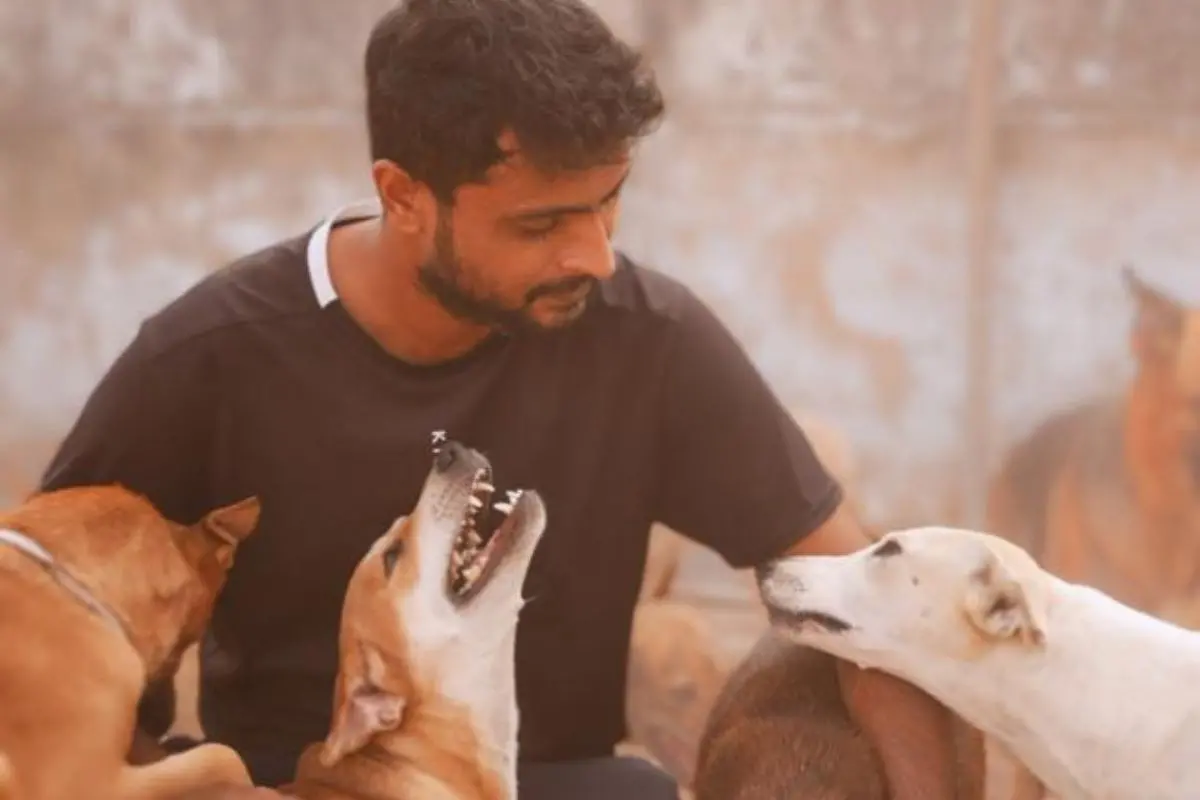
A day before the Supreme Court reinforced its stance on stray dog management across India, a Kochi-based animal rescuer had published a detailed warning: without a clearly defined standard for identifying “dangerous” dogs, the system risks turning subjective judgement into irreversible action.
By the following day, the court had reiterated that stray dogs must be removed from high-footfall public spaces such as schools, hospitals, bus depots and railway stations, and that animals identified as rabid, incurably ill or “demonstrably dangerous/aggressive” could be euthanised under Animal Birth Control (ABC) Rules.
The proximity between the open letter and the ruling has since drawn attention to a broader unresolved question at the heart of India’s stray dog debate: who, exactly, decides which dog is dangerous — and on what basis?
‘Who decides which dog will inflict harm?’
In his open letter, Pratik Sudhakaran — an engineer, paravet, certified rabies instructor and animal behaviourist — questions the absence of a uniform, evidence-based screening process for classifying stray dogs as dangerous.
“Who decides which is a dog that will inflict harm?” he asks, arguing that current practice leaves room for complaints, perceptions and administrative discretion rather than structured behavioural assessment.
While stating that he supports the removal of genuinely aggressive animals from the streets, Pratik warns that the ambiguity in classification risks sweeping in animals that pose no threat.
“The dogs that will come near you would be the friendly ones, and they would be snatched away,” he writes, calling the approach “unfair” in the absence of clear behavioural thresholds and monitoring protocols.
He argues that the responsibility for such classification must rest with a properly constituted monitoring committee, but insists that the eligibility and competence of those appointed to it must be “thoroughly vetted”, particularly in relation to their understanding of free-roaming animal behaviour and direct field experience.
Without such safeguards, he contends, decisions risk being made on incomplete observation or second-hand reporting rather than sustained behavioural monitoring.
Field documentation: Kochi’s free-roaming dogs under observation
Central to Pratik’s argument is a field documentation exercise he conducted between March 9 and April 24, during which he travelled across Kochi at night recording first-contact interactions with free-roaming dogs.
He describes the work as an attempt to move beyond statistics and policy abstraction by directly observing animal behaviour in uncontrolled urban environments.
Across more than 1,000 individual dogs encountered in different parts of the city, Pratik says he documented a range of scenarios including packs, nursing mothers, territorial disputes, mating competition and resource guarding.
The footage, which he states is unedited and publicly available, includes extended sequences of him approaching unfamiliar dogs in street environments and feeding multiple animals at close range.
According to Pratik, the recordings consistently showed non-aggressive responses to close human contact. “Across more than 1,000 dogs — not one instance of unprovoked aggression,” he wrote in his letter.
He argues that such observational data is absent from most official decision-making processes, which instead rely heavily on bite reports and incident summaries that do not account for everyday non-incident interactions between humans and dogs.
Data gaps and policy blind spots
Pratik also questions the reliability of current datasets used to justify stricter control measures on stray dogs.
He points to bite statistics that do not distinguish between pet and free-roaming dogs, incident reports that lack behavioural context, and records that document attacks without detailing preceding human interaction.
In his view, this creates a system where isolated incidents can outweigh vast volumes of uneventful daily contact between humans and street dogs.
He also highlights what he describes as a structural policy gap: while most interventions focus on managing dogs already on the streets, little attention is given to the sources of population inflow.
“Unregulated breeding. No microchipping. No legal liability for abandonment,” he writes, arguing that the absence of owner accountability ensures a continuous cycle of abandonment feeding the street population.
“A dog can be purchased today and abandoned tomorrow with zero consequence,” he notes, adding that such animals are later counted in the same datasets used to justify removal or culling.
Court’s position and continuing tensions
The Supreme Court’s latest directions prioritise removal of stray dogs from institutional and high-footfall public spaces, while permitting euthanasia only in cases of rabies, incurable illness or demonstrable aggression, in line with ABC Rules.
It also directed states to establish Animal Birth Control centres in every district and emphasised that the right to public safety includes the right to move without fear of dog attacks.
At the same time, the ruling has intensified ongoing tensions between public safety concerns and animal welfare protections, particularly over how “aggressive” behaviour is defined and verified in practice.
Pratik’s intervention places those questions into sharper focus. His central argument remains procedural rather than ideological: that any system empowered to make irreversible decisions about animal life must be based on transparent, consistent and field-tested criteria — not discretionary interpretation.
As implementation begins across states, the gap between policy intent and operational definition is likely to remain contested terrain, with both human safety and animal welfare advocates watching closely how “dangerous” is ultimately defined on the ground.
ALSO READ | ‘There is no bad dog, only bad upbringing’: A conversation at MBIFL 2026