More aircraft, but unpaid pilots: Is SpiceJet buying time or staging a comeback?
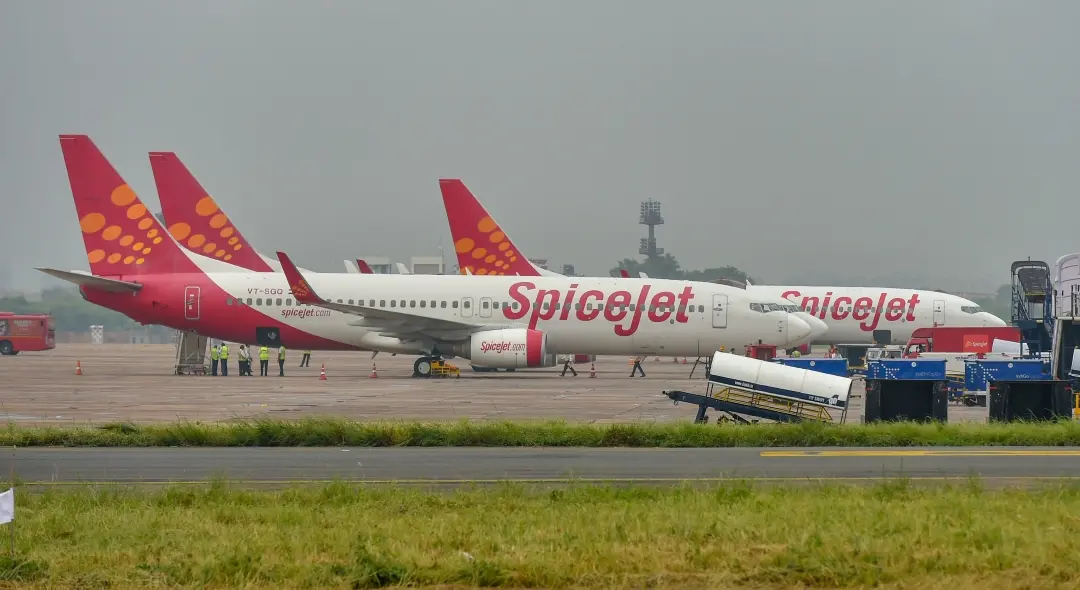
As the airline adds new aircraft to its fleet while grappling with salary delays and financial stress, a crucial question emerges, is SpiceJet staging a comeback or merely buying time?
Indian aviation has seen its fair share of dramatic rise-and-fall stories. From Kingfisher Airlines to Jet Airways and more recently Go First, the industry has repeatedly demonstrated that growth alone does not guarantee survival. Against this backdrop, SpiceJet's latest moves have caught the attention of industry observers.
On one hand, the airline has announced plans to induct three Airbus A320 aircraft on damp lease from July and has returned a Boeing 737 MAX aircraft to commercial service. On the other hand, reports have emerged that many pilots have faced salary delays for several months, while the airline is also seeking financial assistance under a government-backed credit guarantee scheme.
To many observers, the developments appear contradictory. Why would an airline facing cash-flow challenges add more aircraft to its fleet? The answer lies in the unique economics of the aviation industry.
The logic behind adding aircraft
For most businesses, cutting costs during difficult times is a natural response. Airlines, however, operate under a different reality. Aircraft are revenue-generating assets. The more aircraft an airline can deploy efficiently, the more seats it can sell and the more revenue it can potentially generate. Grounded aircraft do not earn money; they simply incur costs.
SpiceJet currently operates a relatively small fleet compared to India's larger carriers. With only around 21 operational aircraft, the airline faces limitations in serving routes, maintaining schedules, and capturing passenger demand.
The induction of three Airbus A320s and the return of a Boeing 737 MAX are therefore aimed at increasing capacity ahead of a busy travel period. More flights could translate into higher ticket sales, improved cash flow, and greater operational flexibility.
From a strategic perspective, the move is not necessarily a sign of confidence. Rather, it reflects a recognition that shrinking further could make recovery even more difficult.
The salary issue raises serious questions
While fleet expansion may make business sense, the reports regarding delayed salary payments highlight the challenges facing the airline.
According to reports, some pilots have experienced payment delays stretching across multiple months. The airline has acknowledged that payments are being made in phases as it works towards normalising operations.
For any airline, pilots represent one of its most critical assets. They are highly trained professionals who carry enormous responsibility and operate under demanding conditions.
Financial uncertainty among flight crew can create stress and affect employee morale. Although there is no indication that operational safety has been compromised, prolonged salary delays can lead to dissatisfaction, higher attrition, and difficulties in retaining experienced personnel.
At a time when airlines globally are competing for skilled pilots, maintaining workforce confidence is becoming increasingly important.
A long road back from past challenges
SpiceJet's current difficulties did not emerge overnight.
The airline was significantly impacted by the global grounding of the Boeing 737 MAX fleet in 2019. Like many carriers worldwide, it was then hit by the COVID-19 pandemic, which devastated air travel demand.
In the years that followed, the airline became entangled in multiple legal disputes, lessor payment issues, and operational challenges. These difficulties gradually eroded its market position. Once India's second-largest airline with around 15 percent market share, SpiceJet today accounts for a much smaller portion of the domestic market.
Meanwhile, competitors have grown stronger. IndiGo has consolidated its leadership position, while Air India is pursuing an ambitious expansion strategy backed by the Tata Group.
In such an environment, maintaining relevance has become a challenge in itself.
Industry experts often describe aviation as a business were standing still is not an option. If SpiceJet continues to reduce capacity, it risks losing more passengers and surrendering additional market share to competitors. Reduced operations can also weaken customer confidence and make it harder to attract future investment.
Viewed through this lens, the airline's latest fleet additions appear to be part of a broader effort to generate revenue and restore operational momentum. However, growth funded by financial strain can be risky.
Additional aircraft bring additional costs, including leasing expenses, maintenance requirements, fuel consumption, airport charges, and operational support. These investments only make sense if they generate enough revenue to improve the airline's financial position.
The challenge for SpiceJet will be ensuring that increased capacity translates into stronger cash flows rather than higher losses.
Seeking government-backed support
Another significant aspect of the airline's strategy is its pursuit of funding under the government's Emergency Credit Line Guarantee Scheme. The scheme allows eligible businesses, including airlines, to access government-backed loans designed to support operations during periods of financial stress.
For SpiceJet, such funding could provide breathing room while it works to rebuild its fleet and stabilise cash flows. However, loans can only provide temporary relief. Ultimately, sustainable recovery depends on an airline's ability to generate consistent revenue, control costs, and regain market confidence.
Is this another nail in the coffin?
Given India's history of airline failures, comparisons with Kingfisher Airlines, Jet Airways, and Go First are inevitable. Yet it would be premature to conclude that SpiceJet is heading down the same path.
Unlike airlines that entered a rapid downward spiral marked by shrinking fleets and collapsing operations, SpiceJet is still attempting to rebuild capacity and maintain network presence.
The airline continues to operate flights, induct aircraft, and pursue financing options. These are not typically the actions of a carrier preparing to shut down.
At the same time, the warning signs cannot be ignored. Salary delays, lessor disputes, and financial pressures indicate that the airline remains in a fragile position.
The next six months will tell…
The coming months may prove decisive for SpiceJet's future. If the additional aircraft help improve revenues, passenger numbers remain strong, and financing support materialises, the airline could gradually move towards stability.
If, however, financial pressures continue to mount and operational performance fails to improve, the fleet expansion may only delay deeper structural challenges. For now, SpiceJet finds itself walking a tightrope between recovery and uncertainty.
The airline's latest moves reflect a belief that the path out of trouble lies not in retreating but in flying more aircraft, carrying more passengers, and generating more revenue. Whether that strategy delivers a genuine turnaround or simply extends the timeline of its challenges remains one of the most closely watched questions in Indian aviation today.