Sholay still plays in theatres, homes, and hearts—even after 50 years
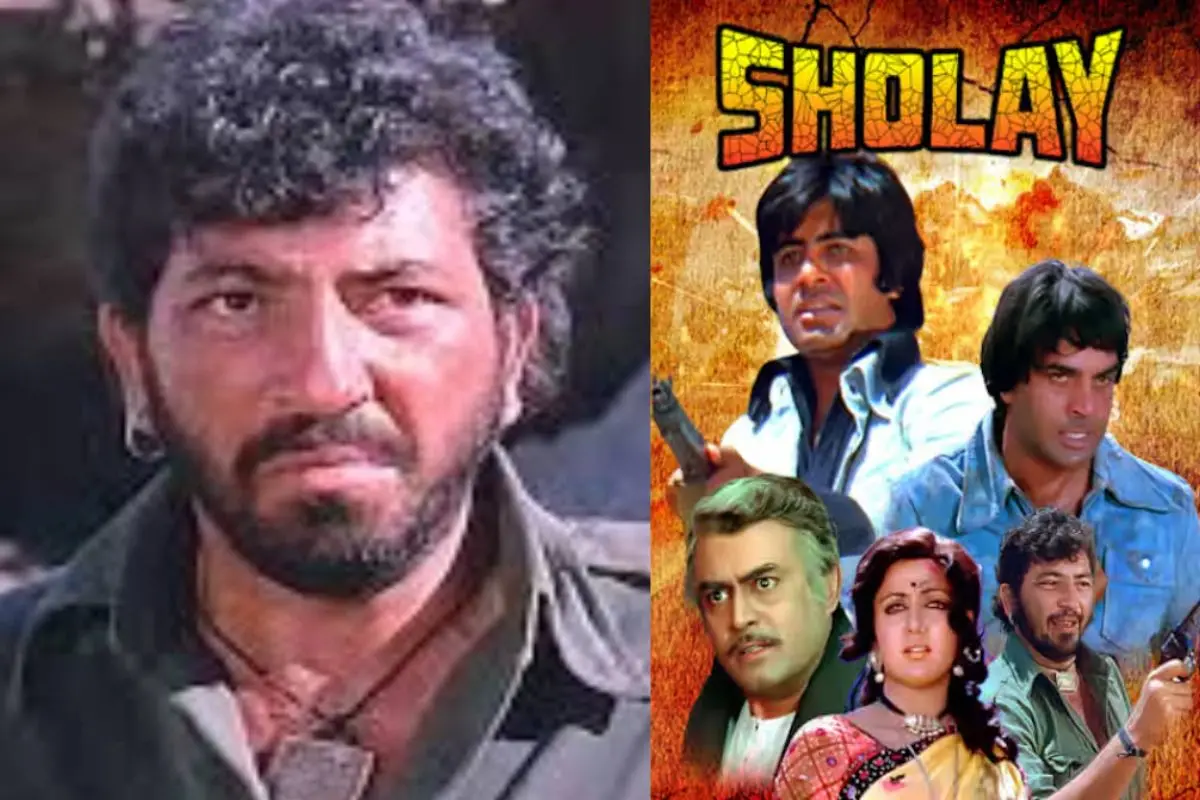
I clearly recall witnessing fancy dress contests in schools and clubs filled with kids competing as Gabbar Singh, Veeru, Jai and Thakur. I watched amazed, as parents preened with pride when their ten-year-olds walked away with prizes for their Gabbar Singh disguise.
Film lore intimates that the 1975 blockbuster Sholay, released six weeks before the Emergency began, was initially allowed its violent sequences because of the close friendship between the Information and Broadcasting Minister Vidya Charan Shukla and its producer G.P. Sippy (Bose 2013). Nonetheless, director Ramesh Sippy (son of G.P. Sippy) was required to make cuts to numerous violent scenes, including the climactic finale.i All the same, the finale had to be shot entirely in a hurry because the Censors insisted that the overly violent original climax showing Thakur killing Gabbar Singh would be too violent an ending. Ramesh Sippy was very angry but he had no option.
Sholay was a character-driven film. The narratives either emerge out of the cameo characters through very interesting sub-plots or revolve around the major characters Jai, Veeru, Thakur Baldev Singh, Radha, Basanti and Gabbar Singh. There are other satellite characters such as Soormawala Bhopali, the “angrez ke zamaane ke jailor hain” with Asrani caricaturing Adolf Hitler, the classic Mausi, Basanti’s sole and protective guardian and Rahim Chacha, the Muslim Imam portrayed by A.K. Hangal.
Gabbar Singh
Gabbar Singh, with all his evil-doings, exuded a kind of respect for the very villainy he lived for. He had neither taste nor time for women. Nor did we see him drinking. He chewed tobacco and spat it out every now and then. He spiked his three-liners with his unique tag, “kyon”? And to think that the director was disheartened when the actor he had originally cast as Gabbar – Danny Dengzongpa, who could not be signed as he had promised dates to Feroz Khan and was to shoot abroad. Javed Akhtar of the Salim-Javed duo did not approve of the new entrant because they did not like his voice. Amjad Khan proved everyone wrong.
The dialogues for Gabbar were written in a hybrid of Hindi and Khariboli, a dialect spoken in West Uttar Pradesh. Khariboli, considered a more rustic version of Hindi, was later used in TV soap Hum Log. Sholay replete with one-liners, was packed with unforgettable dialogues. The unique blend used for Gabbar Singh's spoken language and Amjad Khan's sinister delivery gave Hindi cinema’s maddest guy some of its most killer lines.
Gabbar Singh is a man without history. His existententialism marks him out as the most outstanding villain of all time. “I exist, therefore I am,” Gabbar seems to say with every stride he makes in Sholay, a sinister signature tune heralding his presence. This was played on the cello by Basu Chakrabarty under R.D. Burman’s direction. Amjad Khan’s name and screen image have been used generously. He appeared in the Britannia Glucon–D ad a funny take on the scene where his three henchmen returning from Ramgarh hand him a packet of biscuits! The commercial was known as Gabbar Ki Asli Pasand! Filmfare named Gabbar Singh the most iconic villain in the history of Indian cinema.
Gabbar Singh was modelled on a real-life dacoit Gabbar Singh Gujjar who had menaced the villages around Gwalior in the 1950s. Any policeman captured by Gujjar had his ears and nose cut off, and was released as a warning to other policemen.
Gabbar’s costume of this olive-green safari suit, a metallic taveez strung on a black thread across his neck, a cartridge-lined belt he sways this way and that to threaten his men, and a small cloth bag of khaini he chews from time to time and spits out at random. His boots are smart too but covered with a layer of dust. His curly hair is unkempt and he shaves rarely. There is an ugly glint in his roving eyes matched with an evil grin. The script does not give him a back story. And this is what makes him so mesmerising. He represented pure, undiluted evil in human form. He also wields a gun for easy gunning down of his “coward” men. He is a bandit not a dakoo.” Gabbar was the first dacoit in Hindi films to wear jeans.
Soorma Bhopali
Jagdeep, who played Soorma Bhopali in Sholay, had a successful career with around 400 films spanning a career of five decades or more. His real name was Syed Ishtiaq Ahmed Jaffrey changed to Jagdeep when he stepped into films.
His catchphrase in the film, “Mera naam Soorma Bhopali aise hi nahi hai,” still echoes in our ears. With his quirky dialogues, playful eyes and superb body language, Jagdeep won hearts. Soorma Bhopali, a timber merchant, made us laugh back then and continues to do so today. “It takes a superb artiste to get all the nuances of a local character like that. Comedy is not easy. The timing has to be perfect and the reaction has to be right. It is not possible without talent. As a director, I cannot make an actor do comedy. I can only ask for improvisation,” said Ramesh Sippy. He had seen Jagdeep in Brahmachari in which Jagdeep performed in a character role tinged with comedy. That decided him to pick the actor for this role. Years after Sholay, his character in Raj Kumar Santoshi’s Andaz Apna Apna was named, Bankelal Bhopali.
Javed Saab says, “Soorma Bhopali could not have been played by anybody other than Jagdeep. He worked hard on the Bhopali accent and got it word perfect. His comic timing was very good but I rue the fact that he wasn’t given an opportunity to do more emotional and dramatic roles.” Yet, we hear that Jagdeep did not want to play the part in the beginning. An interesting anecdote says that Soorma Bhopali was the name of a real life, high-ranking government bureaucrat in Bhopal and the writers had borrowed this name without his permission.
Hum Angrez Ke Zamaane Ke Jailor Hain
The character of the jailer in Sholay does not have a name. He always claims “Hum Angrez Ke Zamaane Ke Jailor Hain” claiming to be extremely strict who does not believe in the reformation of prisoners unlike former “Indian” jailors. He is also proud that he never remains in the same police station and is often transferred. The episode when Veeru and Jai surrender to the police and are jailed is included as a comic interlude like the Soorma Bhopali one. It explains some comic and intelligent features in the characters of Jai and Veeru who trick him to manipulate a very funny and clever escape from the jail counterpointed by the clear stupidity of the Angrez Ke Zamaane Ke Jailor.
Asrani’s performance brings into relief some more comic elements in the otherwise revenge-oriented drama. He wields a stick and waves it this way and that, stumbles on the stairs of the compound where the prisoners have assembled on his command, shouts his favourite phrase and betrays his foolishness at every step. His police uniform has an interesting addition. He sports a toothbrush moustache. This style is characterized by its short, rectangular shape, often approximating the width of the nose, and is also known by the alternative name "Hitler moustache" due to its association with Adolf Hitler.
Rahim Chacha, the Imam in Sholay
Itna Sannata Kyon Hai Bhai? Is a famous line from Sholay uttered by none other than A. K. Hangal in Sholay in which he had a wonderful cameo as the only Imam in the village of Ramgarh. He is blind and has a young son Ahmed (Sachin) who refuses to get a job in the city as it will take him away from his father. He is friendly with all the villagers who respect him a lot. He hardly has two scenes in the film. The first one is when the postman comes to deliver a letter and since he cannot read it, he asks Basanti, who has come to visit, to read it out to him. It is a letter from a cousin in the city with an offer of a job for his son Ahmed.
We next see Rahim Chacha when he bids goodbye to his son as he is leaving for a job in the city on a young horse. But the little horse trots back to Ramgarh with its rider’s body on its back. A crowd is gathered around the dead body when Rahim Chacha walks through the crowd. He does not weep, he does not grieve. But he observes Itna Sannata Kyon Hai Bhai? When he bends down to touch the body of his boy, he weeps softly and bitterly. The crowd is completely silent. The village head fishes out a threatening letter from Gabbar Singh addressed to Thakur Baldev Singh who, along with Veeru and Jai has walked in silently. The letter is a threat to Thakur Baldev Singh to drive Jai and Veeru out of the village failing which, other villagers too will lose their children to Gabbar’s wrath. But Rahim Chacha objects. He says that there cannot be a heavier burden in Life than a father carrying his son’s hearse. He prays that more children of Ramgarh became martyrs to the cause of Thakur Baldev Singh’s determination to overpower Gabbar Singh with the help of Jai and Veeru.
Mausi
Another character without a name in Sholay is Mausi, meaning “aunt” known right across Ramgarh as “Mausi” the lone family of Basanti who insists that she is not Basanti’s step mother but her real aunt when Jai approaches her with the marriage proposal of Veeru asking for Basanti’s hand in marriage. This role was essayed by Leela MIshra.
It is her scene with Amitabh Bachchan as Jai which stands out. Jai offers Veeru as a possible match for Basanti knowing that the two are falling in love. But while elucidating Veeru’s eligibility as the right groom, in a very plain manner and voice, he keeps detailing the ‘qualifications’ of the groom and Mausi is shocked with each revelation. He begins with Veeru’s gambling, leading to his joblessness, followed by his addiction to the bottle and finally, adding Veeru’s habit of visiting a gaanewali.
Released on 15th August, 1975, Sholay ran and ran and ran in theatres across the Indian map and beyond for five years, and continues to be screened on YouTube and OTT channels till this day. Song sequences, important tracts from the film such as the Mausi scene, the “suicide” scene with Veeru in the centre, the scenes with Soormawala Bhopali and with the Hitler-caricatured police inspector can be seen again and again with the click of your mouse or a tap on your mobile. The same applies to the song and dance scenes. The children among the first group of audiences now grown adults have large tracts of dialogue from Sholay memorized which they can quote from memory any time.