Where is my son? Remembering Eachara Warrier on Father's Day
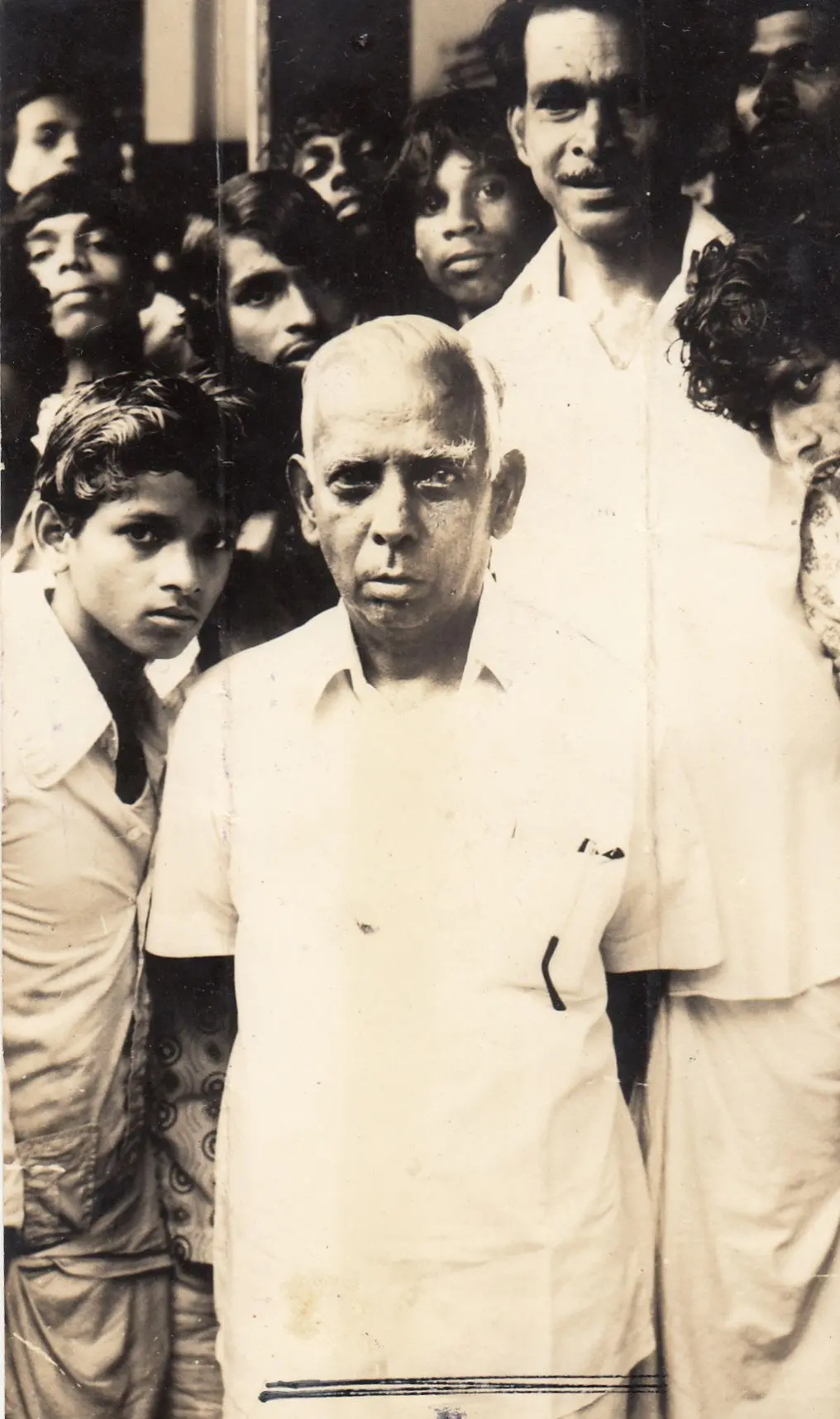
This Father's Day, the focus once again turns to honouring fathers and acknowledging their profound sacrifices. One poignant story that highlights this theme is that of a father from Kerala, whose quest for justice spanned decades after his son's tragic demise during the Emergency in India in 1976.
What happened to my son?
This haunting question was posed by T.V. Eachara Warrier, father of P. Rajan, a student of the Regional Engineering College, Kozhikode (now NIT Calicut), who tragically lost his life after facing torture in police custody during the nationwide emergency in India in 1976.
Warrier's determination to uncover the truth continued throughout his life, exacerbated by his wife's deteriorating mental health and death. Despite filing appeals with political leaders and government authorities, Warrier's quest for justice remains unfulfilled until he passed away in 2006.
Days of Emergency
Warrier's lifelong search for his missing son began on the night of March 1976, following an incident at Kayanna Police Station in Kozhikode. After the Naxalite group attacked the station in February, police immediately launched a search for suspects, reaching Kozhikode Regional Engineering College Hostel. Rajan and his friend Joseph Chali, who had just arrived in Kozhikode for a college arts festival, were apprehended by the police. They were accused of being part of a Naxalite group allegedly involved in the station attack, marking a sudden and tumultuous turn of events.
Rajan and Joseph Chali were taken to the infamous Kakkayam camp, where they faced severe police torture. The camp was under the authority of DIG Jayaram Padikkal at the time.
Warrier's struggle began when the Engineering College principal informed him via telegram about Rajan. He immediately traveled to Kozhikode, knocking on numerous doors in search of his son but receiving no positive responses. A few days later, police returned to the campus and summoned the college principal to the Kakkayam camp to meet DIG Jayaram Padikkal. The police informed the principal that Chali was detained in the camp and claimed that Rajan had allegedly escaped police custody.
After the emergency was lifted on March 21, 1977, Warrier filed a writ of habeas corpus in the High Court. Initially, the police denied Rajan's custody and the existence of a camp in Kakkayam, but the court dismissed their claims after the principal testified. The court on April 13. 1977 ordered police to produce Rajan, which they failed to comply with. Eventually, the police admitted that Rajan had died in their custody. Later, Warrier filed a case against Jayaram Padikkal, District Superintendent of Police G. Lakshmana, and SI Pulikkodan Narayanan for their involvement in the incident. Since the police failed to find the body, the prosecution was unable to prove murder charges against the accused. Despite receiving a one-year jail term, the accused appealed in the High Court, resulting in their sentence being vacated.
"Looking back, I feel more guilty about how it all turned out. I am sad that the father of Rajan never received justice. Chief minister K Karunakaran had tried to save the accused, including Chief of the Crime Branch, DIG Jayaram Padikkal. There was move to shift the trial outside Kerala to avoid public interest in the case. Even though the Nayanar-led government came to power thrice, Warrier never received justice," recalls Appukuttan Vallikkunnu, former State Committee member of the CPI (Marxist) and former Chief Editor of Deshabhimani Daily. Vallikkunnu brought out the inside story of Rajan’s case through a series titled ‘Kakkayam Camp Kadhaparayunnu’ (‘Kakkayam Camp Narratives’).
A helpless father
“Why are you making my innocent child stand in the rain even after his death? I don’t close the door. Let the rain lash inside and drench me. Let at least my invisible son know that his father never shut the door,” Warrier writes in his book, ‘Memories of a Father’.
After Rajan went missing, his mother's mental health deteriorated, leading to her hospitalization. Meanwhile, Warrier exhausted his money while trying to find his son. He approached police officers, hoping they could provide details about Rajan's arrest and whereabouts, but his inquiries yielded no answers. Frustrated by the lack of response from authorities, Warrier eventually met with then-Home Minister K. Karunakaran and sent petitions to the state's Home Secretary three times, receiving no replies. He also sought help from the Union Government, but to no avail.
Meanwhile, amidst the anti-Congress wave sweeping the country, the Congress-led coalition surprisingly came to power in the 1977 assembly elections in Kerala, with Karunakaran assuming the role of Chief Minister.
However, his tenure was short-lived, as he resigned just a month after assuming office in connection with providing false testimony in the High Court as a respondent in the Rajan habeas corpus case. Despite these developments, the father's relentless quest to find his son remained unfulfilled.
The fact that their son's body could not be found was unbearable for Warrier. "The pain and sorrow of losing my son will haunt me until my death. My wife passed away, asking where her son was. She used to set aside rice every day for her son, who never returned," Warrier once said. He passed away on April 14, 2006, carrying that grief until his final days.
.