Mission Samudra: Can Keralam’s maritime growth protect coastal rights and livelihoods?
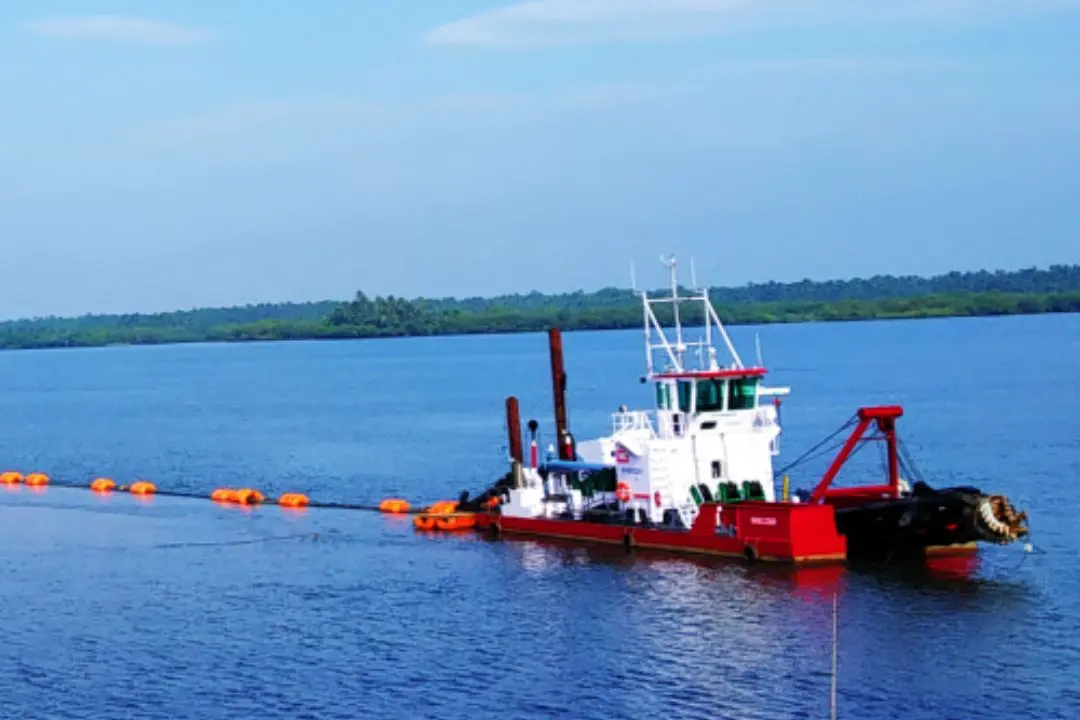
When a port expands, the legal boundary of the project seldom coincides with its social consequences. A new jetty may alter the route of fishing boats; a logistics yard may interrupt an established public passage; dredging can affect a neighbouring beach. These are practical reasons for examining Mission Samudra through the law. Keralam’s maritime programme must be judged partly by how clearly it assigns authority and protects existing uses of the coast.
The revised 2026–27 Budget earmarked ₹400 crore for an initiative encompassing ports, inland waterways, shipbuilding and logistics. The government envisages more than one lakh jobs by 2031. Vizhinjam’s export-import operations, Kochi’s industrial capabilities and the proposed seafood hub at Aroor provide an economic foundation. Nevertheless, a budgetary allocation is not evidence of completed investment, just as an employment target is not a count of jobs secured. Public reporting should preserve those distinctions.
A more immediate issue follows the Keralam Legislative Assembly’s passage of the Keralam Maritime Board (Amendment) Bill, 2026, on 28 October. Its published text proposes substantial changes to the Kerala Maritime Board Act, 2017. The Bill must, of course, be distinguished from operative legislation until the necessary assent and commencement are established. Even at this stage, however, its provisions raise questions of property, administrative accountability and coastal livelihoods that deserve attention.
The public character of coastal land
Proposed Section 22A would constitute a State Maritime Land Bank comprising government-controlled land for non-major ports and allied maritime activities. The purpose is intelligible. Warehouses, repair yards and freight facilities require land, and assembling it separately for every project can be cumbersome. Legal difficulty arises when the expression “government-controlled land” is treated as though it described land free of competing uses or public obligations.
The Bill would permit land held by other government departments within port limits to be transferred to the Maritime Board. Its proposed functions also contemplate development of non-port land vested in the Board. The Chief Minister has explained that the land bank is not intended to appropriate the coastline indiscriminately. This assurance should find precise expression in the implementing rules. A publicly available inventory must identify each parcel, its boundaries, present occupation, proposed purpose and any claims requiring examination before transfer.
The public trust doctrine is relevant here. Government control of a natural resource carries duties extending beyond the collection of revenue from its commercial use. A coastal parcel may be described as State land in official records while serving as a fish-landing space, an approach road or a workplace for vendors. These functions cannot be dismissed because they do not appear as registered private titles. Their recognition is central to lawful and reasonable decision-making.
The proposed concept of waterfront royalty deserves equal care. The Bill refers to charges for using water bodies within port limits, but leaves important matters for subsequent rules and decisions. Ordinary fishing, customary access to landing points and other traditional activities require an expressly stated treatment. Otherwise, a provision designed to collect commercial charges could become a source of uncertainty for people whose livelihoods depend on daily access to the water. Consultation with fishing communities, including women engaged in marketing and processing, is essential.
Concessions and the discipline of public contracts
Private investment has a legitimate place in Mission Samudra. The amendments would facilitate public-private partnerships and allow extensions of concessions subject to conditions and government approval. Long tenures may be justified for capital-intensive infrastructure. They can also bind public assets to private management for decades. Contractual safeguards consequently matter as much as the investment announced.
Every substantial concession should identify the asset being made available, the basis of its valuation, the procedure used to select the operator and the obligations undertaken in return. Completion schedules, tariff principles, environmental responsibilities and consequences of default must be enforceable rather than aspirational. Where an agreement is revised, the financial effect on the public should be recorded. Governmental sanction does not dispense with transparency, competitive discipline or an assessment of contingent liabilities.
Section 103 proposes Port Area Development Authorities to prepare spatial plans for special areas. This may improve coordination between port construction and surrounding infrastructure. Yet those plans will affect settlements, public roads and services delivered by local bodies. The reference to the Kerala Town and Country Planning Act, 2016, must therefore have practical content. Panchayats and municipalities should see draft proposals early enough to respond meaningfully. A procedure that achieves administrative speed by excluding local voices is unlikely to produce legal certainty.
Environmental responsibility and regulatory coordination
Environmental duties cannot end with the grant of clearance. The Environment (Protection) Act, 1986, the Coastal Regulation Zone Notification, 2019, and applicable environmental impact assessment requirements must inform project design. Dredging may alter sediment movement; breakwaters may intensify erosion elsewhere; effluent from processing units may damage estuaries. The combined effect of several developments on the same coast warrants scrutiny alongside individual project assessments.
For Keralam, the financial implications of environmental neglect are especially serious. High waves, flooding and coastal erosion can interrupt port operations, damage infrastructure and undermine livelihoods. Concession documents ought to allocate responsibility for maintenance, emergency planning, pollution response and restoration. The cost of protecting an asset over its useful life belongs in the investment appraisal. It should not emerge later as an unforeseen burden on the public exchequer.
State initiatives must also be read alongside central maritime legislation. The Indian Ports Act, 2025, provides the broader statutory framework for non-major port administration, pollution control, safety and emergencies. The Inland Vessels Act, 2021, addresses inland navigation, while the Coastal Shipping Act, 2025, offers possibilities for integrating transport routes. Clear arrangements are needed wherever the functions of the Maritime Board, vessel inspectors, environmental regulators and coastal security authorities overlap. Multiple competent agencies are manageable; uncertain responsibility after an accident is not.
Environmental, social and governance (ESG) obligations belong in the concession agreement itself. Water quality and waste disposal should be monitored; occupational safety and fishing access should be protected; tenders and conflicts of interest should face scrutiny. Listed concessionaires covered by SEBI’s Business Responsibility and Sustainability Reporting (BRSR) requirements have an additional disclosure framework. Other operators can be required by contract to report project-level sustainability performance. Proposed changes to Section 84 concerning audits are useful, but an annual Mission Samudra statement should separately report land committed, investment received, breaches and verified employment. The government’s July clarification that ₹10,000 crore represented investment potential, rather than a concluded single-company agreement, illustrates why such distinctions matter.
Benefits should extend beyond the principal ports. Beypore and Azhikkal may serve different markets from Vizhinjam. Aroor’s seafood enterprises need cold storage, dependable testing and export channels. Maritime law and engineering education can prepare young people for skilled work. Small processors, traditional fishers and coastal women must also participate without losing their existing occupations.
Sustainable Development Goals 8, 13 and 14, concerning decent work, climate action and marine conservation, offer useful policy benchmarks, although they do not displace enforceable Indian law. Keralam can pursue maritime industrialisation while respecting established coastal interests. By 2031, Mission Samudra should be judged by the public value obtained from assets committed, the quality of employment created and the condition of the coast left to those who depend upon it. That would be a blue economy with a defensible legal foundation.
(Dr.Ranjith is Associate Professor, Christ University, Delhi NCR; Dr.Anil is Professor & Dean at Amrita International School of Law, Coimbatore)