Grace marks initiative: How Kerala can cultivate a generation of informed and engaged citizens
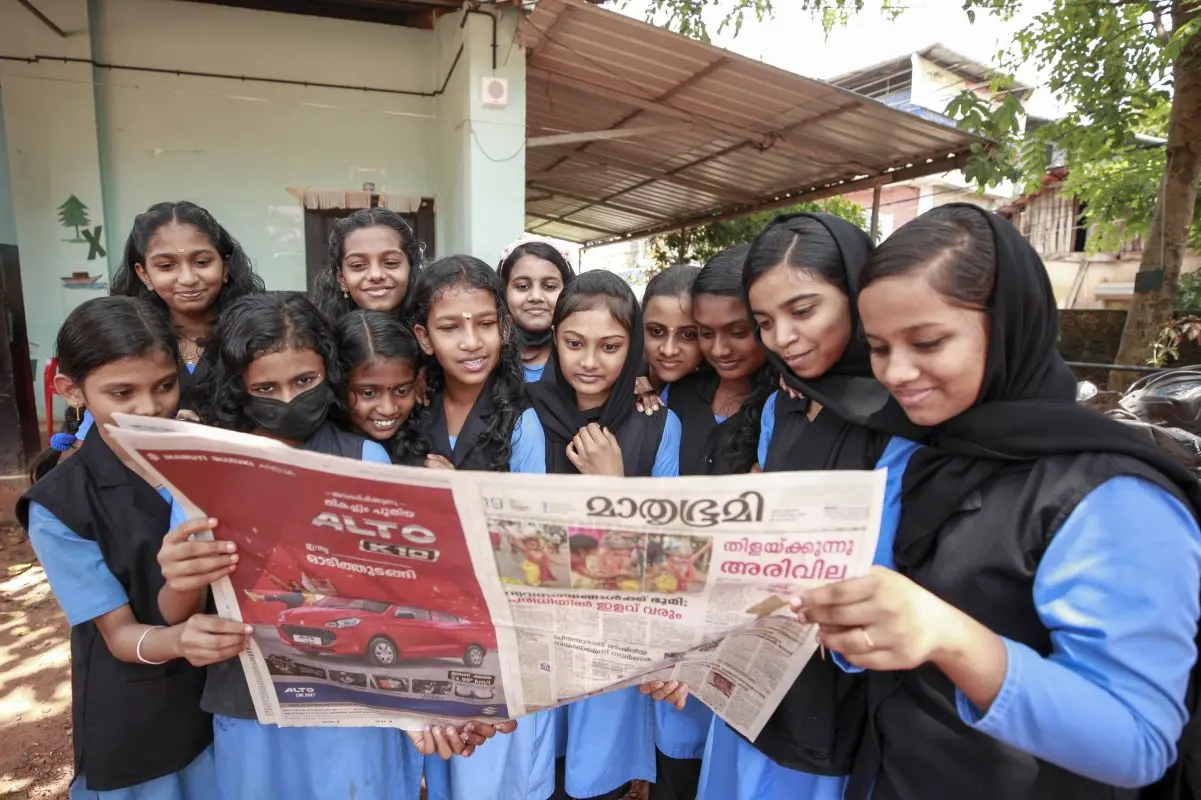
When Kerala's General Education Minister V Sivankutty announced that school students would be given grace marks for developing reading habits from the next academic year, it was welcomed with general appreciation and curiosity. It is not often that a government so explicitly connects reading to student performance, but in a State that boasts a reputation for literacy and cultural accomplishment, the gesture seems like a natural continuance of a long tradition.
The move is timely as educators, media professionals, and journalists increasingly talk about how to encourage authentic interaction with information among young people. If a reading habit is rewarded, what are the students reading, and more so, how can the news world adapt to suit the curiosity of school children?
For decades, a past generation of newsroom professionals carried a perception that kids and teenagers really did not care about news. They thought children were better off being surrounded by cartoons, comics, and frivolous entertainment, while current affairs and social matters could be left for later in life. That presumption now appears increasingly illusory. Children not only understand the world around them but also develop opinions at an early age.
The issue, then, isn't if they want news, but if the news business is reaching them where they are, communicating in ways they do, and creating products that respond to their views of the world.
Actually, kids have always been a consumer base for news, although they have been addressed in limited and sometimes shallow ways.
Numerous mainstream Indian newspapers used to carry School Editions of their papers. These were under the Newspaper in Education programs, which aimed to expose young adults to news and current events in a safe, palatable, and school-appropriate manner. But these editions were usually repackaged goods. The central thrust of the newspaper was retained, with some pieces of news selected and rephrased to emphasise the general knowledge component. This left students with exposure to facts and statistics, quiz-friendly tidbits, and condensed versions of big stories, but seldom with news written in their voice, about stories they passionately cared about, or in formats that resonated with their everyday life.
Now, that model seems archaic. The next generation is growing up in an era of non-stop information saturation. They tweet, they watch digital entertainment, they interact with memes, they stalk influencers, and they are interested in topics from climate change to artificial intelligence.
Offering just a diluted version of the newspaper won't be enough to satiate their information hunger. What is required is the development of innovative and original news products that address their interests, modes of consumption, and increasingly, their role as citizen readers.
If Kerala wishes to foster reading habits among school children through the giving of grace marks, then publishers, educators, and newsrooms must ask: what are we giving them to read?
It is here that media literacy becomes essential. Over the past few years, journalism education has been introduced in the curriculum of most schools, not only as a vocational stream but as part of general education. Students are being taught about the concept of comprehending news, understanding bias, fact-checking, and separating credible information from false content.
Media literacy is no longer a luxury; it is a requirement in an age when misinformation travels faster than authenticated reports. Constructing student-centred news products, then, can't be solely a matter of presenting content -- it needs to train students in interpreting, questioning, and using that content responsibly.
One such solution is to redesign occasional print products that are not only information outlets but collectors' items as well. Picture a special edition of a newspaper solely focused on culture, with features on local traditions, folk arts, and festivals relevant to children in various districts of Kerala. Or a colourful magazine focused on entertainment, with interviews with young artists, school-level play reviews, and tales of how music or dance influences the youth's identity. Environment editions might feature student-led campaigns in cleaning rivers, tree planting, or sustainable living, while worldview special editions might bring stories from around the globe to real contexts. If these are crafted with style, visual interest, and a compelling narrative, students won't merely read them but value them.
Meanwhile, it would be irresponsible to dismiss the sheer rate at which digital media is expanding. Schoolchildren today are digital natives and learn, play, and interact on screens. The concept of students' news products, thus, must stretch to digital media. Sites, mobile applications, and interactive newsletters just for students can provide appropriate, fact-checked, and engaging news.
In contrast to the passive process of reading a newspaper, digital offerings can be interactive -- quizzes appended to the end of a news report, polls that record student responses, and infographics that explain complicated issues at a glance. Add-ons such as short explanatory videos, audio bulletins, and even gamified learning modules can engage the new age into consuming news as an integral part of their routine.
The true promise of this approach lies in convergence and collaboration. Instead of producing news for students, why not involve them in the process of production? Imagine a collaboration where students write, edit, illustrate, or even broadcast stories about their communities. Such involvement would not only create fresh and authentic approaches to news but also make students feel invested in the very idea of journalism.
Schools can have newsroom clubs where students collaborate to create their own newspapers, podcasts, or YouTube-like shows under the guidance of professional journalists. These offerings can then be incorporated into mainstream sites, providing student voices with visibility and instilling a habit of civic-minded storytelling.
Apart from words and elementary reporting, there is so much more. The current young generation is visually oriented, with a liking for content that is fast, colourful, and interactive. Online cartoons and animations can be strong instruments for breaking down news stories for kids, particularly on intricate topics like economics or geopolitics.
Student-made short movies can offer strong viewpoints on local and international problems. New technologies such as Augmented Reality and Virtual Reality can take it a step further. Picture students having the opportunity to investigate a virtual world in order to learn about the history of an area, the effects of climate change, or even the inner workings of a newspaper. These experiments might seem like science fiction, but they are within the bounds of modern technology-based classrooms.
Needless to say, no student product would be complete without the presence of fun. Incorporating contests, competitions, and challenges can add flavour and make the experience last longer. Media houses could be partnered with by schools to organise essay contests on issues of the day, photography contests that document life at the school, or quizzes that challenge knowledge of local and international events.
Champions might be rewarded with special editions, internship opportunities with news outlets, or even special programs. For readers, this recognition would be encouraging, and for newsrooms, it would be a means of nurturing the future generation of readers and contributors.
The underlying vision is evident: children's news cannot be an afterthought or a charity endeavour. It has to be viewed as a serious investment in the future of journalism and democracy itself. Children who learn to read critically, question responsibly, and participate actively in the world they live in stand a better chance of becoming citizens who cherish truth, accountability, and engagement.
Kerala's effort to reward reading with grace marks is an important step, but it should also be the beginning of a larger conversation on how to re-imagine news products to address young audiences' needs.
The stakes are especially high for Kerala. The state has traditionally boasted of its literacy rates, cultural success, and advanced education system. It has traditionally been at the forefront of connecting education with social growth, and this latest initiative takes forward that tradition. But literacy in the twenty-first century can no longer be defined simply in terms of being able to read and write. It should also possess the capacity to traverse a rich media landscape, to discern truth from untruth, to value multiple viewpoints, and to receive information in ways that foster community and curiosity instead of division and distraction.
Throughout the globe, there are precedents that Kerala can follow. In certain Scandinavian nations, dailies publish weekly issues solely for schoolchildren, written and illustrated in a format that is more appealing to them. In Japan, there are widely sold children's versions of newspapers, commonly produced with the same editorial gravity as the adult dailies. In the United States, campus newspapers and student newsrooms are going great guns, frequently uncovering substantial local stories. These examples prove that children are not necessarily passive consumers but can be active contributors to the news landscape if they are provided appropriate forums.
In India, the picture has been patchy. Though there are some schools that promote wall magazines, newsletters, and yearly magazines, these hardly possess the vibrancy to match the digital world children live in outside the classroom. Private schools occasionally venture into more sophisticated products, but state schools tend to fall behind.
Kerala has the chance now to close this gap by integrating student-focused news products into the mainstream. Reading rewards in the form of grace points can lead students to read a book or a newspaper, but it will take consistent efforts on the part of teachers, policymakers, and journalists to make what they read worth their while and attention.
Then there is the issue of inclusivity. Not all children in Kerala, even with the success of the state, have access to the same digital resources or tools. A really democratic student news environment has to make provision for both print and online products to exist side by side, and ensure that no child will be excluded from the debate.
Accessibility with regard to language, form, and price will be key. However, there also have to be provisions to make sure that students are not overpowered by commercials or manipulated by political ideologies. Children's news has to remain credible, transparent, and trustworthy.
The policy of awarding grace marks is as much symbolic as practical. By giving credit for reading, the state is announcing that reading is not just an entertainment but a civic virtue. Applying that notion to news means accepting that being well-informed is part of being educated. The actual test will be if teachers and news outlets meet the challenge of producing products worthy of this philosophy.
The picture of a child sitting with a book or a tablet, reading, has long been a symbol of the social imagination of Kerala. Today, with policy, technology, and imagination coming together, the state has the opportunity to reimagine that image for the future.
Whether through beautifully designed print editions, interactive digital media, immersive VR content, or youth-led newsrooms, the potential is limitless. What is important is that children are not overlooked, their intelligence is valued, and their curiosity is fostered. If this is attained, the grace marks will not only improve examination results but will also produce a generation that appreciates reading, asks responsibly, and engages actively in democracy. And ultimately, that will be the greatest reward of all.