Explainer: Why does India need Sudarshan Chakra?
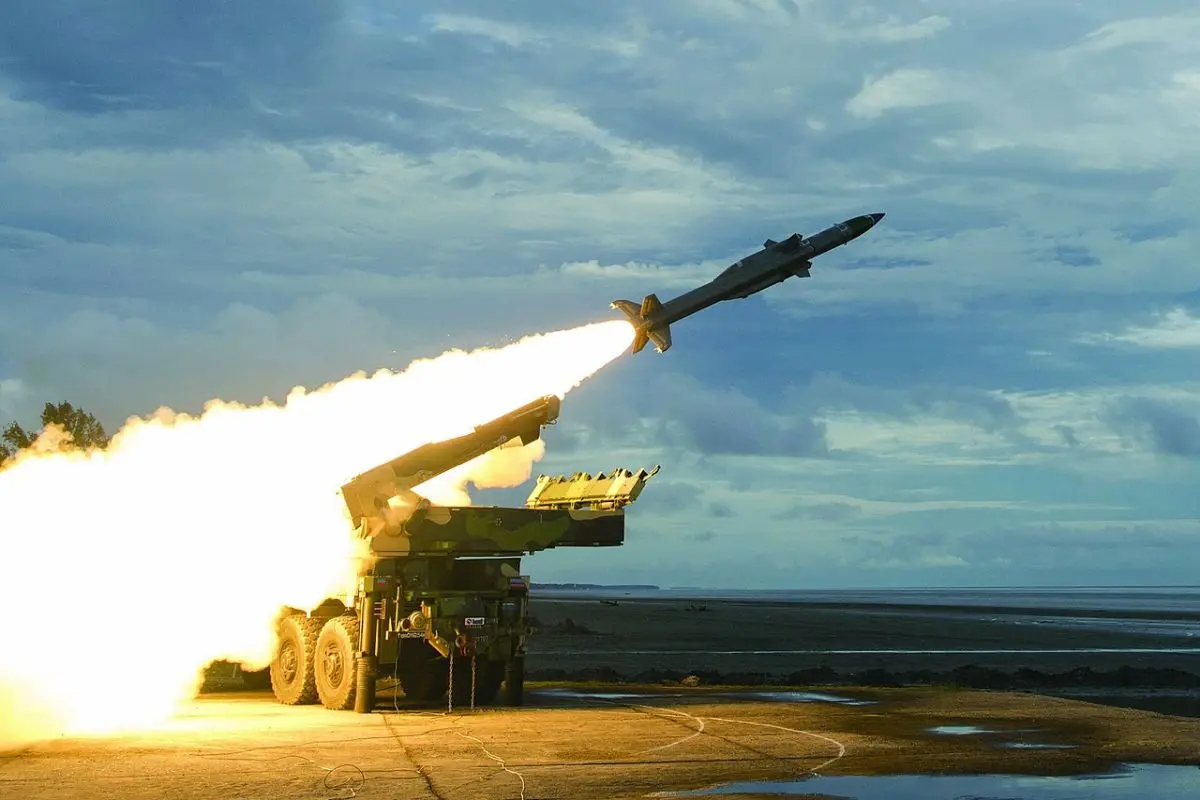
Defence stocks may draw investor attention after Prime Minister Narendra Modi, in his 12th consecutive Independence Day speech, announced 'Mission Sudarshan Chakra', an indigenous missile defence shield, and renewed his call for homegrown jet engines, signalling a strong push for self-reliance in key military technologies.
Why is Mission Sudarshan Chakra critical?
India faces an unprecedented convergence of security threats that make Mission Sudarshan Chakra not just strategic but essential for national survival. Recent events underscore the urgency of this comprehensive defence initiative.
Immediate Security Provocations: The announcement comes days after Pakistan Army chief Field Marshal Asim Munir reportedly hinted at targeting Indian assets -- including Reliance Industries Limited's Jamnagar refinery in Gujarat -- if there is a future military clash. Such direct threats to critical civilian infrastructure highlight the vulnerability of India's economic backbone and the need for robust protective measures.
Escalating Terror Activities: The April Pahalgam terror attack and Pakistan's planned strikes were planned against Indian military bases, fighter jets, and cities during Operation Sindoor, demonstrate the multi-pronged nature of modern threats. While India's existing systems successfully intercepted these attacks, the frequency and sophistication of such attempts are increasing, demanding a more comprehensive response.
Evolving Threat Landscape: Modern warfare extends far beyond traditional missile attacks. Today's threats include cyber warfare, drone swarms, hypersonic weapons, and coordinated multi-domain attacks that can overwhelm conventional defence systems. Pakistan's recent acquisition of advanced missile technology and China's growing military capabilities in the region create a security environment where partial protection is no protection at all.
Critical Infrastructure Vulnerability: India's rapid economic growth has created numerous high-value targets -- from tech hubs in Bengaluru and Hyderabad to industrial complexes in Gujarat and Maharashtra. The potential economic damage from successful attacks on these facilities could set back India's development by decades.
The Sudarshan Chakra Solution
The Sudarshan Chakra missile defence system will integrate advanced surveillance, cyber security, and physical defence to protect citizens and critical infrastructure. The project's name comes from Hindu mythology, referring to the Sudarshan Chakra used by Lord Krishna to help Arjuna in battle. It will be fully researched, developed, and manufactured in India, with major expansion and modernisation planned by 2035.
The system is expected to feature precision counterstrike capabilities and tools to counter cyber threats such as hacking and phishing. It will be developed through collaboration between India's top scientific and defence research organisations, the military, and private sector innovators.
Experts suggest it could be similar to Israel's Iron Dome, an all-weather missile shield known for its high effectiveness.
While India already operates the Integrated Air Command and Control System, proven effective in Operation Sindoor, Mission Sudarshan Chakra aims to go beyond traditional missile defence, delivering a comprehensive, multi-layered security strategy to meet evolving threats.
Unveiling the plan from the Red Fort, PM Modi said that by 2035 he wants to expand, strengthen, and modernise India's national security shield. The mission will harness the skills of young talent to create a dome-like defence shield capable of stopping terrorist attacks and striking back at terrorists, protecting both critical sites and civilian areas.
Strategic need for Sudarshan Chakra
Geographic Vulnerability: India's vast borders with hostile neighbours and extensive coastline create multiple attack vectors that require simultaneous monitoring and protection. Traditional point defenses cannot cover such expansive terrain effectively.
Economic Asset Protection: With India positioned to become the world's third-largest economy, protecting industrial corridors, financial centers, and technological hubs becomes paramount. A single successful attack on Mumbai's financial district or Bengaluru’s IT sector could have global economic repercussions.
Deterrence Factor: A comprehensive missile defence system serves as a powerful deterrent, raising the cost and complexity of any potential aggression. When adversaries know their attacks will likely fail, they are less likely to attempt them.
Technological Independence: By developing indigenous capabilities, India reduces dependence on foreign suppliers who might withdraw support during critical moments, as seen in various international conflicts.
Why develop jet engines locally?
PM Modi also urged the country's youth to develop jet engines within India, saying, "I urge young scientists, talented youth, engineers, professionals, and all government departments to ensure we have jet engines for our own Made-in-India fighter jets."
This call gains importance as talks between Hindustan Aeronautics Limited (HAL) and US defence company GE Aerospace to jointly produce a jet engine for India's next-generation fighter aircraft have faced delays.
GE Aerospace has been late in delivering its jet engines to HAL, which has in turn delayed HAL's handover of Tejas fighter jets to the Indian Air Force.
India began work on an indigenous jet engine nearly 40 years ago under the Kaveri engine programme. Approved by the Cabinet Committee on Security in 1989, it was intended to power the country's Light Combat Aircraft (LCA), but the engine is still not ready for operational use.
What’s status of India’s defence production?
India's defence production has reached a record high of ₹1.5 lakh crore in FY25. This is 18% higher than last year's ₹1.27 lakh crore and almost 90% more than in FY 2019-20, when it was ₹79,071 crore.
India's locally-made defence products are getting more demand worldwide, with exports hitting a record high of ₹23,622 crore in FY 2024-25.
The government now plans to reach ₹50,000 crore in annual defence exports by 2029, increasing India's presence in the global market. Demand for the BrahMos missile has risen sharply after its key role in Operation Sindoor, where it targeted Pakistani military sites, including air bases, army camps, and terror camps.