IFFK banning row: A clash that puts Kerala’s long tradition of free cinema in focus
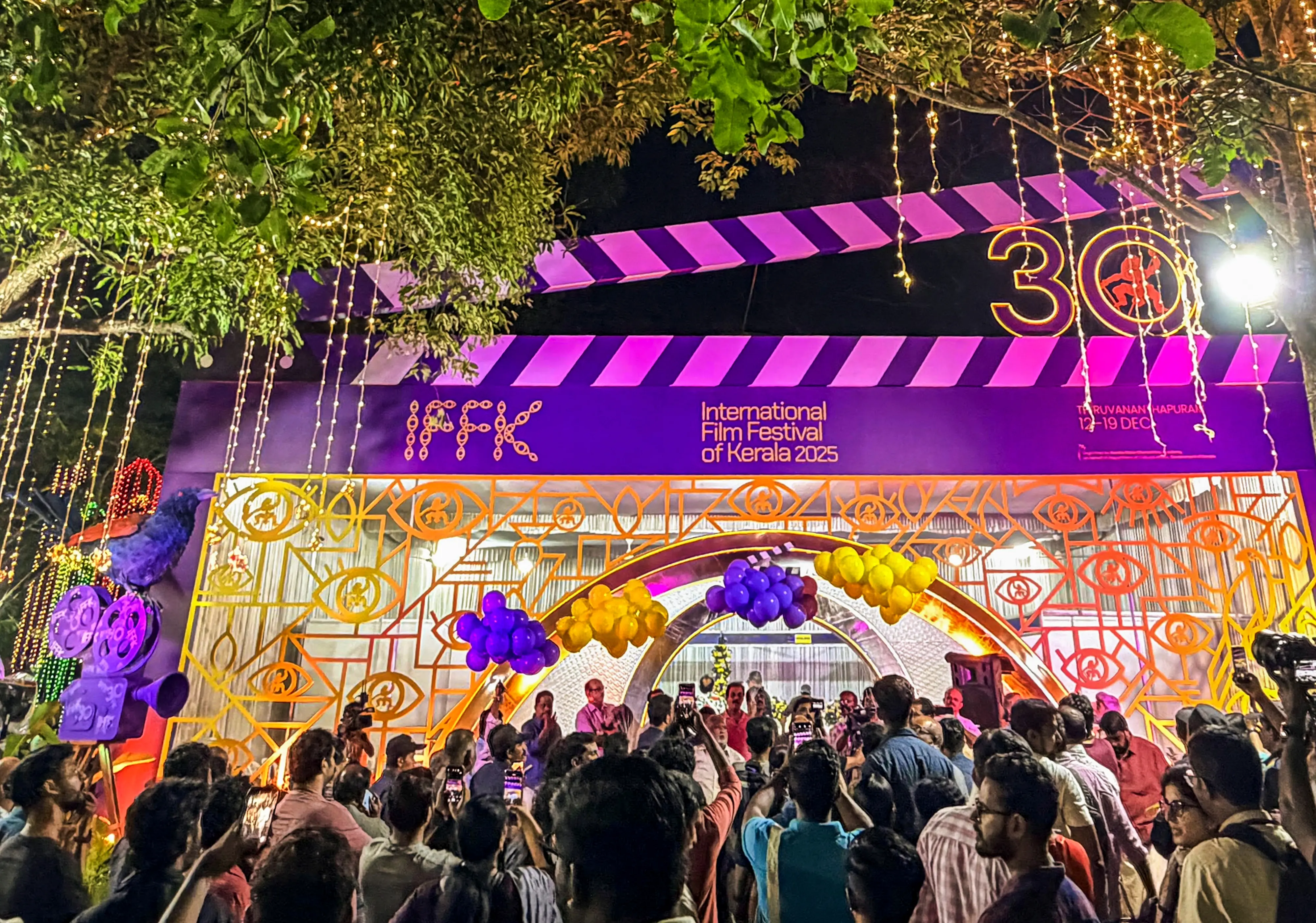
The 30th International Film Festival of Kerala (IFFK 2025) was expected to make headlines for being a bigger and better edition than previous years. However, it is now in the limelight for a different reason — a banning row.
It may be noted that films to be screened at the IFFK are not required to have a censor certificate but must obtain a censor exemption under the Cinematograph Act from the Union government. However, the Union government did not grant exemption for 19 films chosen for screening at IFFK 2025. These movies included famous classics and films with political content. This sparked a row.
IFFK’s benchmark
IFFK’s eclecticism has been one of the reasons for its popularity, and it is recognised for showcasing the works of new film practitioners from Asia, Africa, and Latin America, apart from films by European and American masters. Some films at IFFK are presented as tributes, where the films are placed within their contexts.
For most participants, IFFK is more than a movie experience. For many, it is a celebration of a collective tradition. The lines outside cinema halls, discussions that stretch late, and impromptu meetings between filmmakers and attendees are all part of a rare experience in current times.
The festival has never wavered in its focus on audience interaction, filling screenings with overflowing crowds, engaging fans in fervent post-screening sessions, and involving young participants at the organisational level through its volunteering programme.
IFFK has carved out a reputation through unconventional programming and an inclusive approach to cinematic diversity. The possibility of last-minute cancellations seemed to strike at the very core of what IFFK stands for. The festival has consistently screened films from war-torn regions and works that explore state control, the experiences of marginalised groups, and stories that question prevailing social norms. It can safely be assumed that many such films have found an appreciative audience in Kerala, where film literacy and cinematic discourse are remarkably high and where film-related debates often spill into the public domain.
Moreover, Kerala has a rich tradition of film societies, alternative cinema, and art practices with a political edge. The state has a track record of hosting festivals of master filmmakers, exposing Malayali audiences to international cinema, and serving as a meeting ground for young filmmakers and veterans alike. Hence, any threat to the independence of IFFK would be seen by the people of Kerala as an attack on a deeply cherished cultural space for untrammelled inquiry.
Breakthrough
Under mounting pressure, intensive talks were held among the festival organisers, the Kerala state government, and the central government. The state government reiterated its stance on safeguarding artistic freedom and maintaining the independence of international film festivals like IFFK. Following this, the Union government granted approval to some of the 19 films earlier denied permission. However, a few films have still not received approval for screening at IFFK. Despite this, the state government directed the organisers to screen all films shortlisted for the IFFK 2025 event. Further developments in the tussle between the state and Union governments are awaited.
State government’s approach
Interestingly, the state government’s approach has drawn attention. By standing firm on its commitment to artistic freedom and festival independence, the state has reinforced its image as a bastion of support for arts and culture. This position is consistent with Kerala’s long tradition of backing education, literature, and the arts, and of providing space for dissenting voices through cultural platforms. For some, the episode underlines that regional governments can support arts and cultural institutions within a federal framework.
Broader questions
Nevertheless, the incident has once again highlighted the broader regulatory framework governing censorship exemptions in Indian cinema. Although the Cinematograph Act allows certain exemptions for film festivals, concerns persist that ambiguities may sometimes operate as tools of ‘indirect regulation’, even when outright bans are not imposed. The latest controversy surrounding IFFK has revived demands for clearer and more specific norms recognising the role and importance of film festivals within India’s cultural landscape.
More than just cinema
As the lights go down in packed theatres across Kerala and stories from other cultures unfold on screens, it appears that the cloud which threatened to shadow this year’s IFFK may instead be remembered as a moment when the ideals of artistic freedom were not only questioned but ultimately reaffirmed. IFFK 2025, therefore, is set to be about more than just cinema from around the world.
(Author is a student of Mathrubhumi Media School, attending IFFK 25 at Thiruvananthapuram.)