How the Emergency muzzled India’s media
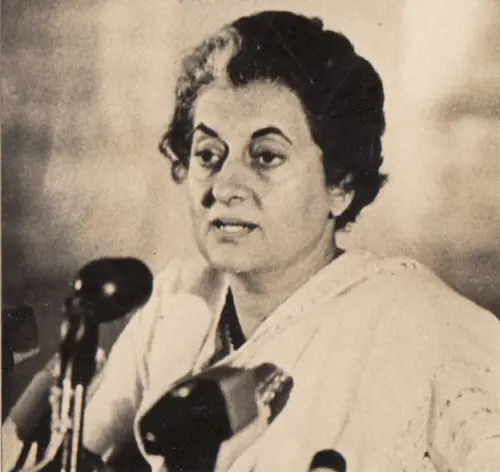
The two years of national emergency of 1975-77 was not just totally new experience for people at large in India and also for the media (newspapers), (no private television, radio or social media then) and films. Though most opposition political leaders were jailed, very few media or film people were targets of the government then. But the Damocles sword of censorship hanged over all media activities including that of films during the two years.
“Censorship was the primary instrument of the Emergency and it resulted in the atomizing of society and the creation of fear and uncertainty. Everything else followed. Vox populi was officially silenced. Tongues wagged. Rumours spread.”, wrote the then Hindustan Times Editor B G Verghese in his autobiography, “First Draft –Witness to Making of Modern India”. He went on to say that “The Rule of Law was supplanted by the Rule of Men”. Verghese was one of the first victims of the emergency, as he was unceremoniously terminated as Editor of the Hindustan Times, even as cartoons declared “Mrs Gandhi admired, Verghese hired, Mrs Gandhi Tired, Verghese Fired”. Verghese indeed was one of the media advisors of Gandhi in her first term as Prime Minister.
Old timers in Delhi recalled how the censorship of media worked after the first night of shut down of the electricity to most media organisations in the newspaper street of Delhi (Fleet street), the Bahadur Shah Zafar Marg on the night of June 25, 1975. The censors, including Om Cheri NN Pillai, the Malayalam writer who was with the Press Information Bureau then, was keen on deciphering political news and news on government and Sanjay Gandhi, younger son of the then Prime Minister Indira Gandhi for any negative lines. While papers like “Patriot“ edited by Edatatta Narayanan refused to print any news of Sanjay Gandhi, they were asked to show the final galley proof of pages of the newspaper before it was going to the printers. Years later OV VIjayan, Malayalam writer used to say many copies which were not so government friendly got in as Om Cheri, himself a journalist in his early days, was a benevolent censor. “He used to call up journalists with critical remarks on the government to tone down, as he did not want issues for them and him”, late OV Vijayan, who stopped writing political-social articles and took to cartooning those days, once told this writer. In Delhi only one mainline journalist was arrested, in Kolkata Chief Minister Sidharth Shanker Roy ordered the arrest of two senior journalists who had to spend two full years in jail. In Kerala too one journalist was arrested for his write up in a Congress journal, criticizing the emergency.
For this writer, the emergency and its censorship came as a shock on the morning of June 26, 1975, as I reported to a newspaper office at 8 am for a workshop of college students on journalism. The teenager in me was disappointed when the receptionist told me that “there is no freedom of press and hence no journalist workshops”. That incident had a lifelong bearing on me, as in 1980, I landed up in Delhi as a student of journalism at the Indian Institute of Mass Communications for a four-and-half-decade-long search on how politics, democracy and media manifest themselves to decide the future of this country and its people.
June 26, 1975 was also an eventful day for the capital's media. BG Verghese, who brought out a special supplement of Hindustan Times working early morning of June 26,, wrote; ”After HT’s June 26 supplement hit the streets, I returned home to freshen up for what I suspected might be a long day. Within a few hours, the electricity supply to HT and The Statesman was cut, and Jan Sangh paper, Motherland, was shut down. Word had gone round at the instance of Kuldip Nayar, then general manager and Editor of UNI, calling on journalists to gather at Press Club to take stock of the situation. Not all came. Fear had taken hold.” The meeting of journalists deplored emergency and censorship and Kuldeep Nayar was arrested and lodged in Tihar jail, effectively silencing the rest of journalists. Soon after the Janata Party came to power in 1977, Information and Broadcasting Minister LK Advani made the famous comment: ”many of you were asked to shut up, but some preferred to crawl”, almost summing up the state of media those days.
Not just the newspapers, the film field had to bear the effects of censorship and highhandedness of Sanjay Gandhi and his cronies like VC Shukla, the then Information and Broadcasting Minister. Apart from forced participation of many Hindi film stars in various government programmes and the monopoly Doordarshan programmes singing paeans to the government and its leaderships, they finished off the Film Finance Corporation (FFC) headed by BK Karanjia, who was popping the ‘new wave’ in Indian films, by financing films of freshly graduated Pune Film Institute graduates like Mani Kaul and Adoor Gopalakrishnan. Karanjia, who was also Editor of Filmfare Magazine, not being a civil servant did not go to receive V C Shukla at the Mumbai airport those days and hence was in the firing line of the then all power I&B Minister. Prime Minister Gandhi was the force behind the FFC and ‘new wave’ in Indian films, and invited Karanjia for tea in Delhi to sort out the issues. Despite the intervention of the Prime Minister, his son managed to get Karanjia sacked soon after the meeting. Karanjia himself described the incident in his autobiography “Count my Blessings”. That was the power of the ‘extra-constitutional authority’ of Sanjay Gandhi, who stayed at the residence of the Prime Minister as her son and was the then Chief of the Indian Youth Congress, youth wing of the ruling Congress party.
Sanjay Gandhi, insiders, say was keen that Satyajit Ray make a documentary on government’s flagship programme of 20 point programmes aimed at ‘garibi hatao’ (remove poverty), during the emergency period. Having been a personal friend of Gandhi, Ray sent word that he was not interested in making films on government programmes. In 1976, Ray did make a documentary ‘Bala’ on the famous dancer and in 1977 he made the Hindi film ‘Shatranj Ke Khilari’, his only Hindi film on how Lucknowvi nawabs played around with their Nawabi lifestyles, losing power to the British. In 1977, Ray also attended the International film festival of India at Delhi along with film maestros, Akira Kurosawa of Japan, Michelangelo Antonioni of Italy and Elia Kazan of the Greek American from the USA. Four of them visiting the Taj Mahal at Agra during those days is a photograph etched in the history of world films.
Two films had made the news during the emergency. One is ‘Kissa Kursi ka’, allegedly a satire on Gandhi's kind of politics, which was banned and later released during the Janata regime. The film, ‘Aandhi’ written by eminent Hindi writer Kamaleshwar and directed by poet Gulzar, focused allegedly on the private life of Gandhi, though the writer claimed it was another politician Tharakeshwari Sinha of those days. This film was banned on the alleged grounds of violation of the Model Election Code of Conduct, claiming it can cause damage to the reputation of the Congress party. This film, starring Suchitra Sen of Bengal films and Sanjeev Kumar, a Hindi film veteran, was released during the post emergency period of 1977-79 and is remembered for its melodious songs even today.
Describing Gandhi’s meeting with philosopher Giddu Krishnamurthi before lifting emergency in 1977, their common friend and childhood buddy of Gandhi, Pupul Jayakar, wrote in her biography of ‘Indira Gandhi’, “When we were alone Krishnamurthi spoke to me of his meetings with the Prime Minister. He appeared deeply moved. He said there is something very fine about Gandhi, but she is greatly troubled.” Jayakar’s observation about the last meeting during the emergency days with the London-based philosopher is very significant in this context. “They were together for more than an hour. She (Gandhi) came out of the room with tears streaming down her face.” Within a few months, the emergency was lifted and elections were declared much to the surprise of everyone, including her own son Sanjay Gandhi, who had grown to be a parallel power centre in the government. Pressure from the European friends of Gandhi like Michael Foot, Leaders of British Labour party, German Chancellor and Socialist international chief Willy Brandt, many astrologers Gandhi trusted, her own Nehru legacy confidants, her personal friends like Krishnamurthi and Pupul Jayakar led her to rethink about emergency, ending the two years of dark period of Indian democracy.
Recalling the day on lifting of emergency, Gandhi’s Information Advisor, Sharada Prasad, who was the Director of Indian Institute of Mass Communications when I joined the institution as a student, remarked to his family: “I knew she was more of Nehru’s daughter than Sanjay’s mother”. The Gandhian journalist that he was, Sharada Prasad was inducted into government service to edit collected works of Gandhi’s writing during Nehru’s regime as Prime Minister and later joined Gandhi’s group of her father Nehru’s confidants in her secretariat. To understand the end of an emergency of 75-77 in full measure, that quote of Sharada Prasad is the most apt one, as it combines the personality of Gandhi, as a daughter of a scholar statesman, freedom fighter and mother of an extra-constitutional authority son. But Gandhi remains as the Prime Minister who chose to censor her own people, curbing freedom of speech, just like the British Raj, for the first time in independent India, 50 years ago.
(The author is a Delhi-based writer and a communications professional for the last 45 years)