Forget filters; Snapchat just turned AR into a full-time job
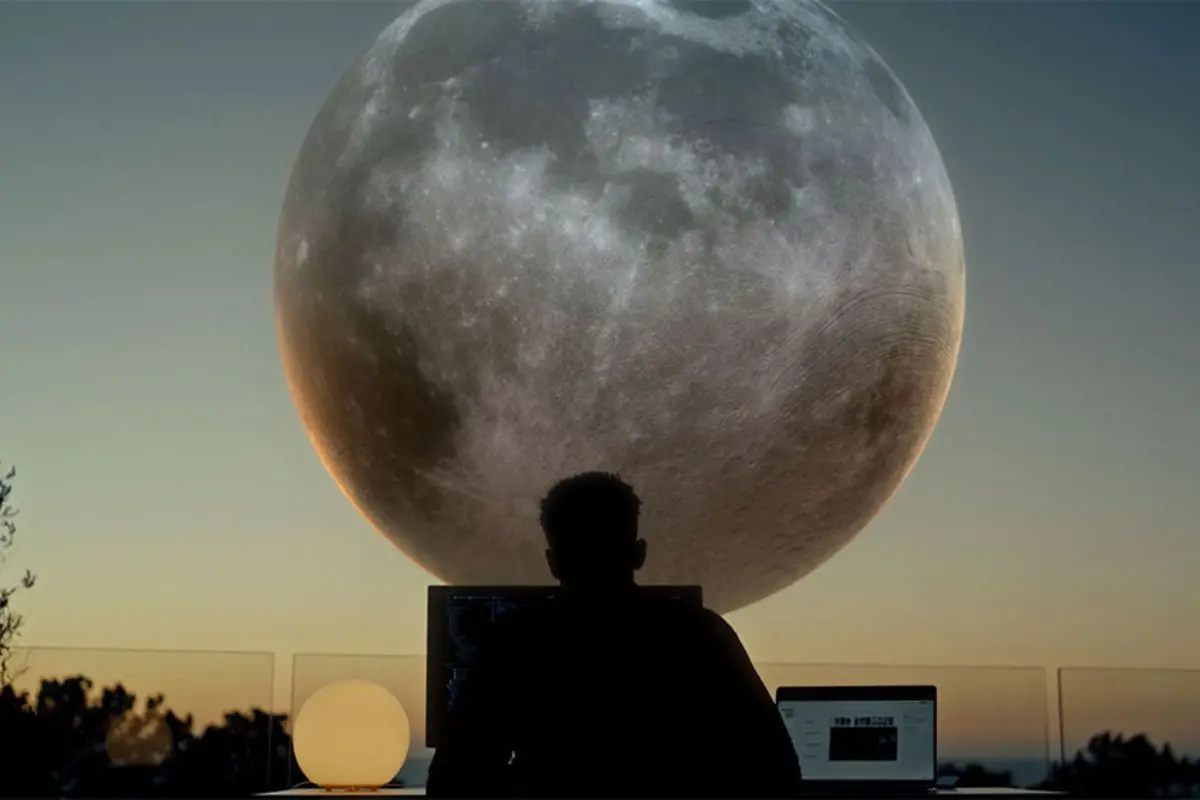
A few years ago, there was a time when augmented reality existed solely in the territory of billion-pound tech giants, VFX houses, and experimental labs behind NDA-bound innovation hubs. You required expensive modelling software, extensive machine learning expertise, motion capture rigs, specialized design teams, and months of development. Now, an eighteen-year-old with only a smartphone and a decent idea can create an AR experience in under an hour, deploy it to millions of people globally, and — most importantly — receive payment for it. That is not science fiction. That is the economy Snapchat is constructing today.
Snap's newest iteration of its Lens Studio platform — now internally referred to as an AR-first developer ecosystem — represents one of the biggest changes in the democratisation of digital creativity. This is not a toolset for filters; it is infrastructure for the next generation of spatial computing. Snap is no longer positioning itself as a social platform but as the globe's most frictionless AR creation and distribution layer — an invisible pipeline that allows anyone to create immersive, interactive and monetisable AR objects that exist within the fabric of daily life. The pitch from the company is as daring as it is holistically simplistic: if you can imagine it, you can create it — no code, no setup, no studio. And if you can build it, you can now get paid for it.
At the heart of this movement is Lens Studio’s newly supercharged GenAI Suite. In principle, it resembles the generative image and text tools that have surged in adoption across the creative industry over the past year. But here, the difference is execution speed and purpose. You are not generating abstract stills, but deployable AR assets. A creator can write in a text description — perhaps as relaxed as "make me a glowing digital samurai with reactive neon armor that changes color when I yell" — and rather than generating just a concept drawing, Lens Studio is now able to build the interactive lens itself. It can auto-create 2D or 3D assets, add physics and triggers, optimise them with natural language iteration, and get them production-ready for tens of millions of users who will experience it instantly. It compresses the whole pipeline from concept to asset to rigging and testing into minutes. The very concept of 'production' is fading away.
This is not technological convenience alone; it is a psychological unlock. It heralds a move away from old-style creative hierarchies, in which expertly trained specialists possessed the keys to the machine. For much of digital-born talent, especially Gen Z and the emerging AI-native generation behind them, technology has finally caught up with their natural creative pace. These are youngsters who remix culture at meme video speed — not in production cycles. AR, which was once the distant horizon of innovative computing, has been redirected to the natural activity of this generation: gratuitous world-creation. The walls have come down. What took whole design teams is now possible for a teenager on a train.
But a facility without purpose is entertainment. The actual strategic genius of Snap's maneuver is the launch of Lens Creator Rewards, a structured monetisation system for AR creativity. Creators on all platforms have been using indirect earnings models — brand partnerships, affiliate commissions, merchandising, or salaried positions. Snap is doing something much more direct: making AR effects themselves into money-making digital products. It's not waiting for brands to compensate creators. It is compensating them directly for value generated on-platform.
The programme runs along two clear but potent earning avenues. The first is Top Performer Payouts — a results-based incentive system whereby a Lens gets paid money if it hits 15,000 Qualified Posters in its first 90 days. Posters are not spectators; they are users who deliberately opt to use the Lens and share content with it — a definitive indicator of cultural uptake. This promotes impactful public AR over passive ego filters. It also prefers creators who have learned how to read, anticipate, and shape culture, rather than create superficial utilities.
The second route — Lens+ Payouts — brings in a paid subscription economy where content creators are able to provide subscribers who proactively subscribe with exclusive AR Lenses. Unlike the first one, which is fueled by organic virality, this is for content creators with established micro-communities or niche-specific offerings, the way Patreon, OnlyFans or digital art subscription platforms have grown up — but natively within everyday camera culture. The entry threshold is higher; only sanctioned creators are allowed to enroll, so quality control is guaranteed. But the money-making potential is irresistibly compelling. In a single stroke of strategy, Snapchat has turned AR into a sellable product category. No longer is this all about filters — this is now about digital objects imbued with emotional or utilitarian value.
What is particularly interesting is how clearly Snapchat articulates what it will not reward. Top Performer Payouts don't extend to plain beautification tools, colour filters, saturation boosters, static 2D frames or straightforward analysis of repeatable Lens styles. In short: this isn't a low-hanging fruit gold rush for repeatable, low-cost, AI-spammed assets. Snap has drawn a very clear line. The platform is paying not for numbers, or algorithmic optimisation — but for creative AR imagination. Lenses need to accomplish something significant — convey meaning, change a perception, encourage engagement, bring about authentic human expression. Mathematical aesthetics are so out. Expressive spatial creativity is so in. Creativity, not utility, is being economically rewarded. It is a deep disruption to much of the existing generative AI economy, which is saturated with near-duplicate output.
The outcome is a cultural tipping point. Augmented reality is no longer the mythical technology holding out for its iPhone moment. It is here. But whereas AI chatbots and image generators tend to produce introspective or passive outputs, AR is inherently performative and socially contagious. It is the most external of all digital media — overlaid directly on our bodies, on our surroundings, on our daily realities. In AR, the user is no longer a passive observer but an active participant and performer. And Snapchat is placing a bet that user-generated creativity — and not company-driven storytelling — will define the aesthetics, language and emotional vocabulary of this medium.
Think about how Snapchat's scale bolsters this thesis. With more than 350 million daily active Lens users, there is no larger behavioural AR lab on Earth. These are not hypothetical audiences. These are individuals already blurring the lines between AR and their communication, fashion, humour, self-expression and identity. They are not holding out for Apple Vision Pro, or the Metaverse, or mixed-reality workplace meetings. They are already living in bite-sized spatial computing. What Snapchat is doing is merely a change of focus — from participation to authorship. AR is no longer something you use. It is something you create.
The zero-setup quality of this platform is no figment of imagination. It is potential versus inevitability. Old creation platforms take time, onboarding, offline software, account linking, rendering, exporting, and distribution optimisation. With this, you turn on Lens Studio and you are ready to live-distribute. You don't distribute to a store. You land straight into culture. You don't have to build an audience in person — you step into a system where a single good idea can snowball into millions of applications overnight. This concentration of attention isn't only potent for virality — it is cost-effective. AR is currently the lowest-friction route from ideas to instant dissemination in the history of digital.
But the question at the core of all this still is: why now? Why has Snap pushed so rapidly to productise creator economics when wider social platforms are still experimenting with monetisation trials with limited commitment? The reason is strategic differentiation. Snapchat is not attempting to own mass broadcast entertainment like TikTok is. It is not pushing hard on e-commerce like Instagram. It is not staking itself out as an ideology forum like X. Snap is creating something more understated but boundless in scope — a camera-first operating layer for self-expression. Its benefit is behavioural, not transactional. The camera is not an input device. It is the new keyboard. And if the camera is the interface by which people communicate, then AR is the language. Whoever controls AR creation controls the future grammar of digital identity.
There is one more, more forceful layer to this maneuver — a gentle but persuasive power shift away from mainstream employers. Artists, animators, visual designers, fashion students, VFX interns, theatre students or just culturally savvy teenagers had to wait for the market to legitimise their talent for decades. Industry gatekeepers — ad agencies, studios, VFX companies, brand retainers — got to determine what creativity was worth paying for. Snapchat is breaking that equation. A 18-year-old can now earn more from a reactive AR streetwear lens than from a career agency job. The tension between reward and recognition has evaporated. Mass AR is going to be a direct-to-culture economy.
For brands, the stakes are huge. The future of campaigns may not be glossy CGI or agency-created concept videos — but participatory AR experiments, co-created with creators and spreading like jokes, rituals, or superstitions online. Rather than addressing audiences, brands will have to cede control of narrative to people whose cultural instincts operate faster than business clearance loops. Most in the marketing industry still miss just how rapidly this change will snowball. They are quantifying creative risk with outdated metrics, but consumers — particularly younger ones — already speak AR language and anticipate experiences that respond and react to them.
That is exactly why Snap is being merciless when it comes to incentives. The company doesn't want AR to become like filters did early in the 2010s — a novelty that became oversaturated with generic outputs. Its reward paradigms are generative evolution, not generative repetition. Lenses that are only there to pretty up, decorate or replicate do not fit. What does is change. AR that makes a moment that is worth sharing, a view that did not exist before, an emotional or functional richness grafted onto a real-world action. Interactivity is not something in AR, it is the entry fee requirement.
The long-term path is clear. Lens Studio is embedded in Snapchat and Spectacles today. Tomorrow it might be embedded in cars, shop mirrors, livestreaming platforms, rival smart glasses, or even yet-to-be-invented operating systems that employ space rather than screens as their basic interface. Snapchat's goal is no longer social media. It is to be the root creative power behind ambient digital reality. And it is betting that the most valuable talent of the next decade is not coding, not traditional design — but the ability to invent new forms of reality through intuitive creative prompts.
But for everyday creators, the attraction is immediate and human. Become a Lens creator and you do not merely publish content — you create digital experiences that alter how people exist inside their own moments. You build an audience, not by pursuing attention, but by widening perception. And now, for the first time, that power is not merely culturally remunerative — it is financially remunerative. If Snapchat persists to develop and expand this program, a whole new creative middle class may emerge — not influencers, not YouTubers, not ad companies, but experienced artists of real-time AR whose job is at the nexus of technology, entertainment, communication and identity.
It is infrequent to see a moment where a technology platform sets the stage for a whole new creative economy silently without hype or futurist rhetoric. But that is what Snapchat has just accomplished. It did not announce a metaverse. It did not announce Web3. It did not announce a noble philosophical calling. It merely invited millions to rethink what it is to create — and to monetise — in a world that is no longer bounded by screens.
Because the future of creativity is not looking. It's taking part. And for the first time in human history, the tools to create that future don't fit into a laboratory, but into your hand.