How Ritwik Ghatak’s FTII years shaped India’s ‘New Wave’ filmmakers
The year was 1964. The newly established Indian Film Institute at Pune, first in Asia and modelled on film schools of Paris and Moscow and managed by a US trained filmmaker, Jagat Murari as Principal had decided to allow all Screenplay -Director students to make a one reel film (11 minute) to showcase what they have learned in their three year diploma course. Murari thought, being a first of its kind in filmmaking, he couldn't oversee all the 11 filmmakers and invited few established filmmakers to oversee the student productions.
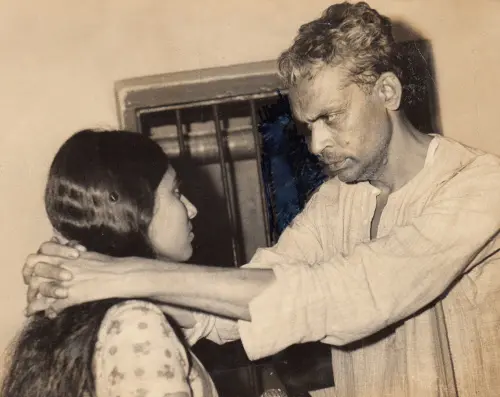
Ritwik Ghatak, the iconic filmmaker from Bengal was one among those invited to oversee the film, Rendezvous with one student RN Shukla. It was about a young woman waiting among the ruins of an old historical structure for her lover who came late as there was heavy rain. The wait made her think about many things about life and she decided to go back. There is no dialogue in the film, only music and some reading of the inscriptions from that Buddhist historic structure. But it ended up as a film by Ritwik himself with all his characteristic touches. “During that extraordinary period, Ghatak Dada completed his deeply personal, melancholic Institute film, "Rendezvous". It wasn’t just cinema—it was testimony. Each frame bore the weight of war, displacement, and defiant hope. We watched its rushes in the recording room seated on the floor. More than anything, we learned to care—for each other, for our craft, and for the truth. We became a tribe shaped by celluloid and circumstance. Those nights of shared fear, whispered dreams, and impromptu performances stitched us together more tightly than any curriculum ever could.” HK Verma, then a cinematography student, remembered the making of the film soon after the 1965 Indo-Pak war. “To this day, those who lived that chapter with Dada wear it like a badge. A war raged outside—but within the Institute, a quiet revolution unfolded. One that changed us all, forever.” Verma ruminated on those troubled times in a recent Facebook post. Verma was part of the camera team of the film Bhuvan Shome of Mrinal Sen, the film which heralded the Indian new wave.
Ritwik, the centenarian’s association lasted for two years, as he himself claimed in an interview. But the recently released biography of Jagat Murari, the first Principal of Pune Film Institute, The maker of filmmakers, says formally Ritwik was at the institute for a few months as Vice Principal and Head of Department of Direction. Ritwik was the only filmmaker of substance during the time, who was fully associated with the new Institute, as his films after Meghe Dhhake Tara were a commercial failure and he desperately needed work.
“With his filmmaking career ground to halt, Ghatak needed another source of income, so when Jagat invited him to Pune – to supervise the making of the diploma film ‘Rendezvous’ which was one of the first assignments in late 1963 - he readily agreed. In Ghatak, Jagat saw that elusive combination that he was always on the lookout for in his teachers - great filmmaking talent and generous time availability”; Radha Chadha, daughter and biographer of Jagat Murari wrote in her book. Ritwik too was lured by the programme of Institute to allow staff to make experimental films and wrote to his wife Surama, in December 1964 (quote from the book) “I don’t like Calcutta anymore. Here in the Institute I will have a fixed salary, respect and can do the work that I want to.”
But it took another six more months for Murari to get him the appointment order as Vice Principal. “I had requested him (Satyajit Ray) to recommend Ritwik Ghatak to the Ministry of Information and Broadcasting for appointment to the post of Vice Principal. Satyajit asked me “Will you be able to manage his drinking “I had then told him that I would like to try”, Murai later wrote in an article.
Ritwik got the appointment letter on June 5, 1965 and wrote to his wife, “I only drink in the night now”. But Murari extracted a gentleman’s agreement from Ritwik, that “if Ghatak was unable to keep his drinking under control, he would go,” to which he agreed. Ghatak was a great teacher and became the star teacher of Film Institute, with Mani Kaul and Kumar Shahani of 1963 batch became his “apostles”, Adoor Goplakrishnan who graduated in 1965 was quoted in the book. The impression of an iconic teacher was summed up by Kuldip Sood, yet another FTII graduate of the time. “Ghatak, would give a better briefing about camera than the Camera professor - a better briefing about sound than the Sound Professor ...a better briefing of Editing…He was one of a kind.” Adoor who attended Ghatak’s few classes remembered recently; “He would screen his own films and explain the rationale behind each of the scenes as to why he chose to use the camera and sounds and editing the way he did. That for me was very interesting”.
“Ghatak’s impact on students was transformative. Every one of the alumni I interviewed who had crossed paths with him at the Institute-whether as a guest lecturer or as Vice Principal –saw him not only as master of cinema, but also as master teacher,” Radha Chadha wrote. Ghatak also made a film Fear, with all the students of the first batch of acting course. Asrani, Mani Kaul and Subhash Ghai and 12 of them featured in the film. “The film depicted the behaviour of twelve characters- thus twelve roles for the twelve final year acting students-huddled in a bomb shelter as they anticipated the impending dropping of a hydrogen bomb.”
Matter took a curious turn as Ghatak could not control his drinking habits and even encouraged students to drink saying “to be a great artist one must be a great drinker too”. Ghatak narrowly escaped confrontation with the Institute, by making up at the last minute in many incidents of his drunken behaviour. His drinking habit almost took a toll on the third convocation at the Institute in the first week of August 1965 where the then deputy Minister for Information and Broadcasting CR Pattabhiraman was the chief guest. By the end of the month he lost it all with a series of mismanagement created under the influence of excessive liquor on a shooting of student films at Lonavala near Pune. The Principal was called in at night to cancel further shooting to avoid a series of mishaps. Back at the Institute an infuriated Ghatak beat up a student making the Principal seek his resignation, according to the book.
The book of Radha Chadha says officially Ghatak was the Vice Principal and Head of Direction department from June to August of 1965, but Ghatak himself says he was associated with the Institute for two years. Both Adoor and a few of the alumni of those times confirm Ghatak's association with the Institute for more than a year. It is possible that Ghatak is considering (in his interview mentioned earlier) his days with shooting student films to workshops he took at the Institute as his broad association. Whatever be the truth, the impact of his presence at the Institute is epochal with the new wave filmmakers in India. His own students like Mani Kaul and Kumar Shahani, John Abraham and even later Saeed Mirza in early 70s adore him as their inspiration for filmmaking which ensured India's first “New Wave” in films. The new wave in Indian films spread to Malayalam with Adoor, Kannada with Girish Kasaravalli, Odiya with Manmohan Mahapatra, Assam with Jhanu Baruda, Marathi with Arunaraje Patil bears the stamp of a Ghatakian influence, making him the centenarian the filmmaker’s filmmaker.