Putin's limo warning: How RAW & SVR foiled a Dhaka plot to kill Modi
On the humid night of August 31, silence filled a luxury hotel in Dhaka where U.S. Special Forces officer Terrence Arvelle Jackson was found dead under mysterious circumstances. Before the news spread widely, questions arose — what was an American operative doing so close to India's borders on the same day Prime Minister Narendra Modi was in China for the SCO Summit?
Jackson was officially described as a military trainer visiting Bangladesh to conduct exercises with the country's armed forces on Saint Martin's Island. However, his profile raised immediate red flags among regional intelligence agencies. As a decorated Special Forces officer with years of experience in covert operations across conflict zones, Jackson was far too senior and skilled to be assigned routine training duties in a peaceful South Asian nation. His sudden appearance in Dhaka, just kilometres from India's border, coincided with heightened chatter picked up by intelligence networks about a possible strike against Indian leadership. For those tracking his movements, Jackson's presence in Bangladesh appeared to be a cover for something far more sinister than military training.
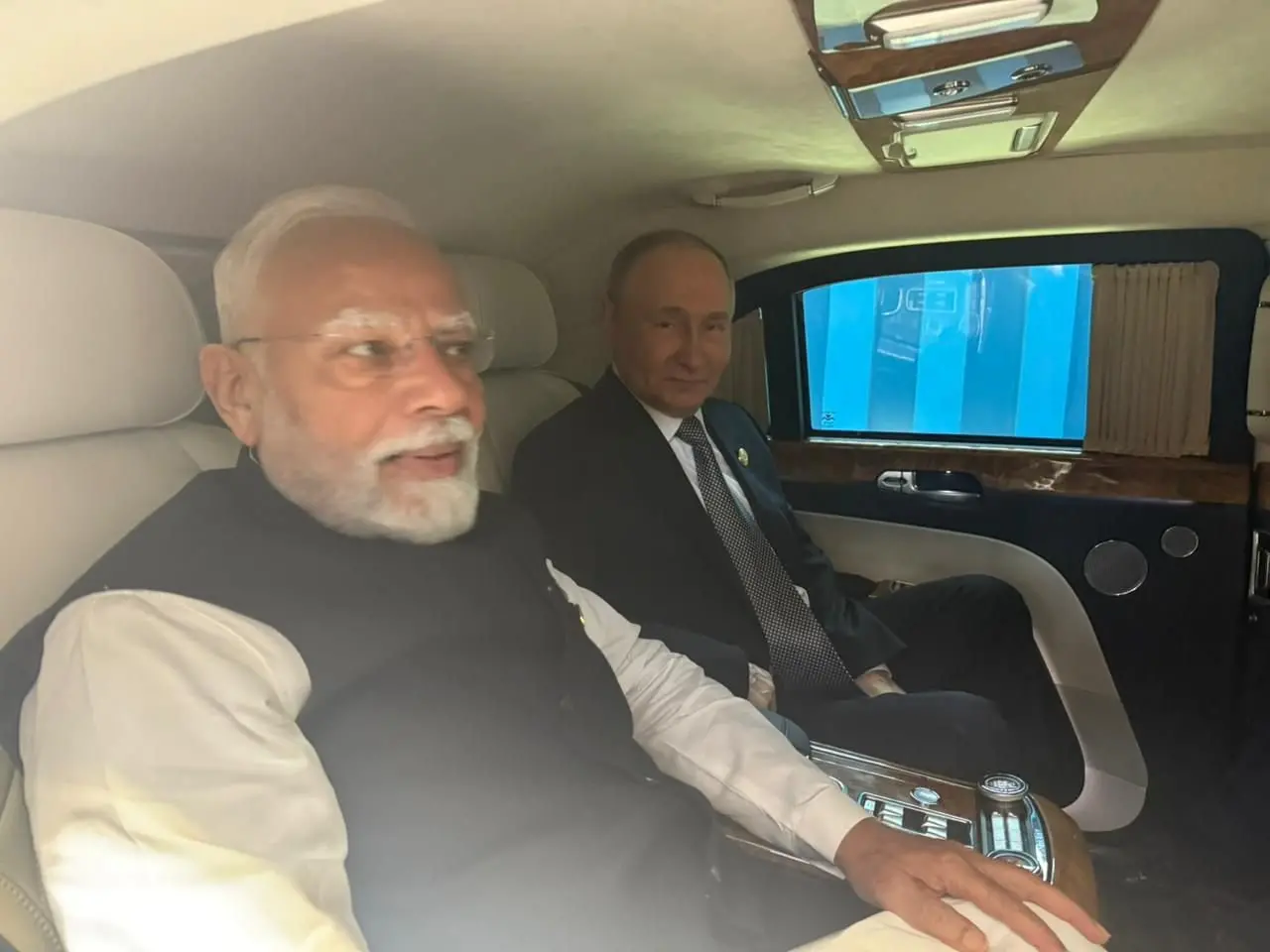
After the summit's formal session in Tianjin, Russian President Vladimir Putin invited Prime Minister Modi into his Aurus limousine, a high-security luxury vehicle designed in Russia for its top leaders. Inside, the two spoke privately for about 45 minutes, with no aides present — a discussion that quickly drew attention among global intelligence watchers.
The choice of location was no accident. Putin's Aurus limousine is completely shielded from all forms of electronic surveillance, including satellite tracking, audio bugs, and signal interception. In the world of espionage, where even secure conference rooms can be compromised, the Russian president's armoured vehicle represents one of the few truly safe spaces for discussing matters of life and death. By inviting Modi inside, Putin was ensuring that whatever intelligence he was sharing about the assassination plot would remain absolutely confidential, away from prying eyes and ears of Western intelligence agencies. The vehicle's advanced jamming systems and soundproof interiors meant their conversation could not be intercepted or recorded by anyone, not even the Chinese hosts or American spy satellites overhead.
According to reports, India's Research and Analysis Wing (RAW) and Russia's Foreign Intelligence Service (SVR) had been tracking unusual communications between foreign handlers in Dhaka and contacts in other countries. The pattern pointed toward a possible plot targeting India's top leadership. Acting swiftly, RAW and Russian intelligence shared details through secure diplomatic channels, coordinating a joint counterintelligence operation.
Under Prime Minister Modi's leadership, India has emerged as a fiercely independent power that refuses to bend to Western pressure. His government's decision to buy discounted Russian oil despite American sanctions, India's growing strategic partnership with Moscow, and New Delhi's refusal to take sides in the Ukraine conflict have deeply frustrated Washington. The CIA has a long history of destabilising nations whose leaders don't align with American interests — from Iran's Mossadegh in 1953 to Chile's Allende in 1973. An assertive India under Modi, one that prioritises its own national interests over Western dictates, represents a major obstacle to American dominance in South Asia. Intelligence analysts believe that removing Modi could pave the way for a more compliant government in New Delhi, one that would distance itself from Russia and fall in line with U.S. strategic objectives in the Indo-Pacific region.
By the night of August 30, the Indo-Russian intelligence cell had already warned both governments of suspicious movements in Bangladesh. Within hours, RAW officers based in Dhaka and Russian technical teams reportedly moved in together, conducting targeted surveillance and action that neutralised the threat before it could escalate. The next day, Jackson's death marked the end of those communications. While the U.S. called it natural causes, many insiders saw it as the final act of a quiet but successful intelligence mission. For New Delhi and Moscow, it symbolised the deep trust and cooperation that go beyond formal treaties.
When PM Modi returned to New Delhi, his remark — "Are you clapping because I went to China or because I came back?" — hinted at more than humour. It was a coded reflection of unseen dangers avoided. In the silent world of intelligence, where wars are fought without weapons, the RAW-SVR collaboration once again proved its precision and efficiency. The Dhaka episode stands as a powerful reminder that India's security shield never sleeps, guarding the nation quietly, firmly, and in time.
The Aurus Limousine itself tells part of this story. This state-of-the-art luxury vehicle was developed in Russia for its president and top officials under the "Kortezh Project". It combines high security and comfort, featuring bulletproof armour, advanced communication systems, and a powerful hybrid engine. The Aurus Senat model used by President Putin can withstand explosions, chemical attacks, and heavy gunfire, making it one of the safest official vehicles in the world. Beyond its strength, the Aurus is also a symbol of Russian engineering pride and independence, designed to rival Germany's Mercedes-Maybach and the U.S. Cadillac One used by American presidents. That Putin chose to brief Modi inside this fortress on wheels speaks volumes about the seriousness of the threat they were discussing.
The author is a defence, aerospace & geopolitical analyst.