Maharaja and the Iron Man: How Mysore’s Dakota plane paved the way for India’s unity
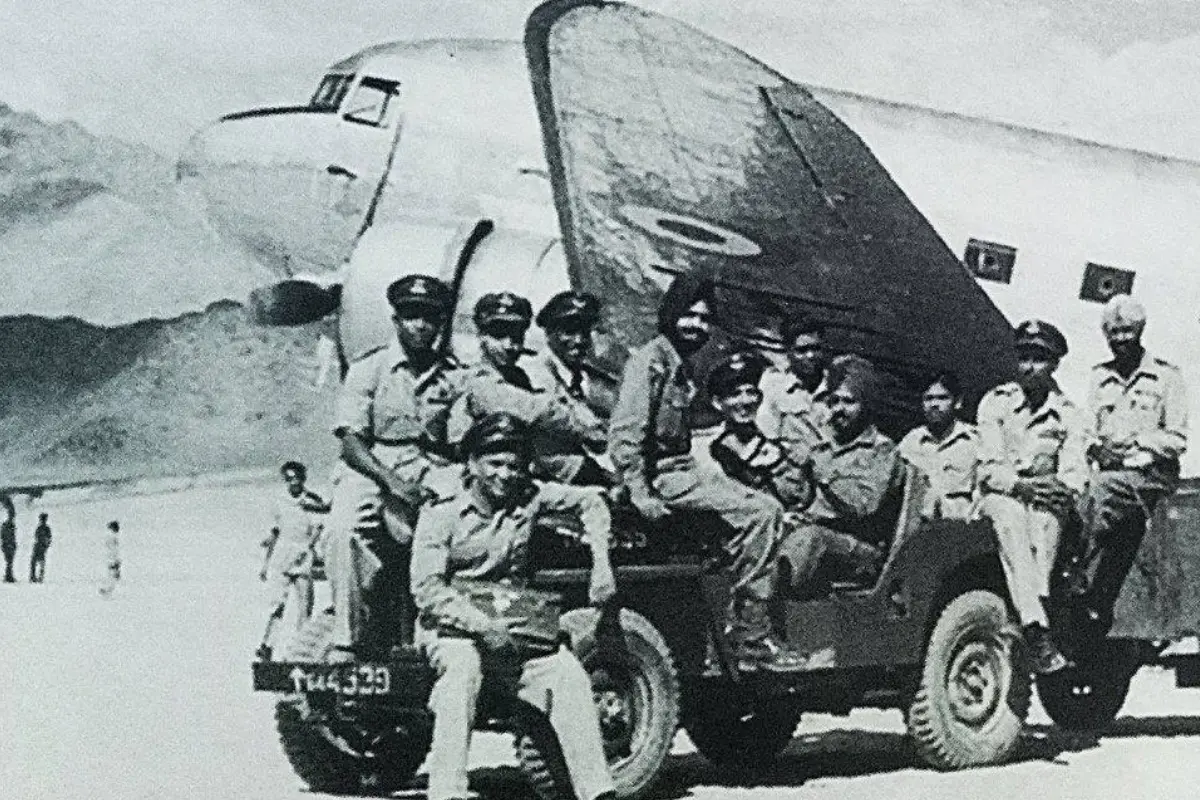
As India commemorated Rashtriya Ekta Diwas on October 31, marking the 150th birth anniversary of Sardar Vallabhbhai Patel, the Iron Man of India, it is time to also celebrate an often-overlooked partnership that proved instrumental in forging our nation's unity. While Sardar Patel's monumental achievement of integrating over 560 princely states into the Indian Union is well documented, the story of His Highness Maharaja Jayachamarajendra Wadiyar of Mysore, whose personal aircraft became the vehicle of unification, deserves recognition.
In 1947, newly independent India faced a formidable challenge: convincing hundreds of princely states to accede to the Union. Sardar Patel, as India's first Deputy Prime Minister and Home Minister, shouldered this Herculean responsibility. Yet the Government of India possessed just one operational aircraft, reserved exclusively for Prime Minister Jawaharlal Nehru. How would Patel traverse the vast subcontinent to negotiate with regional rulers?
The answer came from Mysore. Maharaja Jayachamarajendra Wadiyar, a visionary statesman and ardent supporter of a united India, made a decision that would alter the course of history. He placed his personal Dakota aircraft at the disposal of the nation. This gesture was more than mere logistics; it was a statement of intent and solidarity.
The aircraft in question was the legendary Douglas DC-3 Dakota, registration VT-AXX, acquired by Mysore in 1946 and piloted by Captain V Sundaram, recruited from Tata Airlines. Known as the "Workhorse of the Air," this twin-engine, low-wing monoplane was powered by radial piston engines producing 1,000-1,200 horsepower. With a cruising speed of 333 km/h, a range of 2,400 km, and the ability to operate from short, unpaved runways, the Dakota was perfectly suited for India's challenging terrain. Over 16,000 DC-3s were built during World War II, making it one of history's most successful aircraft designs.
The Mysore Dakota became the wings upon which India's unity was forged. Sardar Patel clocked over 160,000 km on this aircraft, crisscrossing the subcontinent to meet with hesitant rulers. Without this aircraft, reaching hundreds of princely states scattered across India's vast geography would have been nearly impossible.
While neighbouring states like Hyderabad under the Nizam wavered or resisted joining the Indian Union, Mysore took a decisive stand. On August 15, 1947, Maharaja Jayachamarajendra Wadiyar became the first ruler to sign the instrument of accession, making Mysore among the earliest states to voluntarily merge with India. His actions set a powerful precedent for other princely rulers across the subcontinent.
The Maharaja's contribution extended far beyond that pivotal moment. His patronage of aviation proved transformative for India's aerospace ambitions. Under his leadership, Hindustan Aeronautics Limited flourished in Bangalore, Mandakalli Airport was constructed in Mysore, and the Government Flying School was established at Jakkur in 1948—all becoming foundational pillars of India's aerospace ecosystem and contributing to the nation's self-reliance in defence and civil aviation.
This year's Rashtriya Ekta Diwas is particularly special, marking Sardar Patel's 150th birth anniversary and coming a decade after Prime Minister Narendra Modi announced the "Ek Bharat Shreshtha Bharat" initiative in 2015. This program promotes cultural exchange and mutual understanding among states through structured inter-state engagements.
As we honour Sardar Patel's legacy of unity and integration, we must also remember Maharaja Jayachamarajendra Wadiyar, whose foresight, generosity, and unwavering commitment to a united India provided both the literal and metaphorical wings to Patel's mission. Together, their combined vision and leadership laid the foundation of the united, modern, and self-reliant Bharat we inhabit today.
(The author is an award-winning science communicator and a Defence, Aerospace & Geopolitical Analyst)