Hey scooter, this is my path; When an elderly woman said ‘NO’
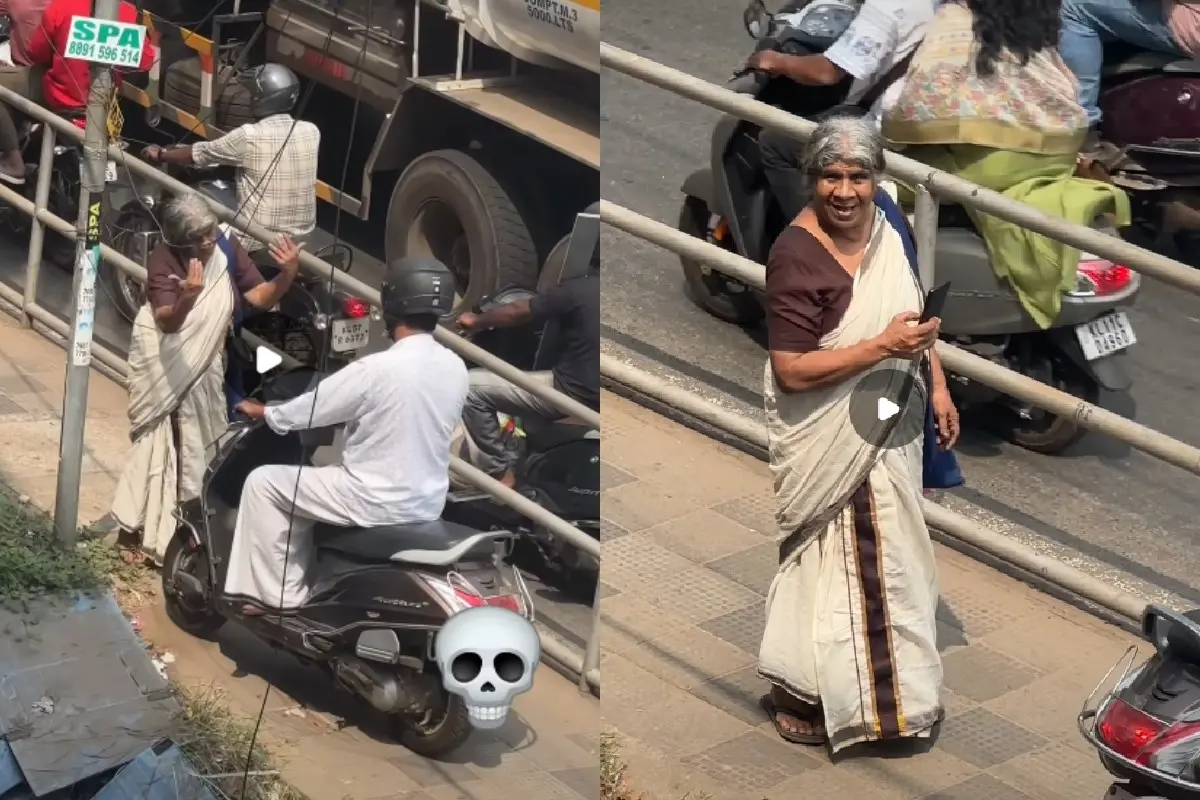
Ask anyone who has walked along Kerala’s pavements and they’ll know this moment. You’re on the footpath, minding your business, when a scooter suddenly appears in front of you – horn blaring – as if you are the one trespassing. And almost without thinking, you step aside. You let it pass. Because everyone does. Because that’s just how it works now.
But an elderly woman in Kozhikode didn’t step aside. Faced with a scooter rider who had climbed onto the footpath to escape traffic, she simply stood her ground. Someone filmed it. The clip went viral. For a brief moment, she became a quiet national hero.
What was striking wasn’t that she did something dramatic. It was that she did something utterly ordinary – she stayed where she had every right to be. And in doing that, she exposed something the rest of us had normalised so deeply that we had stopped seeing it.
Her act carried a faint echo of Rosa Parks refusing to give up her seat on a Montgomery bus in 1955 – not in scale, not in suffering, but in spirit. The refusal to treat an injustice as routine. Parks didn’t shout or fight. She simply didn’t move. The power came from that small, steady refusal.
No one in Kerala passed a law handing footpaths over to vehicles. There was no announcement. It just happened. One parked scooter at a time. One car nudged up onto the pavement. And the rest of us adjusted. Slowly, casually, footpaths were colonised by those with the economic privilege of owning a vehicle.
Walk through streets of Thiruvananthapuram – be it the royal Kowdiar pavements, or bustling Kuravankonam, or busy streets of Thampanoor – and you’ll see it. Pavements packed solid with parked cars and two wheelers. In many stretches, the footpath doesn’t even exist anymore – crumbled, encroached upon, or never built in the first place.
East Fort – the nerve centre of Thiruvananthapuram, where bus routes converge, where the roads to the railway station, the airport and the abode of the city’s guardian angel all meet – has a foot overbridge that cost approximately Rs 2.75 crore of public money and serves virtually no one. It stands as an architectural summary of official indifference.
Families spill onto the road. Children weave through traffic. Elderly people walk inches away from moving buses. This isn’t mere inconvenience. It’s a quiet, structural disenfranchisement hiding in plain sight. Simply put, a kind of cancellation of people who walk.
What makes this especially ironic is that it is happening in Kerala – a state that prides itself on social equity. Land reforms. High literacy. Flattened hierarchies. We like to believe we get fairness right.
And yet here is a class of citizens – defined not by caste or religion or gender, but simply by not owning a vehicle – being systematically pushed out of infrastructure that their taxes helped build.
The neglect isn’t limited to state roads. Take National Highway 66, which cuts through some of Kerala’s densest urban stretches. In the stretch from Kovalam to Kazhakuttom that goes past IT parks, apartment towers and businesses, you’ll struggle to find proper pedestrian crossings at busy junctions. Shaded bus stops are sparse. Safe walkways are non-existent.
Overpasses rise impressively at some points – without escalators, without lifts – practically unusable for the elderly or children who most need them. It’s the classic gap between what planners design and how people actually live.
To be fair, vehicle owners aren’t villains in a simple story. Roads are full of potholes. Parking space is inadequate. The number of vehicles has exploded faster than infrastructure could cope. At times, it feels like everyone is squeezed in a system built without foresight.
But vehicle owners have a voice. They honk. Their ire gets circulated on social media. They flood WhatsApp groups with complaints. Pedestrians don’t have that clout. And no one seems to care.
After the Kozhikode incident went viral, the Kerala Police announced a WhatsApp number to report traffic violations. It wasn’t the first attempt. In Trivandrum, there was already a number tagged “trafficeye tvmc.”
A complaint sent with a photograph of an illegal parking received a polite reply – but no action, because the “number plate wasn’t clear”.
A second similar complaint, this time with a legible number, was met with a different explanation: the vehicle was brand new and had not yet been issued a registration number, so the owner couldn’t be traced. That should be unsettling. An unregistered vehicle on the road – and no way to act.
Apparently, there are violations that enforce themselves, and violations the system shrugs at.
Meanwhile, the AI cameras installed at considerable expense have proven efficient at one thing: collecting fines. Revenue flows neatly into government coffers. The pedestrians on whose behalf traffic laws theoretically exist are yet to see tangible improvement in their daily lives.
Traffic jams spark loud debates. New highways become political battlegrounds. But pedestrians remain trapped in a peculiar kind of invisibility.
Unlike landless farmers who had movements behind them, or women whose issues gained organised political traction, pedestrians have no identity as a group. They aren’t a constituency. No MLA’s career depends on fixing a broken pavement.
The retired schoolteacher walking to the temple and the daily wage worker heading to a bus stop share the same broken path and the same splash of muddy water from a passing SUV. They share the same indignity. But they are too ordinary, too scattered, too mixed across backgrounds to form a lobby anyone feels compelled to court.
That is why the Kozhikode moment resonated so widely. Almost everyone who shared that video had their own version of it – their own kerb they stepped off, their own scooter they silently accommodated. They saw in that elderly woman not a larger-than-life hero, but a mirror. The difference was simple: she didn’t move.
In rural Kerala, danger comes in the form of speeding private buses on narrow roads with no shoulder. In cities, it’s the slow daily creep of vehicles onto every available surface meant for walking. On paper, the law protects pedestrians. In practice, a simpler rule seems to operate: might claims the space.
In a state that prides itself on social conscience, the pedestrian has become an invisible class – unorganised, unpatronised, and largely unheard. Except when an elderly woman puts her foot down.