The expensive gold tax illusion: Why the 15% duty hike won’t fix India’s trade deficit
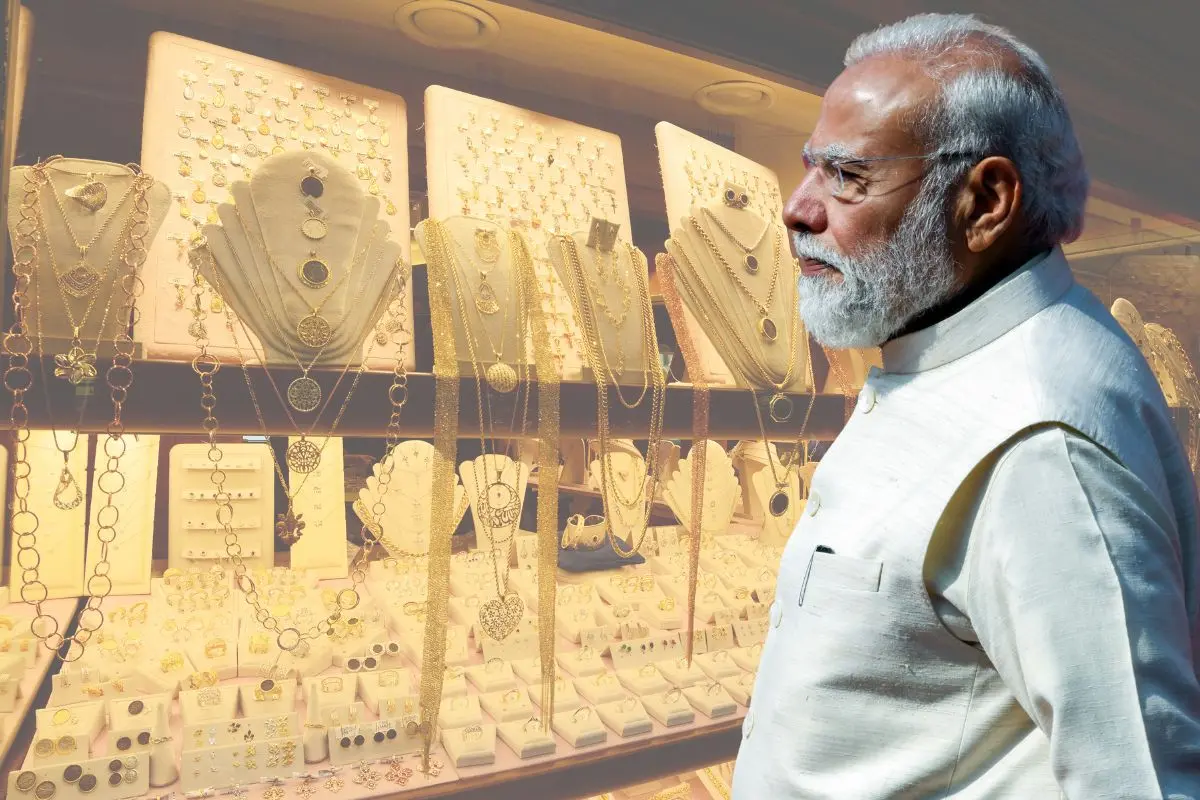
On Wednesday, 13th May, the government made a big decision. It raised the import duty on gold and silver by 15 per cent. The aim sounded very sensible — reduce the pressure on our rupee, control the trade deficit, and save our precious foreign exchange reserves. But scratch the surface a little, and you realise the story is not as simple as it looks. Many economists and market experts are saying this move may not really work the way the government hopes.
Let us understand why. India's gold imports jumped by almost 29 per cent, touching nearly $69 billion (around ₹6.4 lakh crore) in FY26 till February. At first glance, it looks like Indians have gone crazy buying gold. But the real picture is different. We did not actually buy much more gold in quantity. The bill went up mainly because gold has become very expensive in the international market. So even if you bought the same one tola you bought last Diwali, the country ended up paying far more dollars for it this time.
ALSO READ: Small Modular Reactors still face big doubts
Here is a simple formula to keep in mind — your total bill depends on two things: price and quantity. If global gold prices rise by 30 to 35 per cent, India can import even fewer tonnes of gold and still end up paying a much bigger bill. The numbers prove it. In FY26, India actually imported 4.76 per cent less gold — only 721 tonnes — but the import bill still shot up by 24.1 per cent to almost $72 billion (around ₹6.7 lakh crore). Why? Because gold prices jumped by more than 30 per cent globally. Higher prices alone added around $17.6 billion (around ₹1.64 lakh crore) to our bill, while buying less gold saved only about $3.6 billion (around ₹33,500 crore).
Now think practically. To bring the import bill back to last year's level, India may have to cut gold imports by almost 47 per cent — that is, drop from around 721 tonnes to just 384 tonnes. Such a sharp cut is nearly impossible in a country like ours, where gold is part of weddings, festivals, savings, and emotions.
This is where the 15 per cent duty hits a wall. Indians do not stop buying gold just because taxes go up. They simply change the way they buy it. People delay their purchase, switch to lighter jewellery, melt old ornaments and reuse them, or quietly shift to unofficial channels. In short, smuggling. When official gold becomes too expensive, gold finds its own way in through the back door. The World Gold Council itself estimates that demand may fall by less than 3 per cent in the first year, and after that, buying returns to normal. So the long-term effect on demand is almost zero.
ALSO READ: Agni-5 upgrade or Agni-6 debut? Inside India's secret hypersonic leap over Bay of Bengal
There is another reason why this duty hike will struggle to protect our forex reserves. Today, gold is no longer being bought only as jewellery. It has become a serious investment option. With weak stock markets, a falling rupee, and rising global tensions, people see gold as a safe shelter for their money. Investment demand through coins, bars, ETFs and digital gold has shot up by 54 per cent, making up nearly 70 per cent of India's total gold demand. When people are buying gold to protect their savings, a tax of 15 per cent will not scare them away.
And here is the bigger picture most people miss. Gold is not even our biggest worry. India spends far more on crude oil, electronic goods, and heavy machinery. Our monthly trade deficit itself is around $20–25 billion (around ₹1.86 lakh crore to ₹2.32 lakh crore). Even in the best case, this duty may help us save only $10–15 billion (around ₹93,000 crore to ₹1.39 lakh crore) in a year. That is barely 5 per cent of our overall trade gap. Saving a few drops while the bucket has a much bigger hole elsewhere.
ALSO READ: HAL's hidden crisis: Hard truths that chief Kota Ravi must confront
So, will a 15 per cent duty really help our forex reserves? Honestly, only a little, and only for a short while. The real solution lies somewhere else — boosting exports, cutting our heavy dependence on imported oil, and slowly building our own domestic gold mining. Until then, taxing gold is like trying to stop the rain with an umbrella full of holes. It may slow a few drops, but it cannot keep the country dry.
(Girish Linganna is an award-winning science communicator and a Defence, Aerospace & Geopolitical Analyst. He is the Managing Director of ADD Engineering Components India Pvt. Ltd., a subsidiary of ADD Engineering GmbH, Germany.)